The Man Who Made Millions Fall in Love With Football: The Neymar Effect
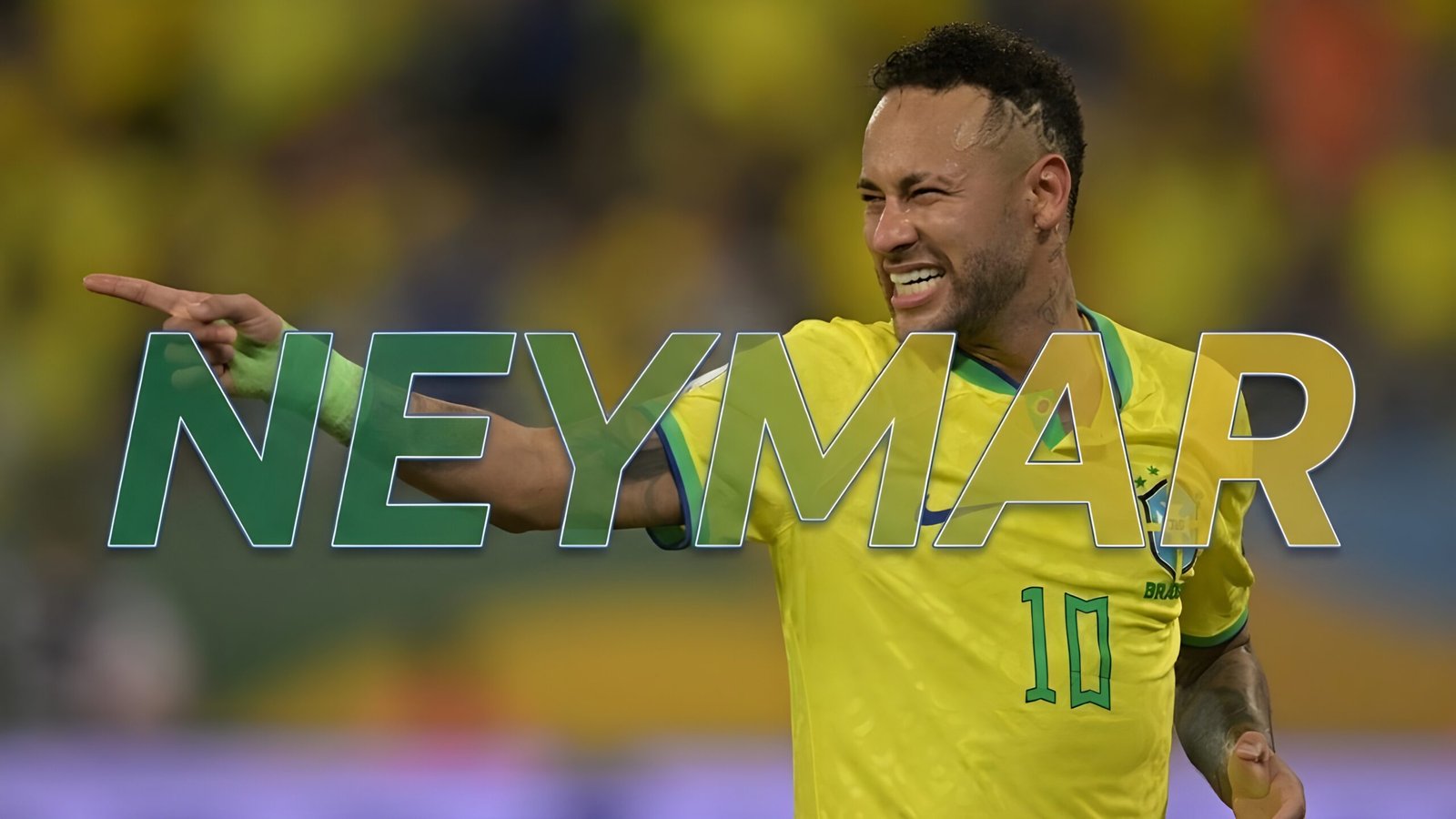
Some players win matches. Some players win trophies. And then there is Neymar — a player who made an entire generation fall in love with football all over again. In an era increasingly dominated by tactical systems, pressing schemes, and data analytics, Neymar arrived like a carnival float crashing a chess tournament. He was loud, joyful, impossible to ignore, and utterly impossible to stop.
From the dusty futsal courts of Mogi das Cruzes to the floodlit cathedrals of the Camp Nou and Parc des Princes, Neymar did not just play football — he performed it. He reminded billions of fans why they first fell in love with the game: not for the formations or the xG charts, but for that electric moment when a single player does something so outrageous, so human, and so beautiful that you leap off your couch and forget your own name.
This is the story of how one man from Brazil made millions fall in love with football — and why that story refuses to end.
What Defines Neymar’s Playing Style?
At the core of Neymar’s genius is a playing style that feels less like a tactical choice and more like a personality trait. He is a forward who dribbles with the instincts of a street footballer, sees passes with the vision of a playmaker, and finishes with the cool authority of a natural goalscorer.
His technical foundation was built on Brazilian street football — the pelada tradition, where children play on concrete courts with no coaches, no systems, and no fear. That upbringing forged his close control, his low centre of gravity (he stands at just 175cm), and his extraordinary ability to shift direction in a fraction of a second.
Add to that the influence of futevôlei — the uniquely Brazilian beach sport blending football and volleyball — and you begin to understand why Neymar can do things with a football that seem to defy physics.
The statistics tell the story clearly. Neymar’s finest year at Barcelona was 2014–15, where he fired in 39 goals over 51 matches in every competition. Across his full stint with the club, he played 186 games, netting 105 goals while dishing out 76 assists. Those assist and key-pass tallies reveal his true depth—he wasn’t only a goal machine, but a visionary playmaker, delivering precise passes into hidden spaces that left defences clueless.
He is among a very small group of players to reach 100 goals for three separate clubs, and he stands as the top Brazilian scorer and assist-maker in UEFA Champions League history. Those numbers don’t belong to someone simply entertaining the crowd; they belong to a player who fused elegance with end product, making artistry and impact look like the same thing.
Why Is Neymar’s Style So Mesmerising?
You can describe a rainbow flick in words. You can chart the biomechanics of an elastico. But neither exercise captures why watching Neymar makes you fall in love with football as if for the very first time.
The answer lies in theatre. Every great entertainer — from a jazz musician to a stand-up comedian — works with anticipation and surprise. Neymar does the same thing with his body. He feints one way, and the defender commits.
He feints again, and the defender stumbles. Then, in the space of a heartbeat, Neymar is already gone — leaving behind nothing but a trail of embarrassed opposition and a stadium in absolute rapture.
His signature moves — the elastico (a flick that shifts the ball outside then sharply back inside), the rainbow flick (looping the ball over an opponent’s head with the heel), and the trivela (a curled pass or shot struck with the outside of the boot) — are not gimmicks.
They are practical weapons deployed with surgical timing. The elastico, for example, is nearly impossible to defend because it exploits the brief moment when a defender’s weight is fully committed.
But beyond technique, what truly makes Neymar mesmerising is emotion. He plays with a smile. He celebrates with children’s joy. When he scores, he does not pump his fist in cold satisfaction — he beams, dances, and shares the moment with anyone nearby.
That infectious enthusiasm is precisely what makes fans fall in love with football through his eyes. In a sporting world populated by robotic professionalism, Neymar’s unbridled passion feels like a gift.
How Did Neymar Bring Magic Back to Football?
The 2010s were, in many ways, the age of the tactical manager. Gegenpressing, high defensive lines, positional play — football became increasingly scientific, increasingly coached, and to many fans, increasingly joyless. The beautiful game had, in patches, become the efficient game.
Neymar was its antidote.
At Santos, before Europe ever got a proper look at him, he was already making Brazil fall in love with football again. A nation that had grown up worshipping Pelé, Zico, and Ronaldo Fenômeno was desperate for its next icon. Neymar delivered — not by mimicking those legends, but by creating something new. He was samba football reborn for the YouTube generation: expressive, viral, and utterly addictive.
When he arrived in Europe, the moments only grew bigger. The most iconic came in March 2017 — the night of La Remontada. Barcelona were trailing 4–0 on aggregate to Paris Saint-Germain in the Champions League Round of 16, needing six goals in 90 minutes to advance.
With the Camp Nou holding its breath, Neymar produced one of the greatest individual performances in the competition’s history. He scored twice, assisted once, and won the dramatic injury-time free kick that sent Barcelona through in the 95th minute. It was the kind of night that makes people fall in love with football — not just fans of the club, but neutrals across the planet who tuned in simply because they could sense history being made.
Rio 2016 became a landmark moment in Brazil’s football history. After generations of disappointment, Neymar delivered the decisive penalty in the shootout against Germany and helped bring home Brazil’s first Olympic gold in the sport. The emotional scene of him collapsing in tears at the Maracanã was unforgettable, capturing the relief of a nation and creating the kind of moment that can make anyone fall in love with football on the spot.
| Milestone | Detail |
|---|---|
| Barcelona Goals | 105 in 186 appearances |
| Barcelona Assists | 76 |
| Champions League Goals (all clubs) | 43 (top-scoring Brazilian ever) |
| Career Club Goals | 371 in 618 appearances |
| Career Club Assists | 228 |
| Brazil International Goals | 79 (all-time top scorer) |
| Olympic Gold | Rio 2016 — penalty shootout winner |
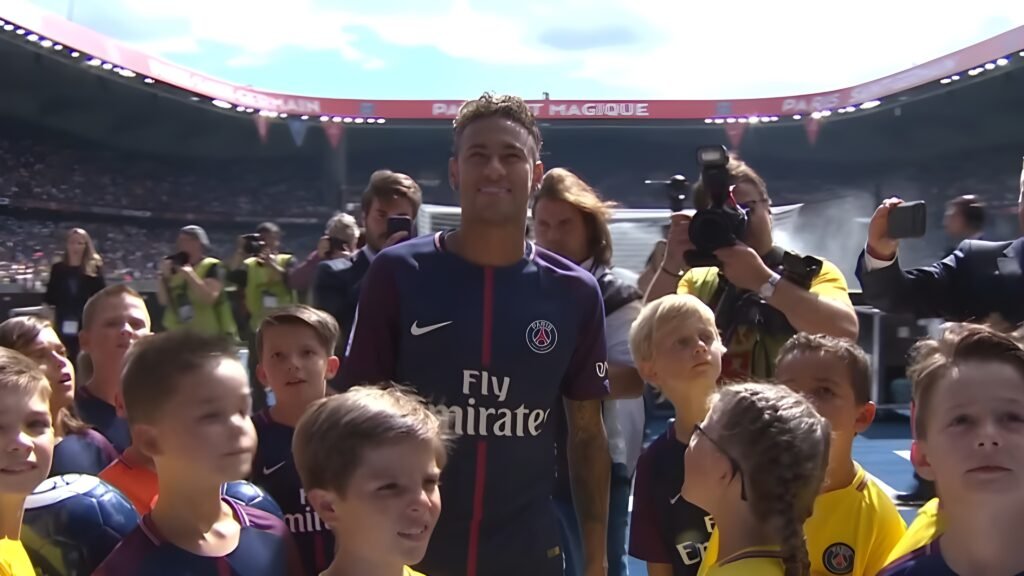
| Most Expensive Transfer (at the time) | €222 million to PSG, 2017 |
| MSN Trio Goals (2014–15) | 122 — most ever by a trio in Spanish football |
What Makes Fans Emotionally Invested in Neymar?
Skill can impress. Trophies can impress. But neither creates devotion the way emotion does. And Neymar, perhaps more than any player of his generation, forged a bond with fans built on raw, unfiltered feeling.
Watch footage of Neymar celebrating a goal with a young ballboy, or crouching down to talk to a disabled child in the stands, and you understand why millions of people genuinely fall in love with football through him. He is not a brand. He is not a corporate ambassador reading from a media training script. He is a kid from Praia Grande, São Paulo, who never forgot what it felt like to love the game before it became a job.
His passion on the pitch is equally contagious. When he misses a chance, he grimaces and laughs at himself. When a teammate scores, he is already sprinting to celebrate. When the crowd roars, he feeds off it visibly, his performance rising to match the moment. This reciprocal relationship between player and audience is what separates entertainers from merely excellent footballers.
Neymar also carries the weight of samba football — Brazil’s cultural philosophy of jogo bonito, the beautiful game. Every Elastico he performs is a tribute to Garrincha. Every rainbow flick echoes Ronaldinho. When fans watch Neymar, they do not just watch a man — they watch a tradition. And that tradition has been making people fall in love with football since before the World Cup trophy even existed.
| Emotional Quality | Why Fans Connect |
|---|---|
| Joy and smiling on pitch | Reminds fans why they loved the game as children |
| Samba football heritage | Carries 70+ years of Brazilian footballing identity |
| Vulnerability (tears, reactions) | Humanises elite sport |
| Interaction with young fans | Shows authentic love for the game |
| Defiance of tactical systems | Represents individual creativity in a conformist era |
Why Does Neymar’s Flair Divide Opinions Yet Endure?
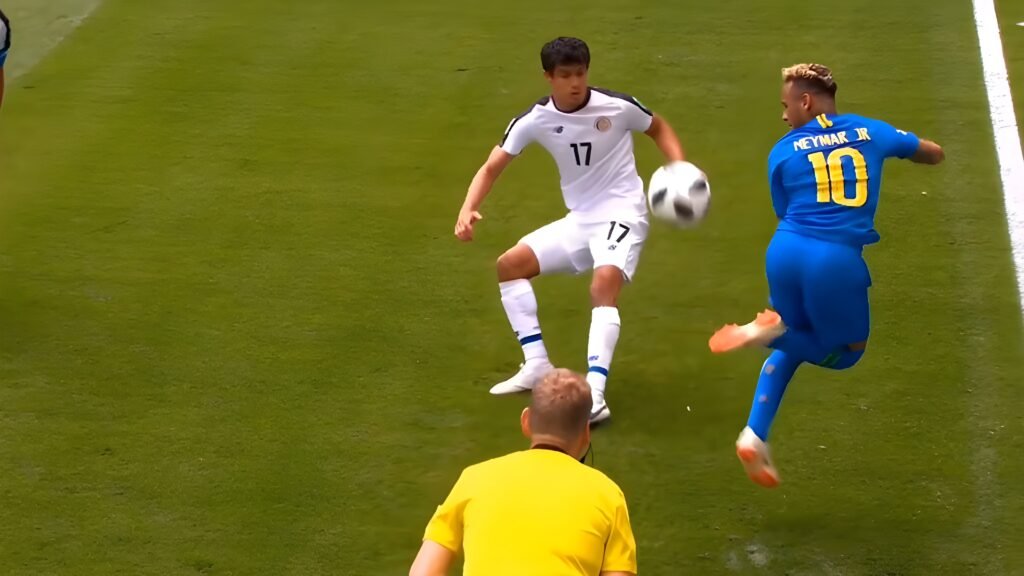
No icon escapes scrutiny. Neymar has spent portions of his career under intense criticism — for perceived diving, for off-pitch controversies, for the injury-plagued years at PSG that seemed to squander his prime. During the 2018 World Cup, the mockery of his rolling theatrics became a global internet meme.
Yet for every critic, ten fans will tell you that Neymar made them fall in love with football — and they mean it without qualification.
The criticism, ironically, often proves the point. Nobody spends that much energy criticising a player they find forgettable. The outrage over his theatrics is itself a testament to how much Neymar commands attention. He occupies space in the cultural conversation the way only the very greatest entertainers do.
His place in the game is already beyond question. He is commonly spoken of as one of football’s all-time greats, and he stands near the top of South America’s international scoring charts. Even more striking, he moved past Pelé in 2023 to become Brazil’s leading scorer of all time, a milestone that feels almost sacred in a nation where football is more than a sport.
And his influence extends beyond records. Youth academies from São Paulo to Seoul now teach the Elastico. Schoolchildren in Lagos and Jakarta attempt rainbow flicks on dusty pitches. That is Neymar’s true legacy — not the trophies alone, but the way he exported the joy of Brazilian street football to every corner of the world, making a new generation fall in love with football in the process.
How Has Neymar’s Impact Shaped Modern Football?
The influence of a truly great player is measured not only in what they achieved, but in what they inspired others to attempt. By that measure, Neymar’s impact on modern football is profound and ongoing.
Tactically, he made opponents and coaches rethink their plans. Stopping a player who can slip past two defenders in the tightest spaces is never simple, especially when he can win free kicks, create numerical advantages with his movement, and switch between wide and central attacking roles with ease.
At Barcelona, his partnership with Messi and Suárez formed one of the most destructive front lines ever, finishing the 2014–15 season with a record-breaking 122 goals for an attacking trio in Spanish football.
Culturally, he moved the needle on how football was consumed. His highlights went viral before “viral football content” was a defined industry. He was among the first players whose skill compilations were shared not by sports channels, but by general entertainment accounts — reaching people who had never watched a match in their lives and making them fall in love with football through a three-minute video.
Generationally, his impact on youth football may be his most enduring legacy. Coaches around the world report that young players cite Neymar as their reason for picking up the game. Kids who might have chosen basketball or cricket or gaming instead chose football because they saw Neymar do something that seemed like a superpower and realised it was a learnable skill. He made dribbling desirable again in an era when coaches often coached it out of young players in favour of safety-first passing.
Neymar’s journey is not over. At 34, back at Santos where he began, he is writing a final chapter that reads more like redemption than retirement. Whether he recaptures his peak or not, the question is almost beside the point. The moments already exist. The goals are scored. The nutmegs are permanent. The memory of a boy from Brazil who played with such outrageous joy that the world stopped to watch — that memory will continue to make people fall in love with football for generations to come.
Because in the end, that is what the beautiful game was always meant to do. Not to be managed. Not to be optimised. But to be played with the soul of a child who just wants to make the crowd gasp — and smile.
And nobody has ever done that quite like Neymar.

I’m a football writer, covering top leagues like the Premier League, La Liga, Bundesliga, Serie A, and Ligue 1. I write about match analysis, football news, tactics, and major tournaments such as the FIFA World Cup, delivering clear, engaging insights for fans.
About The Author