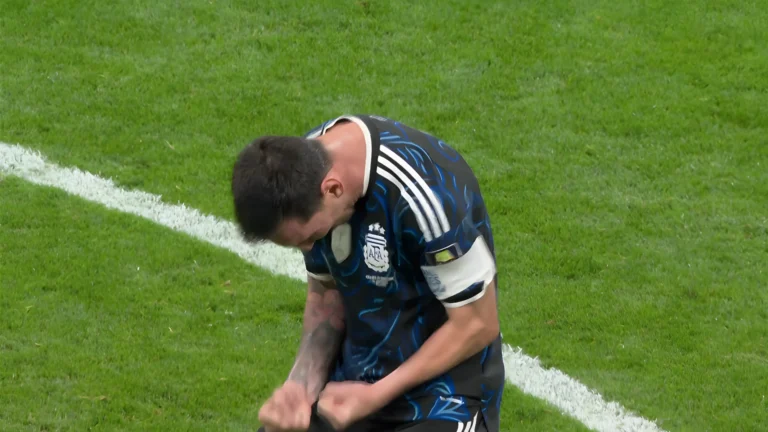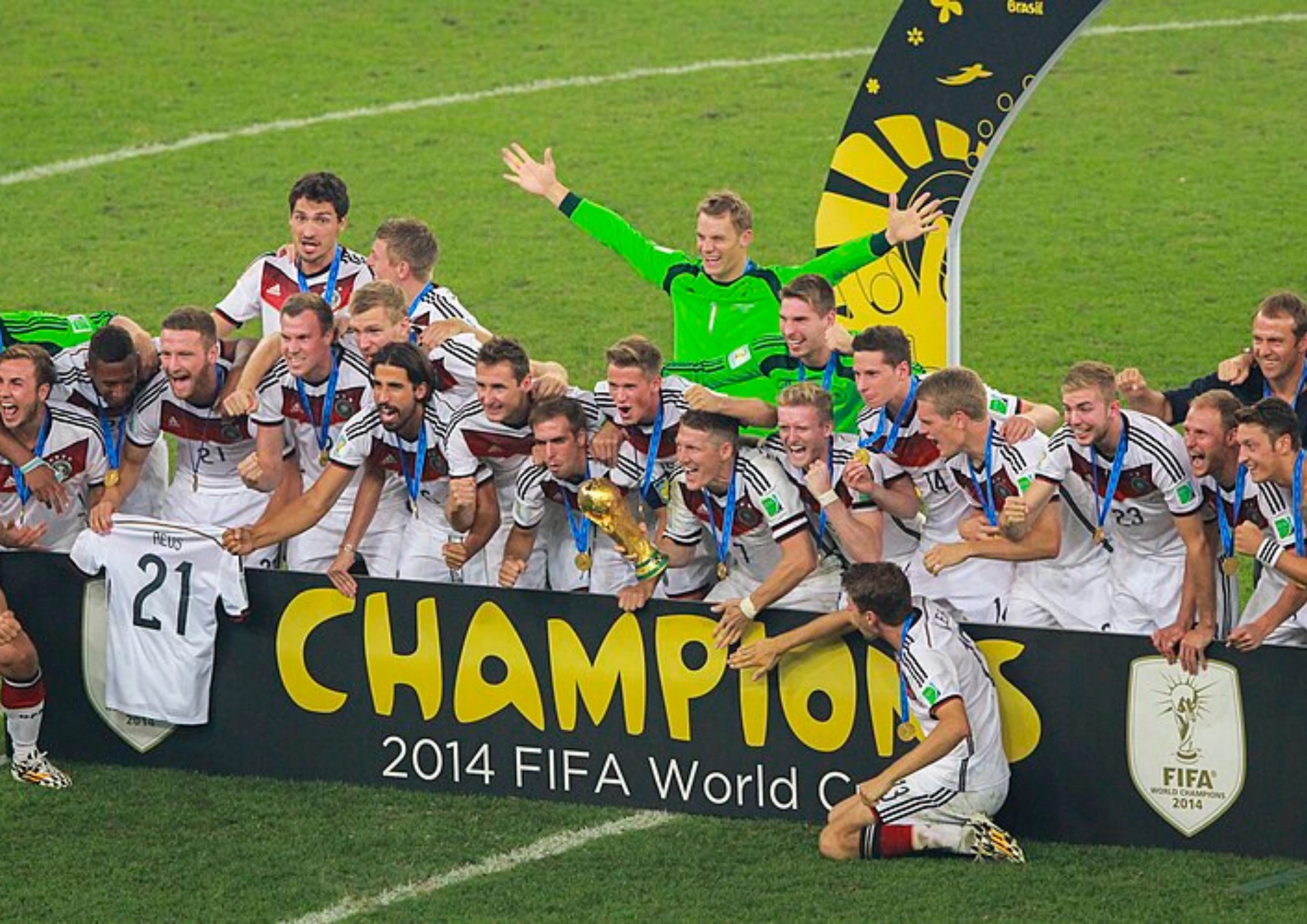
In July 2014, Germany was the best football team on the planet. They dismantled Brazil 7-1 in a semi-final that left the host nation in tears. They beat Argentina in the final with a moment of pure class from Mario Götze. They were complete, dominant and utterly deserving world champions.
Eight years later, Germany were flying home from Qatar having lost to Japan and drawn with Spain. Group stage exit. Again. For the second consecutive World Cup.
The Germany 2026 FIFA World Cup campaign begins in a matter of weeks. And the question the entire footballing world is asking is brutally simple — what has gone so catastrophically wrong with German football?
How Germany Built the Perfect Team — Then Watched It Age Together
The 2014 Germany squad was the product of a decade of planning. After the humiliation of Euro 2000 — when Germany went out in the group stage — the DFB completely rebuilt their youth development system. They invested in academies, coaching education and a new style of possession-based football.
It took 14 years. But when it worked, it worked perfectly.
| 2014 Germany Squad | Age in 2014 | Peak Years |
|---|---|---|
| Manuel Neuer | 28 | 2014–2017 |
| Philipp Lahm | 30 | 2010–2014 |
| Toni Kroos | 24 | 2014–2018 |
| Thomas Müller | 24 | 2014–2021 |
| Mesut Özil | 25 | 2012–2016 |
| Mats Hummels | 25 | 2014–2018 |
| Miroslav Klose | 36 | 2002–2014 |
The problem was structural. This entire generation peaked together — and declined together. By 2018, the same core group was four years older, four years slower, and four years further from their best. Germany kept picking them out of loyalty and reputation rather than form.
Joachim Löw — the manager who masterminded 2014 — stayed in the job four years too long. He was the right man for the rebuild. He was not the right man for the renewal.
The 2018 and 2022 Disasters: What Actually Happened
The 2018 World Cup in Russia was the moment the cracks became craters.
Germany lost their opening game to Mexico. They lost their final group game to South Korea — a team ranked 57th in the world at the time. The defending champions went home without winning a knockout game. It was the most shocking group stage exit in World Cup history.
| Tournament | Result | Where It Went Wrong |
|---|---|---|
| 2014 World Cup | Winners 🏆 | Everything went right |
| 2018 World Cup | Group stage exit | Aging squad, tactical rigidity, no plan B |
| 2022 World Cup | Group stage exit | Lost to Japan, beat Costa Rica, out on goal difference |
| 2026 World Cup | TBD | Rebuilding — but is it enough? |
Four years later in Qatar, Germany showed improvement, but not enough. They beat Costa Rica convincingly. They drew with Spain. But a shock defeat to Japan — who scored twice in the final 15 minutes — meant Germany went out on goal difference despite not actually losing the group.
The common thread across both disasters was identical. Defensive fragility under pressure. A midfield that controlled possession but could not protect a lead. And a squad structure where the top players had been together so long they had stopped surprising each other — let alone their opponents.
The DFB’s Structural Problem Nobody Is Talking About
Beyond tactics and selection, there is a deeper issue with German football that the Germany 2026 FIFA World Cup campaign cannot fix overnight.
The Bundesliga — for decades the engine of German player development — has declined significantly in European relevance. Bayern Munich remain a force, but the rest of the league has fallen behind the Premier League, La Liga and Serie A in terms of quality, investment and competition.
The consequence is direct. German players are developing in a less competitive environment than their Spanish, French and English counterparts. The elite pressure that sharpens a player — playing against world-class opposition every week — is simply less available in the modern Bundesliga than it was in 2005-2014.
| League | UEFA Coefficient Ranking 2025 | German Players in Top 5 Leagues |
|---|---|---|
| Premier League | 1st | 8 |
| La Liga | 2nd | 6 |
| Bundesliga | 3rd | 34 |
| Serie A | 4th | 4 |
| Ligue 1 | 5th | 3 |
Germany’s best young players are still largely developing in the Bundesliga. Their French and Spanish equivalents are developing in the Premier League and Champions League from the age of 17. That gap in competitive experience is measurable — and it shows at World Cups.
The 2026 Squad: Has Germany Finally Fixed It?
Julian Nagelsmann has done something genuinely impressive with the Germany 2026 FIFA World Cup squad. He has been brave where Löw was cautious. He has picked form over reputation. He has built a system that does not rely on any single ageing superstar.
The result is a Germany squad that feels genuinely dangerous for the first time since 2014.
| Player | Age | Club | Why He Matters |
|---|---|---|---|
| Florian Wirtz | 23 | Liverpool | The creative genius — Germany’s best player |
| Jamal Musiala | 23 | Bayern Munich | Unpredictable, direct, brilliant in tight spaces |
| Kai Havertz | 26 | Arsenal | Goals, movement, Premier League proven |
| Joshua Kimmich | 31 | Bayern Munich | Experience, leadership, tactical intelligence |
| Antonio Rüdiger | 33 | Real Madrid | Champions League winner, commanding at the back |
| Jonathan Tah | 31 | Bayern Munich | Dominant in the air, composed on the ball |
| Oliver Baumann | 35 | Hoffenheim | Neuer’s replacement — reliable but unproven at this level |
Wirtz is the headline. He is 23 years old, has won the Bundesliga with Leverkusen and plays with a creativity and calmness that Germany has not had since the peak of Mesut Özil. If Wirtz performs at the level he has shown in 2024-25, Germany will genuinely threaten anyone in this tournament.
Musiala, alongside him, creates a partnership that no international midfield has a clear answer for. Quick, technical, intelligent — they are the most exciting young duo at the entire 2026 World Cup.
Where Germany Can Still Come Unstuck
Despite the optimism, three genuine concerns about the Germany 2026 FIFA World Cup squad cannot be ignored.
The goalkeeper question. Manuel Neuer was one of the greatest goalkeepers in history. His commanding presence, sweeper-keeper ability and leadership set Germany apart for a decade. Oliver Baumann is a competent replacement — but he has never been tested at World Cup level under the kind of pressure Germany’s knockout games will generate.
The defensive depth. Rüdiger, at 33, is still excellent, but one injury to him or Tah opens a significant gap. Germany’s third and fourth choice central defenders are not Champions League standard — and at a World Cup, the difference between your first choice and your backup is always exposed.
The midfield without Kroos. Toni Kroos retired from international football after Euro 2024. His ability to control tempo, spray passes and protect the defence from deep was irreplaceable. Kimmich is excellent but plays differently — more dynamic, less controlling. Germany has not yet found a system that fully accounts for the Kroos-shaped hole in their midfield.
The Honest Prediction for Germany at the 2026 World Cup
| Scenario | Probability |
|---|---|
| Germany reached the semi-finals | 9% |
| Germany exited in the quarter-finals | 28% |
| Germany exited in the Round of 16 | 35% |
| Germany’s shock group stage exit | 20% |
| Germany shock group stage exit | 8% |
The most likely outcome is a quarter-final exit. Germany is good enough to get out of their group — probably comfortably. They have the talent to beat one major opponent in the knockouts. But the squad depth, the goalkeeper uncertainty and the Kroos absence all point to a team that is not quite ready to go all the way.
2026 is a rebuilding tournament for Germany. The real question is not whether they win it — it is whether Wirtz and Musiala use these seven games to announce themselves as the future of world football.
Conclusion
Germany in 2014 was perfect. Germany in 2018 and 2022 was a cautionary tale about what happens when a great generation is held together too long. Germany in 2026 is something genuinely new — younger, braver and more honest about their limitations than any German squad in recent memory.
The catastrophic collapse is over. The rebuild is real. Whether it is finished in time to win a World Cup is a different question entirely.
But for the first time in eight years, Germany is genuinely interesting again. And in tournament football, interesting is where everything starts.
For more 2026 World Cup analysis, read our full breakdown of the World Cup 2026 top teams and our World Cup 2026 predictions.

I’m a football writer, covering top leagues like the Premier League, La Liga, Bundesliga, Serie A, and Ligue 1. I write about match analysis, football news, tactics, and major tournaments such as the FIFA World Cup, delivering clear, engaging insights for fans.
About The Author