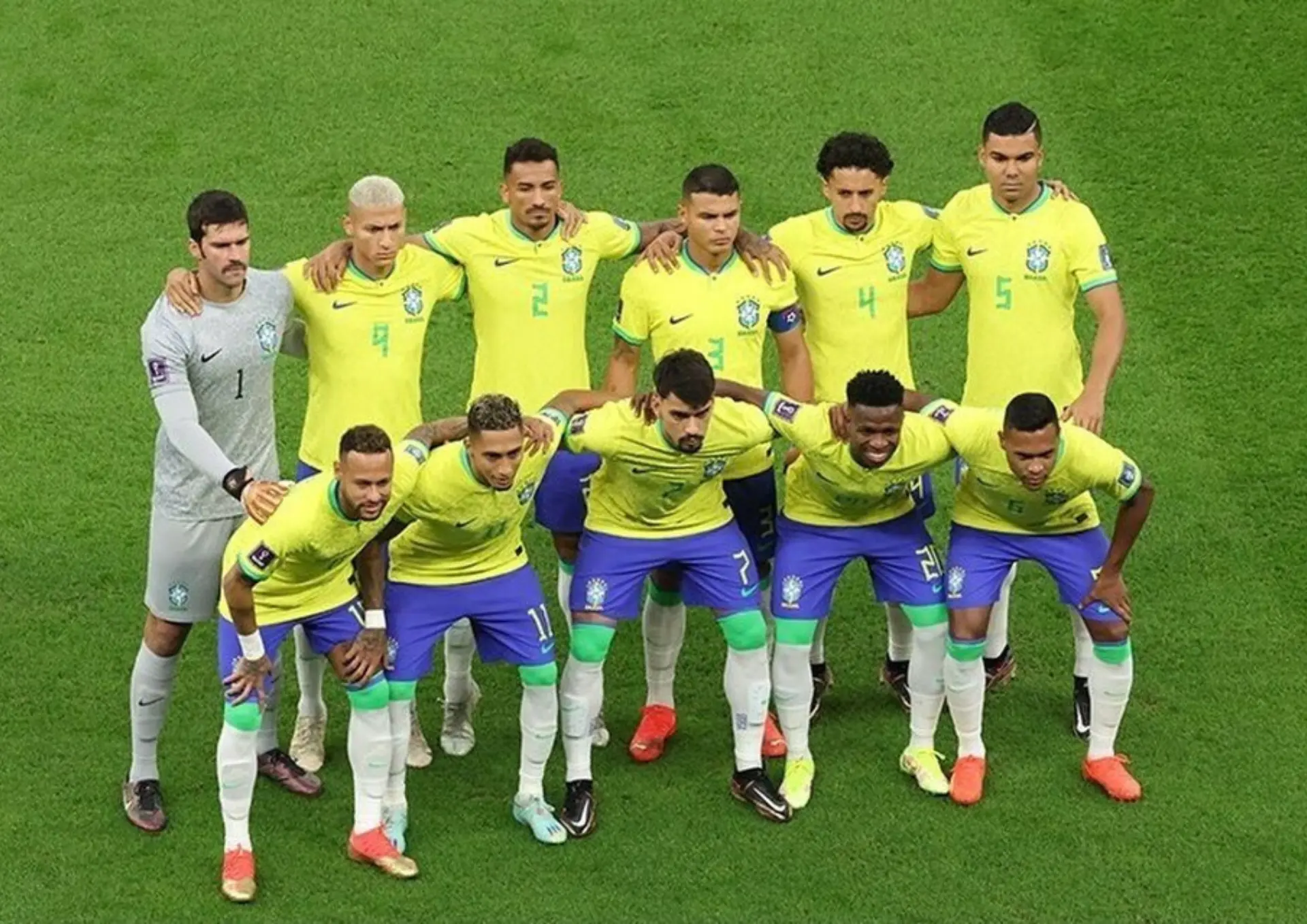
FIFA World Cup 2026 Group C Predictions: Brazil Lead, Morocco Rise & Tough Exits
When the FIFA World Cup 2026 draw was revealed, Group C immediately stood out to both fans and analysts. The group features Brazil, Morocco, Haiti, and Scotland, with fixtures scheduled between June 13 and June 24, 2026.
At first glance, it appears relatively straightforward, with Brazil positioned as the clear favourite. But a deeper look at the dynamics of Group C reveals a far more layered narrative. There is a five-time world champion aiming to end a 24-year title drought, a Moroccan side that made history as the first African nation to reach a World Cup semi-final, a Scottish team returning to the tournament after a 28-year absence, and a Haitian squad stepping onto the World Cup stage for the very first time.
The dynamics of FIFA World Cup 2026 Group C predictions are far more nuanced than they first appear. Brazil arrives with elite individual talent and an unmatched global pedigree, while Morocco brings tactical discipline and recent knockout-stage experience at the highest level.
Scotland adds a different dimension — high pressing intensity, physicality, and a strong collective identity — whereas Haiti enter with the unpredictability of a side playing without pressure, which can often translate into dangerous, fearless performances.
What makes this group particularly compelling is the lack of stylistic overlap. Each team presents a distinct tactical challenge, ensuring that no fixture feels repetitive. While there is a clear favourite, the battle for second place remains genuinely open — a tension that defines the intrigue around Group C predictions.
🇧🇷 Brazil – Clear Favourites or Hidden Weaknesses?
Brazil head into the FIFA World Cup 2026 as clear favourites not only in Group C but among the leading contenders for the title overall.
In attack, Vinícius Júnior is operating at the peak of his powers, offering pace, creativity, and elite-level end product, while Endrick arrives at his first World Cup at just 19, carrying significant expectation as one of the most highly rated young talents in world football.
Under Carlo Ancelotti — a five-time UEFA Champions League winner with vast elite-level experience — Brazil have evolved toward a more balanced tactical identity.
Ancelotti has leaned into pragmatic systems such as a 4-3-3 or 4-2-3-1, prioritising defensive compactness, controlled build-up play, and coordinated pressing rather than relying solely on traditional Brazilian flair. Possession is often circulated through wide areas, with transitions designed to maximise the pace and directness of Vinícius Júnior.
In midfield, Bruno Guimarães and Casemiro are effectively non-negotiable selections, providing the structural backbone of the team. Their ability to dictate tempo, shield the defence, and manage transitions will be central to Brazil’s control in matches throughout the tournament.
The depth available to Brazil in attack is exceptional. Players like Vinícius Júnior, Estevão Willian, Matheus Cunha, and Raphinha all offer starting-calibre quality, giving the team multiple tactical options and profiles in the final third.
The most closely watched variable, however, remains Neymar. His fitness continues to dominate the narrative, with Carlo Ancelotti making it clear that selection will depend strictly on proven form and physical readiness ahead of the squad deadline.
Yet Brazil are not without flaws. The midfield lacks a true long-term successor to Casemiro in the No. 6 role — and at 34, his ability to cover transitions against high-pressing opponents is an emerging concern. That vulnerability can be exposed when Brazil lose possession in advanced areas.
There is also no definitive elite central striker for decisive moments, with much of the goal-scoring burden falling on wide players like Vinícius Júnior and Raphinha.
Even so, in most FIFA World Cup 2026 Group C projections, Brazil still comfortably top the table. Their ceiling — in terms of individual quality, depth, and tactical flexibility — remains significantly higher than any other side in the group, making them extremely difficult to displace over three matches.
Why they top the group: World-class forward line, experienced management, tactical flexibility, and a burning desire to end 24 years without a World Cup title.
🇲🇦 Morocco – Can They Repeat Their World Cup Magic?
Morocco’s run at the FIFA World Cup 2022 remains the benchmark for any African or Arab nation — a historic semi-final appearance that included eliminating both Spain and Portugal.
The central question heading into the FIFA World Cup 2026 is whether the Atlas Lions can replicate that level of performance. Reproducing such a run requires not just tactical discipline and defensive solidity, but also the same level of cohesion, resilience, and clinical execution in key moments — factors that are notoriously difficult to sustain across tournaments.
Morocco arrive at the FIFA World Cup 2026 ranked 8th in the world, reflecting the sustained progress of their current project rather than a one-off peak.
Crucially, the core of the squad — Achraf Hakimi, Nayef Aguerd, Brahim Díaz, and Ismael Saibari — remains largely intact. This continuity suggests stability rather than transition in the traditional sense.
Morocco is not rebuilding from scratch; instead, they are evolving within the same tactical and cultural framework that powered their 2022 success — refining rather than resetting, which makes them a particularly dangerous and well-drilled side heading into Group C.
Captain Achraf Hakimi remains the headline figure for Morocco, widely regarded as the best right-back in world football and a constant attacking outlet from deep.
He is supported by high-level talent across the pitch, including Noussair Mazraoui, who adds defensive versatility and composure, and the emerging creativity of Bilal El Khannouss.
Meanwhile, Brahim Díaz arrives in strong form after finishing as the top scorer at the Africa Cup of Nations 2025 with five goals, maintaining an impressive strike rate of roughly one goal every two games for his national team.
Defensively, Morocco remains one of the most structurally disciplined sides in world football. Their organisation without the ball is elite — compact lines, intelligent spacing, and a clear willingness to absorb pressure before striking on the counter.
They are entirely comfortable defending deep and exploiting transitions, a strategy that proved highly effective in the FIFA World Cup 2022.
The challenge arises when the tactical script flips. Against opponents who sit back, Morocco can struggle to break down low blocks. The absence of a consistently clinical, high-volume striker means they sometimes lack the cutting edge required to convert territorial dominance into goals — a limitation that could become decisive in tightly balanced Group C fixtures.
There is also a layer of uncertainty around managerial continuity for Morocco. Under new head coach Mohamed Ouahbi, the primary challenge is establishing tactical cohesion in a limited preparation window before the FIFA World Cup 2026 begins.
Despite that, recent qualifying performances suggest the core identity remains intact. Morocco has continued to display the defensive organisation that defined their success in the FIFA World Cup 2022, while also finding contributions in attack. Ismael Saibari added three goals during the campaign, and Ayoub El Kaabi contributed four — indicators that the team can still produce an end product even within a structured system.
Why they finish second: Tournament experience, defensive organisation, world-class wide threats, and a squad that has been here before and knows how to survive the group stage.
🏴 Scotland – Brave Fight but Not Enough?
Scotland return to the FIFA World Cup 2026 for the first time since 1998, carrying momentum from an impressive qualifying campaign that included a standout 4–2 victory over Denmark.
Under Steve Clarke, the team has developed a clearly defined identity built on collective discipline, aggressive pressing, and strong team cohesion. Rather than relying on individual brilliance, Scotland functions as a synchronised unit — a structure that can disrupt more technically gifted sides and make them a difficult opponent in tournament conditions.
Scotland’s core strengths are well established. They apply relentless pressure out of possession, thrive in the intensity of one-off matches, and operate with a strong sense of unity that often allows them to outperform expectations.
Their structure and physicality make them a difficult side to break down, capable of disrupting rhythm and forcing opponents into uncomfortable, high-pressure situations. In tournament football, those qualities are invaluable — Scotland may lack elite star power, but they compensate with cohesion, work rate, and tactical discipline that can trouble any opponent.
But in most FIFA World Cup 2026 Group C predictions, Scotland consistently falls into third place — and the reasoning is straightforward.
Key concerns include uncertainty around goalkeeper availability and a limited ability to retain possession against elite opposition. Against a side like Brazil, Scotland are likely to spend extended periods without the ball, forced into a reactive shape rather than dictating play.
While their structure and intensity remain assets, the squad lacks the top-end individual quality required to consistently turn pressure into goals, particularly against well-organised teams such as Morocco. Over the course of a group stage, that gap in attacking efficiency could prove decisive.
The Scotland vs Morocco fixture on June 19 in Boston is effectively their qualification decider. Win that, and everything is alive. Lose it, and their World Cup dream ends in the group stage. Scotland will give Morocco an uncomfortable evening — but Morocco’s superior defensive structure and experience at this level tips that crucial match in the Atlas Lions’ favour.
Where they fall short: Lack of world-class attacking options, vulnerability against technically superior opponents, and the brutal reality of facing two top-10 sides in the group.
🇭🇹 Haiti – Underdogs with Nothing to Lose
Haiti’s presence in FIFA World Cup 2026 Group C predictions is already a milestone achievement, marking their debut on the global stage.
While they enter as clear underdogs, Haiti are not simply there to make up the numbers. Under head coach Sébastien Migné, the team has developed a defined structure built on defensive discipline, physicality, and quick transitions.
Their squad, strengthened by diaspora talent, adds an extra layer of unpredictability — combining players developed in different footballing systems into a cohesive unit. That blend of organisation and athleticism means Haiti could be more competitive than many expect, particularly in matches where they can absorb pressure and exploit space on the break.
Haiti are expected to operate primarily in a 4-2-3-1 or shift into a compact 4-4-2 shape without the ball, prioritising defensive structure and discipline. Their game plan revolves around staying compact, winning possession, and transitioning forward quickly and directly.
A key focal point in attack will be Frantzdy Pierrot, whose physical presence allows Haiti to hold the ball up, relieve pressure, and bring others into play during counter-attacks.
Beyond tactics, the atmosphere could be a significant factor. With a large Haitian diaspora across the United States and Canada, their matches are likely to feel far from neutral — creating an energetic, emotionally charged environment that could further fuel their performances.
Realistically, Haiti’s main target is a dignified performance and perhaps a single memorable result. The Scotland match on June 13 in Boston is their most winnable game and a genuine must-win if they harbour any hopes of surprising the group. Against Brazil and Morocco, the technical gap is simply too vast. But football loves a story, and Haiti’s debut at this stage is one worth following closely.
Key Matches That Will Decide Group C
Brazil vs Morocco — June 13, MetLife Stadium (New York/New Jersey)
This opening Group C clash between Brazil and Morocco sets the immediate tone for how the group may unfold.
Brazil arrive with the highest ceiling in the group, backed by elite attacking depth and individual quality across the pitch. Morocco, however, possesses the tactical discipline and structural maturity to make this a far more competitive contest than the talent gap alone might suggest.
Defensively, Morocco have the organisation to frustrate Brazil, and their transition threat — particularly through Achraf Hakimi and Brahim Díaz — gives them a genuine route to goal even against top-tier opposition.
That said, the difference in individual quality remains significant. Over 90 minutes, Brazil’s attacking options are likely to create enough high-value chances to edge the result. The most realistic outcomes are a narrow Brazil win or a tightly contested draw, rather than a clear Moroccan victory.
Morocco vs Scotland — June 19, Gillette Stadium (Boston)
This fixture between Scotland and Morocco is likely to be decisive in the race for second place in Group C.
For Scotland, the equation is simple — a win is essential to remain in serious contention. Morocco, by contrast, may only need a draw to stay firmly on track for qualification to the knockout stage.
On paper, Morocco holds a clear edge in squad quality, tournament experience, and tactical structure. Their defensive organisation and ability to absorb pressure before countering — particularly through players like Achraf Hakimi — align well against Scotland’s high-pressing, high-intensity approach.
While Scotland will look to disrupt rhythm and force errors, Morocco’s composure under pressure and efficiency in transition make them the more probable winners.
Scotland vs Haiti — June 13, Gillette Stadium (Boston)
This opener between Scotland and Haiti is effectively non-negotiable for Scotland.
They must take all three points to build any realistic pathway out of Group C. Dropping points here would immediately place them under extreme pressure heading into matches against Brazil and Morocco — fixtures where opportunities will be far harder to come by.
Haiti, meanwhile, are unlikely to make things straightforward. Their defensive structure, physical approach, and transition-based game can disrupt rhythm and force mistakes. However, over 90 minutes, the technical and tactical gap between the sides remains significant.
For Scotland, anything less than a win would leave their FIFA World Cup 2026 campaign hanging by a thread before it has truly begun.
Final Group C Table Prediction
| Position | Team | Played | Won | Drawn | Lost | GF | GA | Points |
|---|---|---|---|---|---|---|---|---|
| 1st | 🇧🇷 Brazil | 3 | 3 | 0 | 0 | 8 | 2 | 9 |
| 2nd | 🇲🇦 Morocco | 3 | 2 | 0 | 1 | 4 | 3 | 6 |
| 3rd | 🏴 Scotland | 3 | 1 | 0 | 2 | 3 | 5 | 3 |
| 4th | 🇭🇹 Haiti | 3 | 0 | 0 | 3 | 1 | 6 | 0 |
Brazil take all nine points on the back of Vinicius and Endrick’s brilliance, Morocco finish as a comfortable second, Scotland earn a consolation win over Haiti, and Haiti leave with their heads held high and a debut World Cup experience to remember.
Can Scotland Still Qualify as a Best Third-Place Team?
This is where FIFA World Cup 2026 Group C predictions scenarios become genuinely intriguing for Scotland.
Under the expanded format, the top two teams in each group qualify automatically, but the eight best third-placed teams also advance — a structural shift that significantly improves Scotland’s margin for error.
With 12 groups producing 12 third-place finishers, only four are eliminated. That means Scotland could realistically progress even without finishing in the top two, provided they accumulate enough points and maintain a competitive goal difference.
In practical terms, a third-place finish with three to four points could be enough to sneak through, giving Scotland a genuine lifeline even if they fall short against stronger sides like Brazil or Morocco.
If Scotland beat Haiti comfortably, earn even a draw against either Brazil or Morocco, and build a respectable goal difference, they stand a decent chance of accumulating enough points (4–5) to qualify as one of the eight best third-placed teams. The 2026 format is far more forgiving than previous editions, and Scotland’s goal-difference management across all three games becomes just as important as the results themselves.
What needs to go right: A win over Haiti, goals for and minimal goals against, and some favour from other groups where third-place teams perform poorly. It is not the most likely scenario, but it is absolutely plausible — and Scotland fans will be watching every other group with intense interest.
Biggest Surprise & Potential Upset in Group C
The most plausible upset scenario in FIFA World Cup 2026 Group C predictions revolves around Morocco taking points off Brazil in the opening match.
If Achraf Hakimi is operating at peak level, Brahim Díaz finds pockets of space between the lines, and Morocco’s defensive block holds firm under sustained pressure, then a low-scoring result — such as 1–1 or even 0–0 — is entirely within reach.
Crucially, this would not be an anomaly. Morocco’s victories over Spain and Portugal at the FIFA World Cup 2022 demonstrated a repeatable formula: defensive discipline, tactical clarity, and ruthless efficiency in transition.
If that same structure is executed effectively, Brazil can be contained — and in tournament football, that is often all it takes to produce a result that reshapes the entire group.
Morocco remains the most compelling dark horse not just in Group C, but in the broader FIFA World Cup 2026 landscape.
A second-place finish in the group could place them on a highly intriguing knockout pathway, where their defensive structure, tactical discipline, and set-piece efficiency make them a difficult opponent for any higher-ranked side.
They also arrive with a major psychological boost, having been officially crowned champions of the Africa Cup of Nations in March 2026. That success reinforces belief within the squad and strengthens the sense that their 2022 run was not a one-off, but part of a sustained upward trajectory.
A secondary upset worth watching: Scotland starting the tournament with a surprisingly strong 2-0 win over Haiti could shift the narrative around the Scots entirely and put real pressure on Morocco heading into their June 19 clash.
Breakout Stars to Watch in Group C
| Player | Team | Position | Why Watch |
|---|---|---|---|
| Endrick | 🇧🇷 Brazil | Striker | 19-year-old with explosive big-game temperament |
| Bilal El Khannouss | 🇲🇦 Morocco | Attacking Mid | Creative spark and key playmaker under Ouahbi |
| Scott McTominay | 🏴 Scotland | Midfielder | Scotland’s most technically gifted midfield threat |
| Wilson Isidor | 🇭🇹 Haiti | Forward | Haiti’s most dangerous attacking outlet |
Final Verdict – Who Advances & Who Falls Short
Bringing all the FIFA World Cup 2026 Group C predictions together, the picture becomes fairly clear, even if there is still plenty of drama to be played out across those three matchdays in June.
Brazil are widely expected to finish as Group C winners at the FIFA World Cup 2026.
They possess the highest ceiling in the group, supported by exceptional attacking depth and elite individual quality across multiple positions. Under Carlo Ancelotti, Brazil have also developed the tactical discipline required to manage games efficiently — capable of securing results even when not at their fluent best.
Given that combination of quality and structure, topping Group C is the baseline expectation. Anything less would constitute a significant upset.
Morocco is widely viewed as a strong candidate to finish second in FIFA World Cup 2026 Group C.
Their defensive stability, tournament experience, and tactical discipline give them a clear edge in the race for qualification, even with competition from spirited teams like Scotland.
Morocco’s strength lies in its structure and game management — they are comfortable without the ball, difficult to break down, and efficient in transition. With elite-level European club experience across the squad, they possess the maturity required to navigate tight group-stage scenarios.
As a result, they are well-positioned to secure second place and advance to the knockout rounds, reinforcing their status as one of the most dangerous mid-tier powers in the tournament.
Scotland is projected to finish third in FIFA World Cup 2026 Group C, but that may not mark the end of their campaign.
Even with a likely exit from the top two positions, Scotland retain enough structure, work rate, and collective quality to remain in contention for progression via the expanded format. With the system allowing the best third-placed teams across groups to advance, their qualification chances ultimately depend on points accumulation and comparative group standings elsewhere.
In practical terms, Scotland’s blend of resilience and intensity means they could still emerge as one of the stronger third-placed sides, keeping their knockout-stage hopes alive despite falling short of automatic qualification.
Haiti exited in fourth place, but their debut World Cup appearance will be celebrated for years to come in a nation where football passion runs as deep as anywhere on earth.
The FIFA World Cup 2026 Group C predictions ultimately tell the story of a group that looks settled on paper but contains enough tactical intrigue, star quality, and emotional backstory to produce some of the most-watched matches of the entire tournament opening round.
Frequently Asked Questions (FAQs)
Who will top FIFA World Cup 2026 Group C?
Brazil are overwhelming favourites to top Group C. With Vinicius Junior, Endrick, Raphinha, and a squad managed by Carlo Ancelotti, they possess the deepest attacking talent in the group by a considerable margin.
Can Morocco reach the knockout stage from Group C?
Yes, and most FIFA World Cup 2026 Group C predictions have Morocco finishing second. Their defensive organisation, the individual class of Hakimi and Brahim Diaz, and their tournament experience all point toward a second-place finish and passage to the Round of 32.
Will Scotland qualify from Group C?
Scotland is predicted to finish third, which may still be enough. The 2026 format sends the eight best third-placed teams through, so if Scotland beat Haiti and perform respectably in their other matches, they could still progress despite not finishing in the top two.
Is this Haiti’s first FIFA World Cup?
Yes. FIFA World Cup 2026 marks Haiti’s first-ever World Cup appearance, making their presence in Group C a genuinely historic milestone for Haitian football.
Which is the most important match in Group C?
Morocco vs Scotland on June 19 in Boston is the match that most analysts consider the de facto second-place decider. A Morocco win all but confirms their progression and ends Scotland’s automatic qualification hopes, while a Scotland win would throw the group wide open heading into the final matchday.
Also Read:-
FIFA World Cup 2026 Group D Predictions: Türkiye Favorites, USA Strong Run & Two Early Exits

I’m a football writer, covering top leagues like the Premier League, La Liga, Bundesliga, Serie A, and Ligue 1. I write about match analysis, football news, tactics, and major tournaments such as the FIFA World Cup, delivering clear, engaging insights for fans.
About The Author


2 thoughts on “FIFA World Cup 2026 Group C Predictions: Brazil Dominate, Morocco Surprise & Scotland Exit”