UEFA Champions League Winners List (1956–2025) – Full History & Records
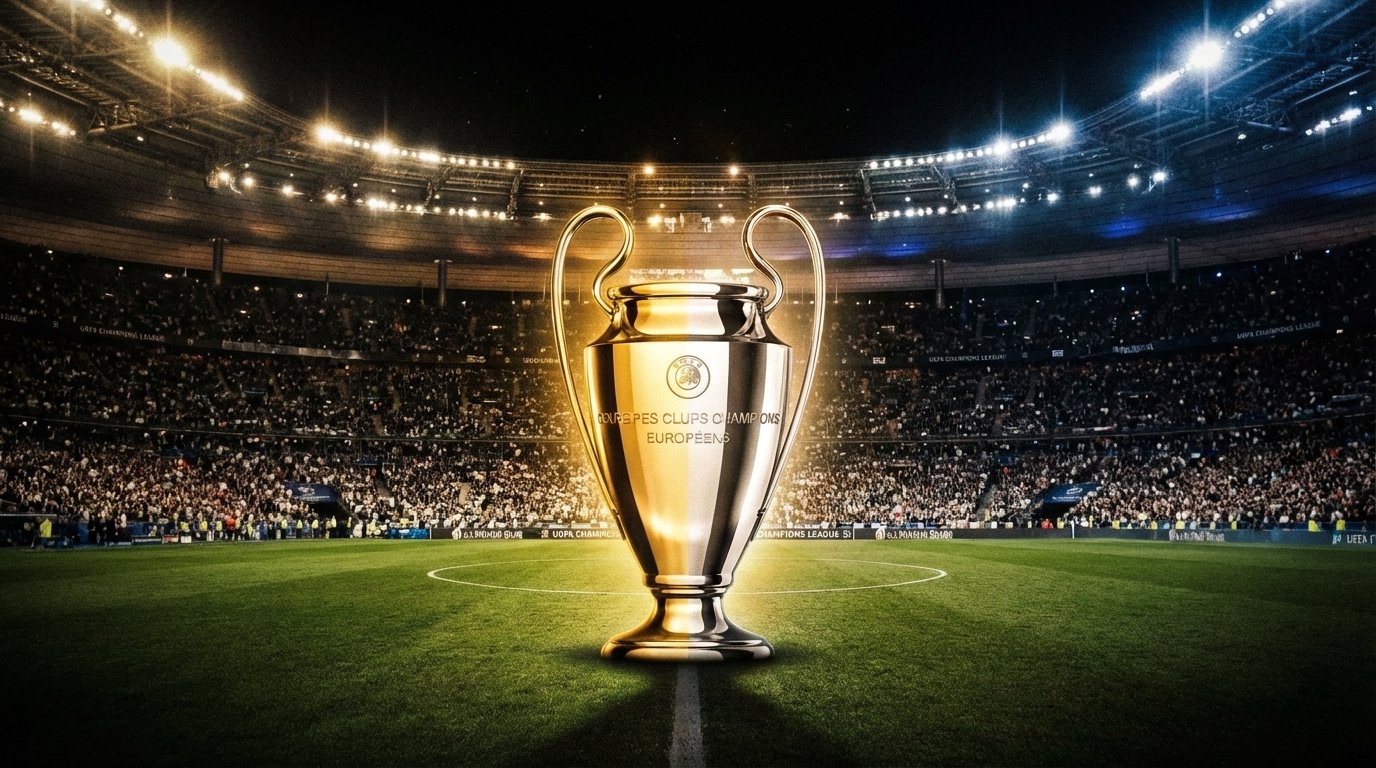
Few sporting events on Earth command the kind of reverence, passion, and global viewership that the UEFA Champions League does. Every year, Europe’s finest football clubs battle through months of qualification, group stages, and knockout rounds for one single ambition: to lift the most coveted trophy in club football. For fans, players, and managers alike, winning the Champions League represents the pinnacle of football achievement.
This article presents the complete Champions League winners list from 1956 to 2025, breaking down the tournament decade by decade, exploring records, celebrating legendary finals, and highlighting the clubs and countries that have defined European football. Whether you’re a die-hard supporter or a football history enthusiast, this guide is your definitive resource.
What is the UEFA Champions League?
The UEFA Champions League is an annual club football competition organised by UEFA (Union of European Football Associations), the governing body of football across Europe. It brings together the top clubs from each of UEFA’s 55 member associations, creating a tournament that spans from August to May every season.
The competition was launched in the 1955–56 season under the name the European Champion Clubs’ Cup, or simply the European Cup. Originally, only national league champions were eligible to compete. That changed gradually, and in 1992, the tournament was rebranded as the UEFA Champions League, introducing a group stage format and allowing runners-up from stronger leagues to participate. The modern format, with its iconic anthem and global broadcast reach, cemented the competition’s status as the biggest club tournament in world sport.
Complete Champions League Winners List (1956–2025)
Below is the full Champions League winners list from the very first edition in 1956 through to the 2025 final.
| Year | Winner | Runner-Up | Score |
|---|---|---|---|
| 1956 | Real Madrid | Stade de Reims | 4–3 |
| 1957 | Real Madrid | Fiorentina | 2–0 |
| 1958 | Real Madrid | AC Milan | 3–2 (AET) |
| 1959 | Real Madrid | Stade de Reims | 2–0 |
| 1960 | Real Madrid | Eintracht Frankfurt | 7–3 |
| 1961 | Benfica | Barcelona | 3–2 |
| 1962 | Benfica | Real Madrid | 5–3 |
| 1963 | AC Milan | Benfica | 2–1 |
| 1964 | Internazionale | Real Madrid | 3–1 |
| 1965 | Internazionale | Benfica | 1–0 |
| 1966 | Real Madrid | Partizan | 2–1 |
| 1967 | Celtic | Internazionale | 2–1 |
| 1968 | Manchester United | Benfica | 4–1 (AET) |
| 1969 | AC Milan | Ajax | 4–1 |
| 1970 | Feyenoord | Celtic | 2–1 (AET) |
| 1971 | Ajax | Panathinaikos | 2–0 |
| 1972 | Ajax | Internazionale | 2–0 |
| 1973 | Ajax | Juventus | 1–0 |
| 1974 | Bayern Munich | Atlético Madrid | 4–0 (replay) |
| 1975 | Bayern Munich | Leeds United | 2–0 |
| 1976 | Bayern Munich | Saint-Étienne | 1–0 |
| 1977 | Liverpool | Borussia Mönchengladbach | 3–1 |
| 1978 | Liverpool | Club Brugge | 1–0 |
| 1979 | Nottingham Forest | Malmö | 1–0 |
| 1980 | Nottingham Forest | Hamburg | 1–0 |
| 1981 | Liverpool | Real Madrid | 1–0 |
| 1982 | Aston Villa | Bayern Munich | 1–0 |
| 1983 | Hamburg | Juventus | 1–0 |
| 1984 | Liverpool | Roma | 1–1 (4–2 pens) |
| 1985 | Juventus | Liverpool | 1–0 |
| 1986 | Steaua București | Barcelona | 0–0 (2–0 pens) |
| 1987 | Porto | Bayern Munich | 2–1 |
| 1988 | PSV Eindhoven | Benfica | 0–0 (6–5 pens) |
| 1989 | AC Milan | Steaua București | 4–0 |
| 1990 | AC Milan | Benfica | 1–0 |
| 1991 | Red Star Belgrade | Marseille | 0–0 (5–3 pens) |
| 1992 | Barcelona | Sampdoria | 1–0 (AET) |
| 1993 | Marseille | AC Milan | 1–0 |
| 1994 | AC Milan | Barcelona | 4–0 |
| 1995 | Ajax | AC Milan | 1–0 |
| 1996 | Juventus | Ajax | 1–1 (4–2 pens) |
| 1997 | Borussia Dortmund | Juventus | 3–1 |
| 1998 | Real Madrid | Juventus | 1–0 |
| 1999 | Manchester United | Bayern Munich | 2–1 |
| 2000 | Real Madrid | Valencia | 3–0 |
| 2001 | Bayern Munich | Valencia | 1–1 (5–4 pens) |
| 2002 | Real Madrid | Bayer Leverkusen | 2–1 |
| 2003 | AC Milan | Juventus | 0–0 (3–2 pens) |
| 2004 | Porto | Monaco | 3–0 |
| 2005 | Liverpool | AC Milan | 3–3 (3–2 pens) |
| 2006 | Barcelona | Arsenal | 2–1 |
| 2007 | AC Milan | Liverpool | 2–1 |
| 2008 | Manchester United | Chelsea | 1–1 (6–5 pens) |
| 2009 | Barcelona | Manchester United | 2–0 |
| 2010 | Internazionale | Bayern Munich | 2–0 |
| 2011 | Barcelona | Manchester United | 3–1 |
| 2012 | Chelsea | Bayern Munich | 1–1 (4–3 pens) |
| 2013 | Bayern Munich | Borussia Dortmund | 2–1 |
| 2014 | Real Madrid | Atlético Madrid | 4–1 (AET) |
| 2015 | Barcelona | Juventus | 3–1 |
| 2016 | Real Madrid | Atlético Madrid | 1–1 (5–3 pens) |
| 2017 | Real Madrid | Juventus | 4–1 |
| 2018 | Real Madrid | Liverpool | 3–1 |
| 2019 | Liverpool | Tottenham Hotspur | 2–0 |
| 2020 | Bayern Munich | Paris Saint-Germain | 1–0 |
| 2021 | Chelsea | Manchester City | 1–0 |
| 2022 | Real Madrid | Liverpool | 1–0 |
| 2023 | Manchester City | Internazionale | 1–0 |
| 2024 | Real Madrid | Borussia Dortmund | 2–0 |
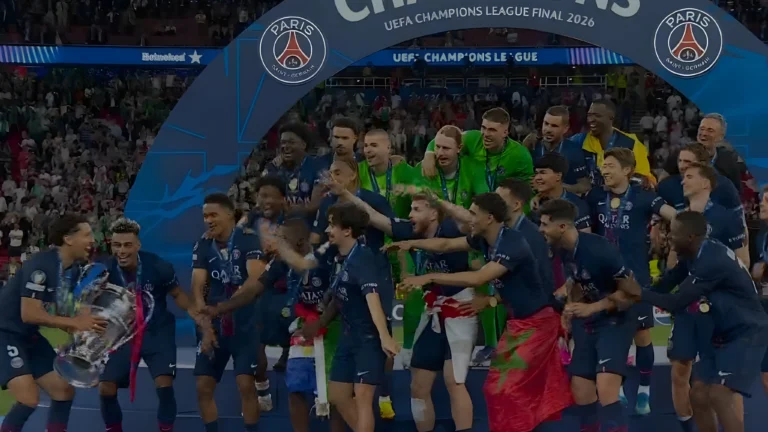
| 2025 | Paris Saint-Germain | Internazionale | 5–0 |
Champions League Winners by Decade
1950s–1960s: Real Madrid’s Stranglehold
The tournament’s early years were dominated by one club. Real Madrid captured the first five European Cups in a row from 1956 to 1960, a feat no other team has ever matched. Their 7–3 win over Eintracht Frankfurt in the 1960 final at Hampden Park is still considered one of the finest displays in a major final. After Benfica and Internazionale interrupted that run in the early 1960s, Real Madrid returned to claim the trophy again in 1966, cementing their status as European football royalty.
1970s: Ajax and Bayern Munich Rewrite the Rules
The 1970s saw a tactical revolution unfold on European stages. Dutch masters Ajax, under the influence of Johan Cruyff and Total Football, won three consecutive titles from 1971 to 1973. Bayern Munich then took over, winning three in a row from 1974 to 1976. English clubs also announced themselves: Liverpool won the European Cup in 1977 and 1978, while Nottingham Forest — a remarkable story — claimed back-to-back titles in 1979 and 1980 under Brian Clough.
1980s: The Competitive Era
The 1980s were an era of genuine variety across the Champions League winners’ list. Liverpool won again in 1981 and 1984. Aston Villa, Hamburg, Juventus, Steaua București, Porto, and PSV Eindhoven all claimed the prize. AC Milan closed the decade emphatically, winning in 1989 and 1990 under Arrigo Sacchi and a squad that included Dutch trio Marco van Basten, Frank Rijkaard, and Ruud Gullit. English clubs were banned from the competition for five years following the 1985 Heysel Stadium disaster, reshaping the competitive landscape of the era.
1990s: The Birth of the Modern Champions League
1992 marked the transition from the European Cup to the UEFA Champions League, introducing a group stage and a more commercial, globally-focused format. Barcelona, Ajax, Juventus, Borussia Dortmund, and Real Madrid all won during this decade. Manchester United’s dramatic triumph in 1999 — scoring twice in injury time to beat Bayern Munich — became one of the most iconic moments in football history, and a defining entry in any Champions League winners list discussion.
2000s–2010s: The Era of Domination
The 2000s and 2010s were largely defined by Spanish football. Real Madrid, Barcelona, and occasionally Atlético Madrid — though they famously never won it — dominated the competition. Real Madrid alone won the title in 2000, 2002, 2014, 2016, 2017, and 2018. Barcelona won in 2006, 2009, 2011, and 2015. AC Milan, Liverpool, Chelsea, Inter Milan, Porto, and Manchester United also contributed memorable chapters to the Champions League winners’ list during this period.
2020s: A New Era Begins
Manchester City finally ended their long wait in 2023, beating Inter Milan 1–0 in Istanbul to give manager Pep Guardiola his third Champions League title across different clubs. Real Madrid won again in 2022 and 2024. Then came 2025, and a seismic moment in football history.
Clubs With the Most Champions League Titles
Real Madrid is the competition’s most successful club, with 15 titles, including the very first edition. Their lead over the next-best sides is huge. Here’s the Champions League winners list by number of trophies:
| Rank | Club | Country | Titles |
|---|---|---|---|
| 🥇 1 | Real Madrid | Spain | 15 |
| 🥈 2 | AC Milan | Italy | 7 |
| 🥉 3 | Bayern Munich | Germany | 6 |
| 3 | Liverpool | England | 6 |
| 5 | Barcelona | Spain | 5 |
| 6 | Ajax | Netherlands | 4 |
| 7 | Internazionale | Italy | 3 |
| 7 | Manchester United | England | 3 |
| 9 | Juventus | Italy | 2 |
| 9 | Benfica | Portugal | 2 |
| 9 | Porto | Portugal | 2 |
| 9 | Nottingham Forest | England | 2 |
| 9 | Chelsea | England | 2 |
Real Madrid’s 15 titles even surpass the combined total of AC Milan, Bayern Munich, and Liverpool, highlighting a level of dominance that goes far beyond short-term success.
Country-Wise Champions League Winners
The Champions League winners list by country reveals the geographic concentration of European football power.
| Country | Titles | Top Club |
|---|---|---|
| Spain | 20 | Real Madrid (15) |
| England | 15 | Liverpool (6) |
| Italy | 12 | AC Milan (7) |
| Germany | 8 | Bayern Munich (6) |
| Netherlands | 6 | Ajax (4) |
| Portugal | 4 | Benfica (2), Porto (2) |
| France | 2 | Marseille (1), PSG (1) |
| Scotland | 1 | Celtic |
| Romania | 1 | Steaua București |
| Yugoslavia | 1 | Red Star Belgrade |
Spain has produced the most Champions League winners, with 20 titles coming from just two clubs. England follows with 15 wins spread across a record six clubs, while Italy has claimed 12 titles through three clubs. In the modern era, the Premier League and La Liga have been the main sources of Champions League success, regularly fielding teams that advance deep into the knockout stages.
Memorable Champions League Finals
No Champions League winners list is complete without revisiting the finals that stopped the world.
2005: The Miracle of Istanbul. Liverpool trailed AC Milan 3–0 at half-time in Istanbul. What followed was the most stunning comeback in Champions League history. Goals from Steven Gerrard, Vladimir Smicer, and Xabi Alonso in a six-minute second-half blitz drew Liverpool level at 3–3. They then won on penalties. It is universally regarded as the greatest final ever played.
1999: Fergie Time at the Camp Nou, Manchester United trailed Bayern Munich 1–0 deep into injury time in Barcelona. Substitutes Teddy Sheringham and Ole Gunnar Solskjær scored in the 91st and 93rd minutes to gift Sir Alex Ferguson the treble. The disbelief on the Bayern Munich bench as the full-time whistle blew remains one of the most replayed images in football history.
2025: PSG’s Historic Breakthrough, After years of heavy spending, disappointment, and near misses, Paris Saint-Germain finally captured Europe’s biggest prize — and did so in emphatic style. PSG won the 2025 final 5–0, giving French football only its second triumph in the competition since Marseille’s 1993 success. The scoreline was the largest margin ever seen in a Champions League final, as no side had previously won by more than four goals. Teenager Désiré Doué scored twice, Achraf Hakimi struck against his former club, and four goals were scored or assisted by teenagers, turning the match into a defining statement for Luis Enrique’s new-look PSG.
Interesting Facts & Records
Completing the Champions League winners list story requires a look at some extraordinary statistics and records:
- Most titles (club): Real Madrid with 15 titles — more than any other nation’s total clubs combined in most cases.
- Most titles (country): Spain, with 20 titles, driven primarily by Real Madrid and Barcelona.
- Biggest final win: PSG’s 5–0 win over Inter Milan in 2025 set a new record for the biggest victory in a Champions League final.
- Most decorated manager: Carlo Ancelotti is the most successful manager in Champions League history, with five titles: two with AC Milan in 2003 and 2007, and three with Real Madrid in 2014, 2022, and 2024.
- Most medals as a player: Francisco Gento, Dani Carvajal, Nacho, Toni Kroos, and Luka Modrić all share the record for the most European Cup/Champions League medals, with six apiece.
- Most finals without winning: Atlético Madrid reached three Champions League finals — in 2014, 2016, and 2018 — but lost all three, including two defeats against Real Madrid.
- Total clubs to win: A total of 24 clubs have won the Champions League or European Cup.
- First all-same-city final: The 2013–14 final was the first to feature two clubs from the same city — Real Madrid and Atlético Madrid.
Conclusion
The UEFA Champions League is more than a football competition — it is seven decades of drama, heroism, heartbreak, and history. From Real Madrid’s extraordinary dynasty in the tournament’s earliest years, to the tactical revolutions of Ajax and Bayern Munich, through the golden Spanish era, and now into a new chapter defined by PSG’s historic 2025 triumph, the Champions League winners list tells the story of world football itself.
Every name on that list represents not just a trophy, but an era. As the tournament continues to evolve — through format changes, financial shifts, and the rise of new footballing powers — one thing is certain: the passion for European nights and Champions League glory will never diminish.
FAQs
Who has won the most Champions League titles?
Real Madrid holds the record with 15 titles, making them the most successful club in the history of the competition. They won five in a row from 1956 to 1960 and remained dominant well into the 2020s.
Which club won the first Champions League?
Real Madrid won the inaugural European Cup in 1956, defeating Stade de Reims 4–3 in the final. It was the first entry in what would become the greatest Champions League winners list in football.
Which country has the most UCL titles?
Spain leads the Champions League winners list by country with 20 titles, all claimed by Real Madrid (15) and Barcelona (5).
How many clubs have won the Champions League?
Twenty-four clubs in total have won the European Cup or UEFA Champions League since the competition began in 1956.
Follow for the latest football updates, match analysis, and more deep dives into the beautiful game.

I’m a football writer, covering top leagues like the Premier League, La Liga, Bundesliga, Serie A, and Ligue 1. I write about match analysis, football news, tactics, and major tournaments such as the FIFA World Cup, delivering clear, engaging insights for fans.
About The Author