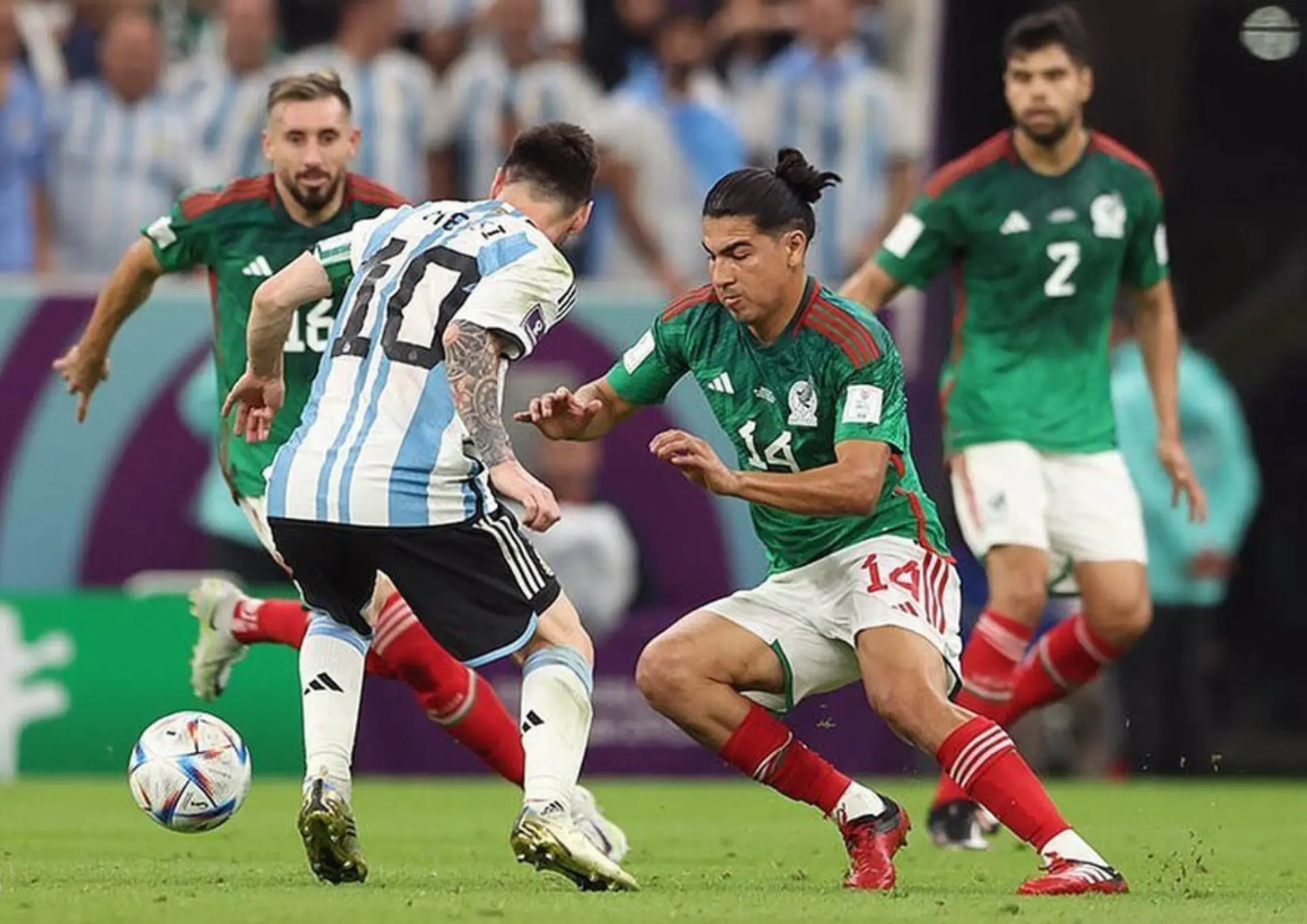
FIFA World Cup 2026 Group J Predictions: Argentina Lead, Austria Rise & Tough Exits
The FIFA World Cup 2026 Group J features a heavyweight storyline built around Argentina (defending champions), alongside Algeria, Austria, and Jordan. On paper, it looks top-heavy, but the mix of styles and tournament pressure adds real unpredictability.
You have South American royalty in the form of Argentina, a resurgent European pressing machine in Austria, the unpredictable North African force of Algeria, and the tournament’s most emotional debutants in Jordan. The contrast in styles is striking: Argentina’s fluid, Messi-inspired attacking football meets Ralf Rangnick’s high-octane German pressing philosophy, Algeria’s transition-based African flair, and Jordan’s compact defensive pragmatism.
The FIFA World Cup 2026 will feature an expanded 48-team format with 12 groups of four, where the top two plus the eight best third-placed teams advance to the Round of 32. This structure gives sides like Algeria a realistic survival path if results break their way, meaning Group J cannot simply be reduced to a straightforward march for Argentina—the third-place qualification rule makes the group far more competitive and tactically nuanced than it first appears.
🇦🇷 Argentina – Can the Champions Dominate Again?
Argentina (led by Lionel Messi) enters the FIFA World Cup 2026 aiming to become the first men’s team in six decades to defend the title, adding major historical weight to their Group J campaign.
Argentina at the FIFA World Cup 2026 are not a one-man story built around Lionel Messi. They also rely on attacking depth from Lautaro Martínez and Julián Álvarez, midfield control through Enzo Fernández and Alexis Mac Allister, and the reliability of Emiliano Martínez in goal.
Argentina, ranked No. 3 in the world, begins its FIFA World Cup 2026 campaign against Algeria on June 16 before facing Austria and Jordan in a group that looks favourable on paper. Under Lionel Scaloni, Argentina’s tactical balance—intelligent pressing, compact defending, and lethal transitions through Julián Álvarez and Lautaro Martínez—makes them strong favourites to progress comfortably.
Age management and squad rotation will be key for Argentina at the FIFA World Cup 2026, with veterans like Nicolás Otamendi (38), Nicolás Tagliafico (33), and Rodrigo De Paul (32) requiring careful workload management.
Despite that, their overall squad depth and balance make them overwhelming favourites to win Group J and comfortably progress.
Argentina’s 2–1 friendly win over Mauritania provided both reassurance and caution ahead of the FIFA World Cup 2026. Goals from Enzo Fernández and Nico Paz, along with Lionel Messi coming off the bench, helped maintain a positive pre-tournament atmosphere for the reigning champions.
🇦🇹 Austria – Structured, Disciplined & Dangerous
Austria arrives at the FIFA World Cup 2026 as a transformed, tactically coherent side under Ralf Rangnick, marking their first World Cup appearance since 1998. Known for intense pressing, structure, and discipline, they represent one of Europe’s most well-organised underdog teams and add real intrigue to Group J.
Austria enters the FIFA World Cup 2026 as one of Europe’s most tactically disciplined sides under Ralf Rangnick, built on high-intensity pressing and quick vertical transitions.
Key players like David Alaba, Marko Arnautović, Marcel Sabitzer, and Konrad Laimer form the core of a system designed to suffocate opponents through coordinated gegenpressing and structured buildup.
Austria under Ralf Rangnick operates primarily in a vertical 4-2-3-1 that can morph into a 4-2-2-2 in possession, reflecting his Red Bull-inspired pressing model.
Nicolas Seiwald and Xaver Schlager provide the double pivot, shielding the defence, while Konrad Laimer and Marcel Sabitzer push high to sustain aggressive pressing and rapid vertical attacks.
Austria finished top of UEFA Group H with 19 points from eight matches, ahead of Romania and Bosnia and Herzegovina, scoring 22 goals while conceding just four.
That record reflects a highly structured, well-drilled system under Ralf Rangnick rather than a one-off surge in form, reinforcing Austria’s identity as a disciplined, tactically consistent side heading into the FIFA World Cup 2026.
The schedule in Group J of the FIFA World Cup 2026 gives Austria a clear early advantage, with a winnable opener against Jordan at Levi’s Stadium before facing Argentina and then a likely decisive clash with Algeria in Kansas City for second place.
If Austria start strongly and manage their resources against Argentina, they enter that final match with a realistic pathway to qualification. As a result, most Group J prediction models reasonably project Austria as the most likely runners-up behind Argentina.
🇩🇿 Algeria – Strong but Not Enough to Progress
Algeria enter the FIFA World Cup 2026 as a classic wildcard side — two-time African champions with the ability to disrupt stronger teams, but also the risk of falling short against elite opposition.
Their reputation is built on resilience and flashes of quality, making them unpredictable opponents capable of causing upsets if momentum goes their way.
For Algeria at the FIFA World Cup 2026, the fitness of Riyad Mahrez and Ismaël Bennacer is central to their chances in the race for second place.
Riyad Mahrez, with his elite close control and final-third creativity, remains the main creative outlet and a proven match-winner on the counterattack, especially when in form.
The issue is consistency. Algeria’s tournament record shows a team capable of brilliant individual performances but prone to collective collapses when the pressure peaks. Their tactical identity tends to rely heavily on transition football — absorbing pressure and striking on the break — which works against lesser sides but becomes predictable against organised defences like Austria’s.
Argentina and Algeria have met only once before, a 4–3 friendly in 2007, meaning there is little historical edge heading into their opening match at the FIFA World Cup 2026.
Argentina remain clear favourites, but Algeria’s most realistic path to progression in Group J relies on taking points against Jordan and then targeting results against Austria—either a win or a draw—to stay in contention for qualification.
🇯🇴 Jordan – Underdogs Facing a Huge Challenge
Jordan’s inclusion in the FIFA World Cup 2026 is one of the tournament’s most uplifting stories, marking their World Cup debut in the expanded 48-team format. It represents a major milestone for the nation and a significant moment for Asian football.
Jordan relies heavily on Mousa Al-Tamari to make their counterattacks effective at the FIFA World Cup 2026. His pace and directness are their main attacking outlet in transition.
However, beyond him, Jordan lacks the squad depth and elite tournament experience needed to consistently compete at this level, which places extra pressure on their key players in every match.
Jordan is expected to set up pragmatically at the FIFA World Cup 2026, focusing on defensive organisation and compact structure.
Their plan centres on a disciplined back line, a protective midfield shield, and quick transitions, aiming to limit space against stronger sides like Argentina and Austria, while targeting their most realistic chance for points against Algeria.
Realistically, the FIFA World Cup 2026 Group J predictions for Jordan point towards an early exit. The experience gap is simply too significant. However, one should never entirely dismiss the emotional energy of a debut World Cup appearance — upsets have been built on less.
Key Matches That Will Decide Group J
Three fixtures will define the shape of this group.
Argentina vs Austria (June 22, AT&T Stadium, Dallas) Argentina vs Austria at the FIFA World Cup 2026 (June 22, Arlington) is the key Group J clash.
Argentina are favourites, but Austria’s high-intensity press under Ralf Rangnick, led creatively by Marcel Sabitzer, means they can realistically push for a draw or upset—especially if they arrive with momentum from their opener. The upset chance is higher than typical pre-match models suggest.
Algeria vs Austria (June 27, Arrowhead Stadium, Kansas City) Algeria vs Austria at the FIFA World Cup 2026 (June 27, Kansas City) is the group’s likely qualification decider.
Austria’s structured pressing system under Ralf Rangnick faces Algeria’s individual quality, led by Riyad Mahrez and Ismaël Bennacer. The winner is almost certain to secure a place in the Round of 32, making this the most tactically significant fixture in Group J.
Jordan vs Algeria (June 22, Levi’s Stadium, Santa Clara) Jordan vs Algeria at the FIFA World Cup 2026 is a high-stakes encounter, with both sides targeting points for different survival scenarios in the group.
Algeria need the result to stay in contention for second place, while Jordan views it as their best chance to secure a landmark result. Expect a tight, low-scoring, and highly tactical match.
Final Group J Table Prediction
| Position | Team | W | D | L | GF | GA | GD | Pts |
|---|---|---|---|---|---|---|---|---|
| 1st | 🇦🇷 Argentina | 3 | 0 | 0 | 8 | 2 | +6 | 9 |
| 2nd | 🇦🇹 Austria | 2 | 0 | 1 | 5 | 4 | +1 | 6 |
| 3rd | 🇩🇿 Algeria | 1 | 0 | 2 | 3 | 6 | -3 | 3 |
| 4th | 🇯🇴 Jordan | 0 | 0 | 3 | 1 | 5 | -4 | 0 |
Predicted Group Stage Scorelines:
| Match | Result |
|---|---|
| Argentina vs Algeria | 3–1 |
| Austria vs Jordan | 2–0 |
| Argentina vs Austria | 2–1 |
| Jordan vs Algeria | 1–2 |
| Jordan vs Argentina | 0–3 |
| Algeria vs Austria | 1–2 |
Argentina topped the group with a clean sweep. Austria edged Algeria in the crucial final match to secure second place. Algeria exit despite showing moments of quality, and Jordan bow out having given everything on their debut World Cup stage.
Can Austria Challenge Argentina for Top Spot?
This is the most compelling sub-narrative running through all FIFA World Cup 2026 Group J predictions. The honest answer is: yes, but it requires near-perfect conditions.
Austria enters the FIFA World Cup 2026 with a clear tactical identity under Ralf Rangnick, built on intense gegenpressing, high ball recovery, and compact spacing.
This system is designed to disrupt technically superior teams by forcing turnovers high up the pitch and limiting time on the ball, giving Austria a structural edge, particularly against sides like Algeria and Jordan.
Where it becomes genuinely difficult is the moment Argentina find their rhythm in the second half. Lautaro Martínez’s movement, Mac Allister’s passing range, and the sheer variety of Argentina’s attacking options make them very hard to contain for 90 minutes. Austria would likely need to score first, play on the break in the second half, and hope their goalkeeper has a defining day.
Austria may have a structural advantage in pressing at the FIFA World Cup 2026, but their main concern is attacking output, with 36-year-old Marko Arnautović expected to lead the line due to limited depth.
Against top opposition like Argentina, failure to convert pressing into goals could prove costly, even if Austria remains competitive. Most projections still favour Argentina, but only by a narrow margin.
Biggest Surprise & Potential Shock in Group J
Every World Cup group carries at least one shock. In the FIFA World Cup 2026 Group J predictions landscape, two realistic shock scenarios stand out.
For Algeria at the FIFA World Cup 2026, the key to upsetting Austria lies in converting transitions into clear chances, with Riyad Mahrez and Mohamed Amoura needing to be decisive in the final third.
If Algeria maintain defensive discipline for 90 minutes and their attacking pair is clinical, a win is realistic and would significantly disrupt the Group J qualification picture.
Austria holding Argentina to a draw at the FIFA World Cup 2026 in Dallas would be a major Group Stage result, potentially securing Austria’s qualification early.
While Argentina remains favourites as defending champions, they also face the psychological challenge of being every opponent’s “big game,” with Austria under Ralf Rangnick well-suited to exploit underdog momentum through intense pressing and discipline.
Final Verdict – Who Advances & Who Goes Home
After weighing all the evidence, here is the definitive summary of the FIFA World Cup 2026 Group J predictions:
Argentina advance as Group winners. Their squad depth, tournament experience, tactical intelligence, and sheer star power make them the class of this group. Messi may be 39 by the time of their second fixture, but Argentina are far more than a one-man team — and that’s what makes them genuinely dangerous heading into the knockout rounds.
Austria advances in second place. Rangnick’s system is too well-organised for Algeria to break down consistently. Austria’s qualification record, pressing intensity, and smart scheduling give them the edge in what will be a very tight second-place race. They arrive at the Round of 32 as one of the more dangerous second-placed teams in the entire tournament.
Algeria exited in third place. They will cause moments of real quality and may push Austria all the way in Kansas City, but consistency and tactical flexibility against top European opposition remain their Achilles heel.
Jordan exited in fourth place. As World Cup debutants facing three very different but equally challenging opponents, Jordan’s realistic target is to compete, represent their nation with pride, and give Al Tamari a stage to announce himself to the world.
The FIFA World Cup 2026 Group J predictions ultimately paint a picture of a group that runs largely as expected — but with enough firepower and tactical depth to produce at least one genuinely memorable moment along the way.
Frequently Asked Questions (FAQs)
Who are the four teams in FIFA World Cup 2026 Group J?
Group J at the FIFA World Cup 2026 features Argentina (defending champions), Austria, Algeria, and Jordan. It stands out for its continental diversity, bringing together teams from South America, Europe, Africa, and Asia in a single competitive group.
Will Lionel Messi play at the 2026 World Cup for Argentina?
As of mid-April, Lionel Messi had not fully confirmed his participation in the FIFA World Cup 2026, though most analysts still expect him to be included in the squad for Argentina. If he features, he could become one of the first men to play in six World Cups, alongside Cristiano Ronaldo. His minutes are likely to be carefully managed due to his age, balancing legacy with performance impact.
Is Austria a genuine dark horse at the FIFA World Cup 2026?
Austria’s approach at the FIFA World Cup 2026 is built on Ralf Rangnick’s high-intensity gegenpressing system, supported by a defence anchored by David Alaba and enhanced through tactical flexibility and squad rotation. Their strong qualification campaign reflects a well-drilled structure capable of troubling top teams on any given matchday.
What is Jordan’s best chance of getting a result in Group J?
Jordan’s best chance in the FIFA World Cup 2026 group stage likely comes in their final match against Algeria, a fixture that could carry major qualification implications for both sides. If points are still needed, it becomes the most open and emotionally charged match of their campaign, with both teams under pressure to deliver a result.
Can Algeria qualify from Group J as a third-placed team?
It is possible. Under the expanded 2026 format, the eight best third-placed teams from all twelve groups advance. If Algeria win their match against Jordan and keeps their goal difference respectable against Argentina and Austria, they could accumulate enough points to squeeze through as one of the better third-placed sides — though it is a narrow path.
Also Read:-
FIFA World Cup 2026 Group K Predictions: Portugal Favourites, Colombia Surprise & Underdog Struggles

I’m a football writer, covering top leagues like the Premier League, La Liga, Bundesliga, Serie A, and Ligue 1. I write about match analysis, football news, tactics, and major tournaments such as the FIFA World Cup, delivering clear, engaging insights for fans.
About The Author



2 thoughts on “FIFA World Cup 2026 Group J Predictions: Argentina Lead, Austria Advance & Two Teams Knocked Out”