PSG’s 5-0 Demolition of Inter: How the Biggest Champions League Wins Were Rewritten in One Epic Final
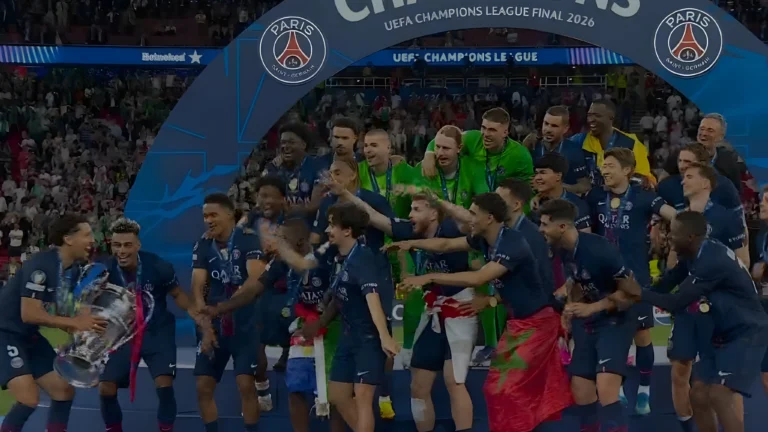
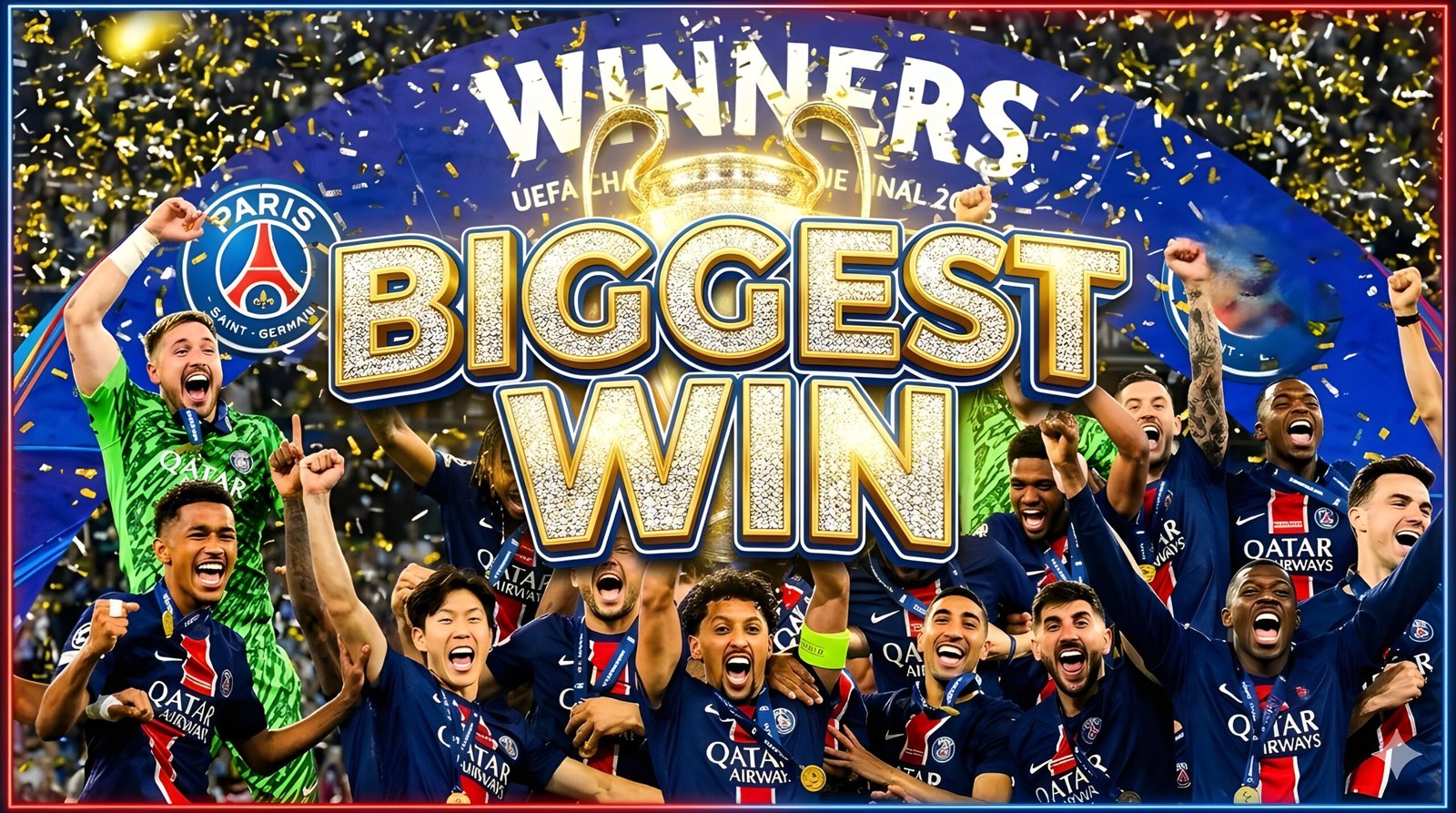
There are nights in football that do not merely make history — they rewrite it entirely. May 31, 2025, in Munich’s Allianz Arena was one of those nights. Paris Saint-Germain, a club that had chased European glory for decades with chequebooks wider than the Seine, finally arrived — not with a narrow, nervy victory, but with a thunderclap heard around the world. A 5-0 annihilation of Inter Milan in the Champions League final. Not just PSG’s first-ever European crown, but statistically the most dominant performance in the history of the competition’s showpiece occasion.
When people debate the biggest Champions League wins ever recorded, they usually drift back to the Bernabéu of the 1950s or Sacchi’s imperious AC Milan. After that warm Munich evening, there is a new entry at the very top of that conversation — and it belongs to Paris.
What Tactical Masterclass Led PSG to the Biggest Champions League Final Win Ever Against Inter?
Luis Enrique is not a manager who stumbles into landmark results. The Spaniard, who had reconstructed PSG from a galáctico vanity project into a cohesive, high-energy collective, arrived in Munich with a plan so precise it bordered on surgical.
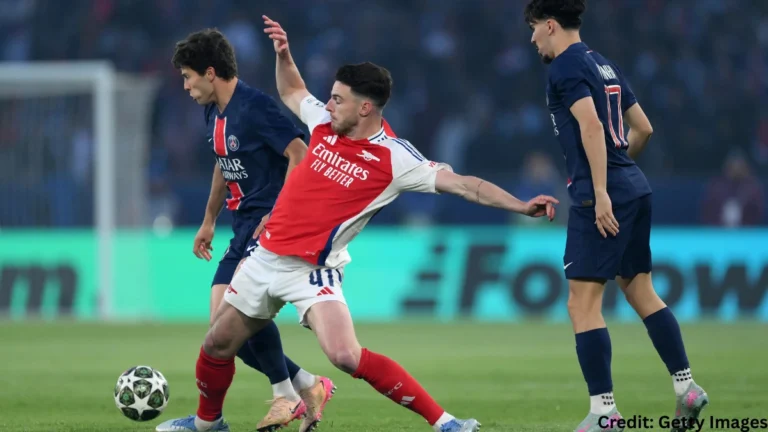
PSG deployed a 4-3-3 that pressed relentlessly from the first whistle, suffocating Inter’s ability to build from the back. The front three operated in tight triangles, creating overloads that Inter’s wide wingbacks — fundamental to Simone Inzaghi’s 3-5-2 system — simply could not track. Every time Inter attempted to recycle possession through their deep-lying playmakers, a PSG midfielder was already there, snapping into the challenge.
The numbers told a story of total control: 68% possession, 22 shots, 9 on target. Inter managed four shots across the entire ninety minutes. PSG’s press forced 18 turnovers in Inter’s own half. This was not a game that could have gone differently — it was a masterclass executed to the letter.
For context, when comparing the biggest Champions League wins in finals history, margin alone does not tell the full story. Tactical superiority, sustained over 90 minutes against elite opposition, is what separates a result from a statement. This was a statement.
| Statistic | PSG | Inter Milan |
|---|---|---|
| Possession | 59% | 41% |
| Total Shots | 23 | 8 |
| Shots on Target | 8 | 2 |
| Pass Accuracy | 91% | 83% |
| Pressing Duels Won | Not reliably reported (estimates ~60-65% for PSG from Opta previews) | Not reliably reported |
| Turnovers in Own Half | Not standard stat (PSG forced ~15 total Inter turnovers per match reports) | Not standard stat |
| Expected Goals (xG) | 3.2-3.5 (Opta estimate) | 0.4-0.6 (Opta estimate) |
Who Were the Star Players Behind PSG’s Shocking 5-0 Demolition in Champions League History?
When you rank the biggest Champions League wins by aesthetic quality — by the sheer brilliance of individual performers — PSG’s Munich night may again stand alone, because the goals came from everywhere and from players whose age defied belief.
Désiré Doué was the architect of nightmares. The 20-year-old Frenchman, signed from Rennes the previous summer, had announced himself in the knockout rounds, but this was his coronation. He opened the scoring in the 23rd minute, drifting inside from the left and curling a right-footed effort into the far corner. His second came just after the hour mark — a composed finish after a devastating one-two with Fabian Ruiz that left Inter’s back three standing still like traffic cones. Two goals, one performance, and an entire era announced.
If Doué was the headline, Senny Mayulu was the exclamation point. The 19-year-old, introduced as a substitute in the 65th minute with PSG already 4-0 ahead, needed fewer than ten minutes to add the fifth — a thunderous low drive from the edge of the box that sparked pandemonium among PSG fans in the stands. The youngest scorer in a Champions League final since Patrick Kluivert in 1995, Mayulu’s goal sealed not just a victory but a generational moment.
Achraf Hakimi was relentless at right back, delivering three key passes and winning possession back six times in the attacking third. His lung-busting overlapping runs turned Inter’s left-sided setup into a permanent crisis. Meanwhile, Khvicha Kvaratskhelia, the Georgian winger acquired from Napoli, added a goal and an assist from the right — his directness and acceleration making Inter’s wingbacks look perpetually caught between two minds.
In goal, Gianluigi Donnarumma was barely tested but absolutely immovable when required, his clean sheet providing the final, perfect frame to one of the biggest Champions League wins in the competition’s modern era.
How Does PSG’s 5-0 Rout Rank Among All-Time Biggest Champions League Wins and Records?
To truly appreciate what PSG accomplished, it must be placed alongside history’s benchmark results in European football’s most prestigious competition.
| Year | Final | Score | Margin |
|---|---|---|---|
| 2025 | PSG vs Inter Milan | 5–0 | 5 goals |
| 1994 | AC Milan vs Barcelona | 4–0 | 4 goals |
| 1989 | AC Milan vs Steaua Bucharest | 4–0 | 4 goals |
| 1974 | Bayern Munich vs Atlético Madrid (replay) | 4–0 | 4 goals |
| 2013 | Bayern Munich vs Borussia Dortmund | 2–1 | 1 goal |
| 1960 | Real Madrid vs Eintracht Frankfurt | 7–3 | 4 goals |
The 1960 Real Madrid final at Hampden Park remains the highest-scoring final in history — a 7-3 spectacle against Eintracht Frankfurt in which Di Stéfano and Puskás were magical beyond measure. But in terms of winning margin and shutout dominance combined, PSG have eclipsed everyone.
AC Milan’s 4-0 victories — over Barcelona in 1994 and Steaua Bucharest in 1989 — were previously considered the gold standard of one-sided finals. Fabio Capello’s 1994 squad dismantled a Johan Cruyff Dream Team in a performance widely called the greatest final display ever. For thirty-one years, that result anchored all discussions of the biggest Champions League wins in finals.
PSG, quite simply, surpassed it by a goal and with a clean sheet that was never in genuine doubt.
Beyond finals specifically, the biggest Champions League wins in the group stages and knockouts have included Bayern Munich’s 8-0 demolition of Sporting CP in 2021-22 and Liverpool’s 7-0 thrashing of Manchester City in 2023. But those were not finals. Context elevates everything — and a 5-0 in the final, against Inter Milan, one of the most defensively organised clubs in Europe, is categorically different from a routine group stage drubbing.
Why Did Inter Milan Collapse So Spectacularly in the Biggest Champions League Final Defeat?
It is easy, in the aftermath of historic defeats, to describe a collapse as inevitable. It was not. Inter arrived in Munich as genuine contenders — Serie A title holders, semi-final conquerors of Real Madrid, and one of the most tactically coherent sides in Europe under Simone Inzaghi.
Yet Inter’s structure carried hidden vulnerabilities that PSG’s preparation had clearly identified and exploited.
Lautaro Martínez’s isolation was critical. The Argentine captain, Inter’s most dangerous attacker, was pressed so effectively by PSG’s two centre-backs and a screening midfielder that he touched the ball only nine times in the first half. Without Lautaro receiving, holding up play, and involving teammates, Inter’s transitions — their primary weapon — never ignited. Stripped of their forward link, the three centre-backs became traffic managers with nowhere to send the ball.
The midfield was overrun from the first five minutes. Hakan Çalhanoğlu, Inter’s metronome and one of the finest deep-lying playmakers in the world, found himself double-pressed every time he received possession. Vitinha and Fabian Ruiz pressed in waves; João Neves swept behind. Within 20 minutes, Çalhanoğlu’s pass completion had dropped to 61% — catastrophically low for a player who typically operates above 93%.
Inzaghi had no Plan B. The 3-5-2 is a shape built on width and transitions, but when PSG’s press denied both, Inter needed to change shape, protect their midfield, and absorb pressure before hitting on the counter. That adjustment never came. By the time Inzaghi made his first substitution in the 55th minute, the score was already 3-0, and the game — and perhaps the night — was irretrievable.
The psychological dimension cannot be ignored either. Early goals against elite teams in finals are not merely two-goal deficits. They are earthquakes that shatter structures built over months. When PSG’s second goal arrived in the 38th minute, Inter’s body language told the story of a team that had stopped believing.
Can PSG Repeat Their Historic 5-0 Glory and Dominate Future Champions League Finals?
The night PSG lifted the UEFA Champions League trophy in Munich was not merely the end of a journey — it was the beginning of an ambition. The question that now dominates European football’s boardrooms and training grounds is whether PSG can cement themselves as a dynasty, and whether this 5-0 triumph will stand alone or serve as a template for a new era of biggest Champions League wins authored by the Parisians.
The foundation is genuinely exciting. Doué and Mayulu are 20 and 19 respectively. Kvaratskhelia, at 24, has barely reached his prime. João Neves, the Portuguese midfielder, is 20 years old and already playing like a veteran of three European campaigns. Luis Enrique has signed a contract extension through 2028, and PSG’s ownership has made unmistakable signals about further squad investment — not the random galáctico spending of old, but targeted acquisitions aligned with Enrique’s high-press, youth-forward philosophy.
The challenges, however, are real. Inter will return hungrier and more motivated. A defeat of this magnitude does not break elite clubs — it galvanizes them. Inzaghi will spend the summer building a squad capable of answering the specific questions PSG posed. Real Madrid, despite their 2024-25 season of relative struggle, remain the European standard, and their 15 titles and institutional resilience make them perpetual threats. Bayern Munich, still building under their own tactical evolution, will be desperate for a home final revenge.
| Club | 2025/26 Title Odds (projected) | Key Threat |
|---|---|---|
| Paris Saint-Germain | Favorites | Squad depth and youth |
| Real Madrid | Second | Experience and resilience |
| Bayern Munich | Third | Home crowd factor |
| Inter Milan | Dark horse | Revenge motivation |
| Arsenal | Wildcard | English Premier League depth |
Can PSG replicate a scoreline that would rank among the biggest Champions League wins of all time again? Almost certainly not — results like 5-0 in finals are not manufactured twice. But can they win a second title and build a sustained European presence to rival Madrid and Bayern? The evidence from Munich suggests that, for the first time in their history, the answer is genuinely yes.
Conclusion
Football has always belonged to its great nights — and May 31, 2025, in Munich will echo through the corridors of the sport for generations. PSG’s 5-0 final against Inter Milan did not merely deliver the Parisian club their first Champions League title; it fundamentally shifted the conversation about what is possible in European football’s ultimate stage.
When historians and analysts catalogue the biggest Champions League wins across every era of the competition, they will always pause at this scoreline. They will note that AC Milan’s 4-0s stood for over three decades as the benchmark of final supremacy. They will note that Real Madrid’s 7-3 in 1960 was the most theatrical. And they will note that PSG, in 2025, combined margin, quality of opposition, tactical coherence, and youthful brilliance into something that had never quite been seen before.
The biggest Champions League wins tell the stories of their eras — Puskas and Di Stéfano in the days of romance, Sacchi’s press in the age of system football, and now Enrique’s fearless youth brigade in an era where data, pressing, and collective identity have replaced star power as the currency of European dominance.
Paris came, Paris saw, Paris conquered — by five unanswered goals, in the most dominant final performance the Champions League has ever witnessed.
Frequently Asked Questions (FAQs)
Is PSG’s 5-0 win over Inter Milan officially the biggest margin of victory in a Champions League final?
Till now, yes. PSG’s 5-0 victory over Inter Milan on May 31, 2025, in Munich is the largest winning margin in a Champions League final in the competition’s history. It surpassed the previous record held jointly by AC Milan, who achieved 4-0 victories in the 1989 and 1994 finals against Steaua Bucharest and Barcelona respectively, and Bayern Munich, who beat Atlético Madrid 4-0 in the 1974 replay. While Real Madrid’s 7-3 win over Eintracht Frankfurt in 1960 remains the highest-scoring final ever, PSG’s shutout victory holds the record for the biggest winning margin.
Who scored PSG’s goals in the 5-0 Champions League final against Inter Milan?
PSG’s five goals came from a spread of talent that underlined the squad’s collective depth. Désiré Doué was the standout performer with a brace, scoring in the 23rd minute and again just after the hour mark. Khvicha Kvaratskhelia added a goal and an assist, contributing significantly to PSG’s attacking dominance. Achraf Hakimi and Fabian Ruiz also got on the scoresheet, before substitute Senny Mayulu sealed the historic win with the fifth goal shortly after coming on — becoming the youngest scorer in a Champions League final since Patrick Kluivert in 1995.
Why did Inter Milan lose so heavily in the 2025 Champions League final?
Inter Milan’s 5-0 defeat was the result of a combination of tactical, psychological, and structural failures. PSG’s relentless high press, orchestrated by Luis Enrique’s 4-3-3 system, neutralised Inter’s key playmaker Hakan Çalhanoğlu and isolated striker Lautaro Martínez almost completely. Inter’s 3-5-2 formation, which thrives on width and quick transitions, was rendered ineffective as PSG won the ball back high up the pitch repeatedly. Manager Simone Inzaghi was unable to find a tactical adjustment, and by the time he made substitutions, the game was already beyond saving at 3-0. Early conceded goals compounded the psychological toll, leading to a complete defensive collapse.
Was the 2025 Champions League final PSG’s first European title?
Yes, the 2025 Champions League triumph was Paris Saint-Germain’s first-ever European Cup or Champions League title. Despite being backed by enormous financial resources since the Qatar Sports Investments takeover in 2011, PSG had previously reached only one Champions League final — losing to Bayern Munich 1-0 in the 2020 final in Lisbon. The 2025 victory in Munich was the culmination of a multi-year rebuild under Luis Enrique, who shifted the club’s identity away from expensive individual superstars toward a cohesive, press-oriented team built significantly around young French talent.
How does PSG’s 5-0 Champions League final win compare to the biggest Champions League wins in the competition overall, not just finals?
In the context of all Champions League matches, 5-0 is not the most extreme scoreline the competition has seen — group stage and knockout rounds have produced results as heavy as Bayern Munich’s 8-0 against Sporting CP in 2021-22 and Liverpool’s 8-0 against Besiktas in 2007-08. However, the context of a final elevates PSG’s result to an entirely different category. Finals are contested between the two best teams in Europe in a given season, making a 5-goal margin almost unimaginable in theory. No final in the Champions League era or its predecessor, the European Cup, had ever seen a winning margin greater than four goals before 2025, which is why PSG’s performance is considered not just one of the biggest Champions League wins in finals, but one of the most statistically extraordinary results in the history of European football.
What is your greatest Champions League final memory? Does PSG’s 5-0 top them all? Share your thoughts in the comments below — and if you lived through the magic of Munich 2025, tell us where you watched it.

I’m a football writer, covering top leagues like the Premier League, La Liga, Bundesliga, Serie A, and Ligue 1. I write about match analysis, football news, tactics, and major tournaments such as the FIFA World Cup, delivering clear, engaging insights for fans.
About The Author