What Does “Park the Bus” Mean in Football? Explained with Tactics, Examples & Winning Secrets
Football is a game of beauty, flair, and attacking brilliance—but sometimes, it turns into a battle of patience. You’ve probably watched a match where one team defends so deeply, so compactly, that breaking them down feels nearly impossible. Fans groan, commentators debate, and social media erupts.
That’s when you hear the phrase: “They’re parking the bus.”
But what does it actually mean? Why do teams use it? And more importantly, how do elite teams overcome it?
Let’s break it down.
What Does “Park the Bus” Mean in Football?
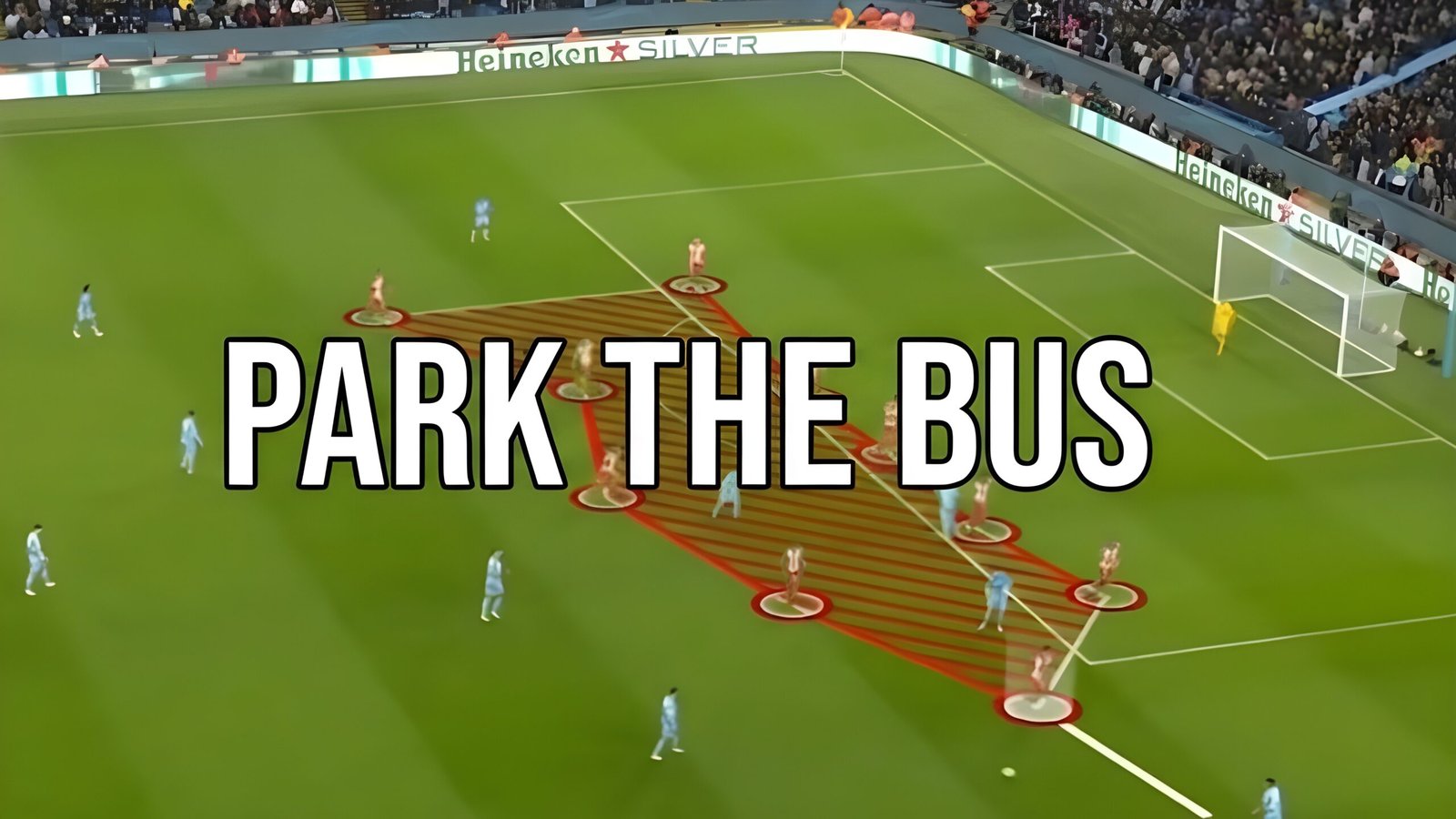
“Park the bus” is a football tactic where a team focuses almost entirely on defense, placing most or all of their players behind the ball to protect their goal.
The phrase was famously popularized by José Mourinho, who used it to describe opponents that defend extremely deep with little intention of attacking.
Key Characteristics of “Parking the Bus”:
- A low defensive block (players positioned close to their own goal)
- Minimal pressing in attacking areas
- Tight spacing between defenders and midfielders
- Heavy reliance on counterattacks
In simple terms, it’s like building a wall in front of your goal and daring the opposition to break it.
Why Do Teams Choose to “Park the Bus”?
At first glance, it may seem like a negative or “cowardly” approach. But in reality, it’s often a calculated and intelligent tactical decision.
1. Underdogs Facing Stronger Opponents
When a weaker team faces a football giant, attacking openly can be suicidal. By staying compact and defensive, they:
- Reduce space for world-class attackers
- Force the opposition into predictable play
- Increase their chances of stealing a result
Think of a small club going up against a powerhouse—they’re not trying to dominate possession; they’re trying to survive.
2. Protecting a Lead
Even top teams use this tactic when they’re ahead, especially late in games.
You’ll often see:
- Full-backs staying deep
- Midfielders dropping into defensive positions
- Time management is becoming a factor
The objective shifts from scoring to game management.
3. Tactical Discipline and Structure
Some managers prioritize structure over chaos. Parking the bus:
- Keeps players organized
- Reduces defensive errors
- Forces opponents into low-percentage chances
For tacticians, it’s less about negativity and more about control without the ball.
Advantages and Disadvantages of Parking the Bus
Like any tactic, parking the bus has its strengths—and its flaws.
Advantages
1. Extremely Difficult to Break Down
With 8–10 players behind the ball, space becomes almost nonexistent. Even elite attackers struggle to find openings.
2. Limits Opposition Creativity
Creative players thrive on space. Remove that, and you neutralize their biggest strength.
3. Perfect for Counter-Attacks
Once the opposition commits players forward, gaps appear. A quick counter can turn defense into a goal-scoring opportunity in seconds.
Disadvantages
1. Constant Pressure
Defending for long periods is exhausting. One mistake can undo everything.
2. Limited Attacking Threat
You can’t score if you don’t attack. Teams that park the bus often rely on very few chances.
3. Frustration Factor
Fans hate it. Players get mentally drained. And if the plan fails, criticism is brutal.
How Can Teams Break Down a “Park the Bus” Defense?
This is where football becomes a chess match.
Top teams spend hours training to solve this exact problem.
1. Quick Passing and Ball Circulation
Slow play helps defenders stay organized. Fast, sharp passing:
- Pulls defenders out of position
- Creates small gaps
- Increases unpredictability
Think of it as stretching the defensive block until it cracks.
2. Using Width
When the center is crowded, the wings become crucial:
- Wingers hug the touchline
- Full-backs overlap
- Crosses force defenders to react
Stretching the pitch horizontally opens vertical gaps.
3. Long-Range Shots
Sometimes, the only option is to shoot from a distance:
- Forces defenders to step out
- Creates rebound opportunities
- Tests the goalkeeper’s positioning
One deflection can change everything.
4. Creative Playmakers
Breaking down a deep defense often requires brilliance:
- A killer pass
- A sudden dribble
- A moment of individual magic
This is where world-class players earn their reputation.
5. Tactical Adjustments
Managers may:
- Switch formations
- Introduce attacking substitutes
- Increase tempo
Flexibility is key when Plan A fails.
Famous Examples of “Parking the Bus” in Football
This is one of the best tactics that have been used in some of the biggest matches in football history.
One of the most iconic examples came under José Mourinho himself, when his teams executed defensive masterclasses against stronger opponents.
From domestic leagues to European competitions, “parking the bus” has:
- Frustrated elite clubs
- Produced shock results
- Sparked endless debates
It’s not just a tactic—it’s a statement.
Is “Parking the Bus” Smart or Anti-Football?
This is where opinions divide.
The Tactical Argument
Supporters say:
- It’s part of the game
- Every team has the right to choose its strategy
- Winning matters more than style
The Entertainment Argument
Critics argue:
- It kills the beauty of football
- Reduces excitement
- Turns matches into defensive battles
The truth? It depends on perspective.
For a smaller team, it’s survival.
For a big club, it’s often seen as a last resort.
The Psychology Behind “Parking the Bus”
There’s more than just tactics involved—there’s mindset.
- Defending players must stay focused for 90+ minutes
- Attackers must remain patient and avoid frustration
- One lapse in concentration can decide the game
It’s a mental war as much as a physical one.
Why “Parking the Bus” Still Exists in Modern Football
In an era dominated by high pressing and attacking football, you might expect this tactic to disappear.
But it hasn’t.
Why?
Because:
- Not every team has world-class attackers
- Defensive organization is still highly effective
- Football is about results, not just aesthetics
As long as underdogs exist, “parking the bus” will remain relevant.
Final Thoughts
“Parking the bus” is one of the most controversial tactics in football—but also one of the most effective.
It’s not always pretty.
It’s not always entertaining.
But it works.
And in a sport where results define success, that’s often all that matters.
Whether you love it or hate it, one thing is certain:
The next time you see a team defending deep with every player behind the ball…
You’ll know exactly what’s going on—and why it’s so hard to stop.

I’m a football writer, covering top leagues like the Premier League, La Liga, Bundesliga, Serie A, and Ligue 1. I write about match analysis, football news, tactics, and major tournaments such as the FIFA World Cup, delivering clear, engaging insights for fans.
About The Author