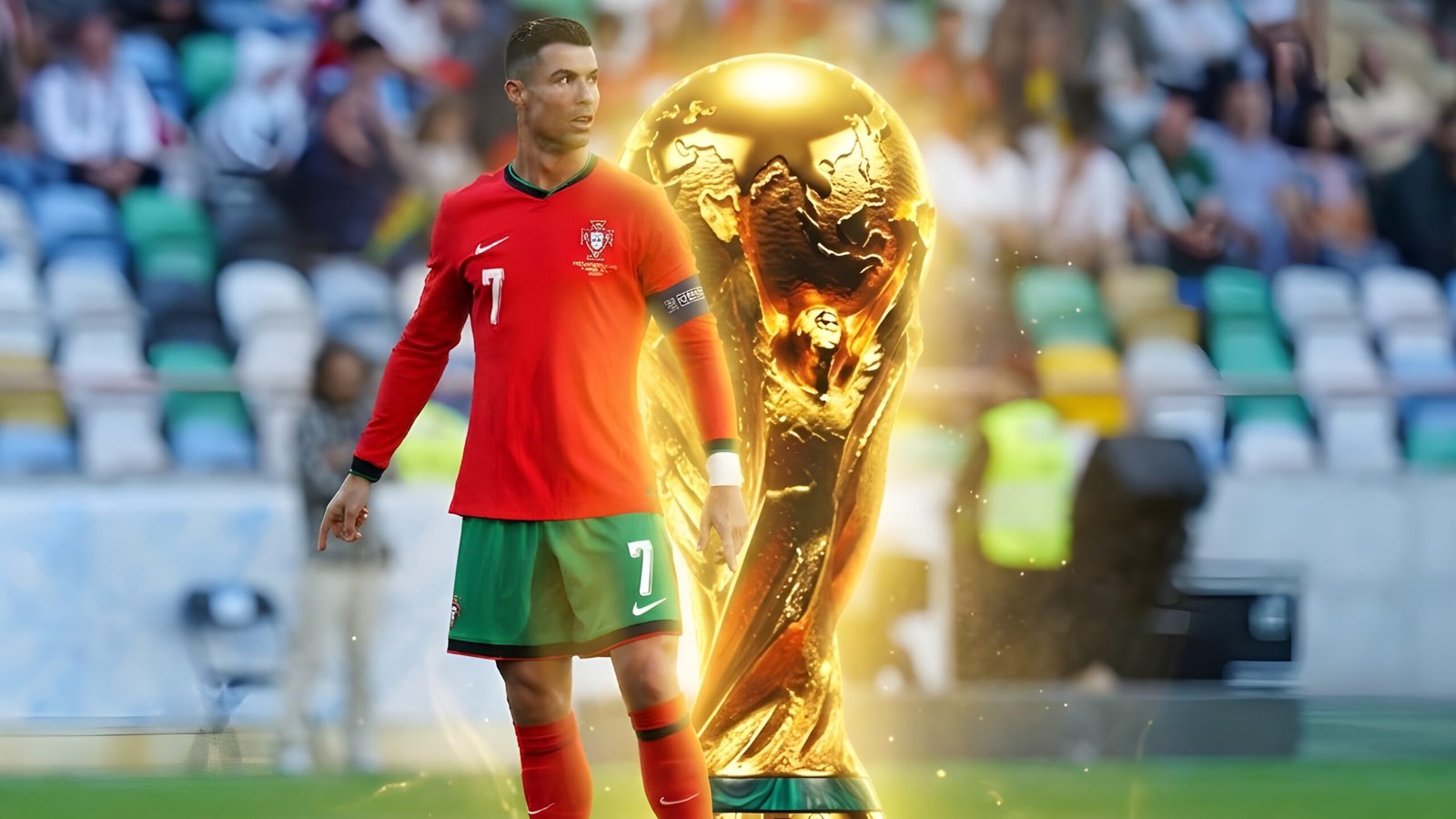
Portugal’s 2026 World Cup Chances: The Honest Assessment
Portugal enters the 2026 World Cup with Cristiano Ronaldo’s swan song fueling dreams of a first-ever title, but 7.7% odds paint them as a talented underdog with everything to prove.
The question echoing through football stadiums, sports bars, and living rooms from Lisbon to Los Angeles is the same: Will Portugal Finally Conquer the FIFA 2026? For a generation of fans who have watched Cristiano Ronaldo chase the one trophy that has eluded him throughout a career studded with every other conceivable honour, this question carries a weight that transcends statistics and betting markets. It is, at its heart, a story about legacy, timing, and whether destiny can be wrestled into submission through sheer force of will.
Portugal arrives at the FIFA 2026 World Cup — a historic tournament spread across the United States, Canada, and Mexico — not as a favourite, but not as a footnote either. With a 7.7% implied probability according to prediction markets, they occupy that tantalising sweet spot: talented enough to cause chaos, vulnerable enough to be written off. Somewhere in that tension lies the entire drama of Portugal’s 2026 campaign.
What Are Portugal’s 2026 World Cup Odds and Why Are They 5th?
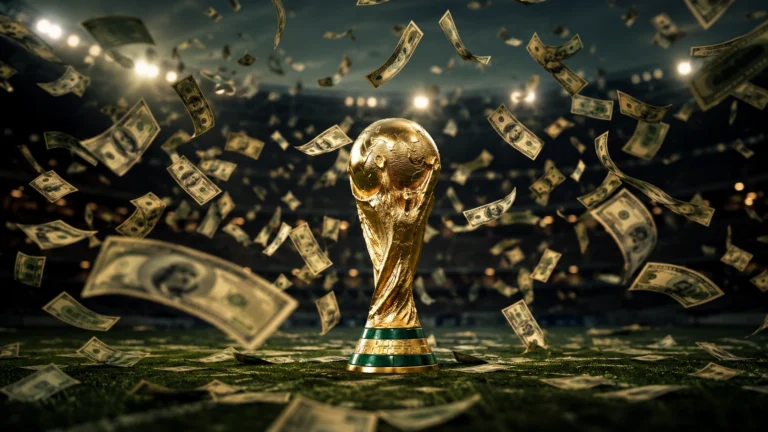
When Polymarket — one of the most liquid prediction platforms in the world — places Portugal at 7.7% implied probability with traditional odds hovering around +1100, that number tells a story far richer than it first appears. With over $15.2 million in trading volume, bettors are clearly paying attention to the Selecção. That volume, notably, exceeds Brazil’s and rivals Argentina’s, suggesting the market finds Portugal a compelling but risky proposition.
So where does that 7.7% come from, and why does it slot Portugal firmly at fifth? The answer lies in the extraordinary depth of the teams ranked above them.
| Team | Win Probability | Trading Volume (USD) | Key Strength |
|---|---|---|---|
| France | 16.45% | $17.7M | Mbappé-led attacking depth |
| Spain | 15.75% | $16.0M | Elite youth & tactical flexibility |
| England | 11.00% | $13.1M | Premier League superstar cohort |
| Argentina | 8.95% | $13.6M | Messi experience & tournament pedigree |
| Brazil | 8.50% | $14.3M | Unmatched individual talent pool |
| Portugal | 7.70% | $15.2M | Ronaldo’s leadership & Leão’s pace |
| Germany | 6.20% | $9.8M | Tactical rebuild under Nagelsmann |
| Netherlands | 5.40% | $8.2M | Van Dijk-led defensive solidity |
France’s dominance at 16.45% is built on a terrifying forward line anchored by Kylian Mbappé, now arguably the best player on the planet. Spain at 15.75% reflects the extraordinary pipeline of talent nurtured through La Masia and the domestic league system — a team that plays football as a philosophy rather than a tactic. England’s 11% represents both the quality of the Premier League generation and the lingering belief that their moment is overdue.
And then there is Portugal, sitting at fifth in the world according to FIFA rankings but fifth by most serious analytical models, carving out a respectable but humbling 7.7%. The gap between Portugal and France is not enormous in absolute terms — roughly eight percentage points — but in tournament football, it represents the difference between a marginal favourite and a genuine dark horse. That gap is precisely where the magic, or the heartbreak, will be found.
The honest assessment is that Portugal’s odds are fair. They reflect a squad that is genuinely world-class in several positions but lacks the systemic depth, tactical certainty, and tournament pedigree of the teams ranked above them. Whether Portugal will finally conquer FIFA 2026 is a question answered with joy or resigned disappointment may ultimately come down to the tournament bracket — and one or two moments of individual brilliance.
Does Ronaldo’s Squad Give Portugal the Edge to Win in 2026?
Roberto Martínez, the quietly meticulous Belgian coach who took charge after Qatar 2022, has spent three years doing something Portuguese football has rarely managed: building a team rather than a support act. The question of whether Portugal will finally conquer the FIFA 2026 is, in significant part, a question about whether Martínez has succeeded in that transformation.
The squad he has assembled is genuinely exciting. Here is how the key components break down:
Cristiano Ronaldo (41): The elephant in every room, the star on every shirt. At 41, Ronaldo is operating on borrowed time in terms of elite club football — his stint in Saudi Arabia’s Pro League has removed him from the week-to-week intensity of Champions League competition. But international tournaments have always brought out a different Ronaldo: focused, furious, and driven by legacy. His goal record for Portugal remains unmatched by any player in men’s international football history. The question is not whether he can score; it is whether he can last 90 minutes through seven gruelling knockout games against the world’s best.
Rafael Leão (26): The AC Milan left-winger is the forward Portugal has waited two decades for — explosive pace, direct running, genuine creativity in tight spaces. At 26, he arrives at this tournament at the ideal age, carrying the torch that must eventually pass fully from Ronaldo. Leão gives Portugal something they have rarely possessed: a genuine wide threat who can beat defenders off the dribble and deliver in the final third consistently.
Bruno Fernandes (31): The Manchester United captain brings vision, energy, and an occasionally maddening tendency to attempt the spectacular when the simple would suffice. But in Portugal colours, Fernandes has been consistently excellent under Martínez — a genuine engine who connects midfield to attack and arrives in dangerous positions with startling frequency.
Vitinha (25): The Paris Saint-Germain midfielder might be Portugal’s most quietly crucial player. His ability to maintain possession under pressure, his positional intelligence, and his technical quality in the engine room give Portugal the midfield control they need against elite opposition. In tournament football, where a single mistake can end your campaign, Vitinha’s composure is invaluable.
Beyond these four, Portugal possesses genuine quality throughout. Rúben Dias and António Silva form one of Europe’s best central defensive partnerships. João Cancelo, when fit and motivated, remains one of the world’s finest attacking full-backs. Pedro Neto offers width and pace in wide areas. The bench, deeper than at any previous World Cup, provides Martínez with options he can trust.
The group stage assignment — Group K, featuring DR Congo, Uzbekistan, and Colombia — is about as favourable a draw as Portugal could have hoped for. Maximum points from the group stage, with squad rotation and rhythm built in, is the realistic expectation. The Nations League campaign has added further momentum, with Portugal playing some of their best collective football in years.
This golden generation may genuinely be peaking at the right moment. Whether that peak is sufficient to answer the burning question — Will Portugal Finally Conquer the FIFA 2026 — remains the tournament’s great unknown.
Why Winning the 2026 FIFA World Cup Is So Difficult for Portugal
Let us be honest about the obstacles, because asking Will Portugal Finally Conquer the FIFA 2026 requires confronting some deeply uncomfortable historical truths.
Portugal has never appeared in a FIFA World Cup final. Their best-ever finish remains third place at the 1966 England World Cup, built around the transcendent genius of Eusébio — a player of comparable mythological status to Ronaldo in the country’s footballing culture. Since then, despite producing generations of genuinely world-class talent, Portugal has consistently fallen short of that benchmark. Semi-final appearances in 1966 and 2006 (another Ronaldo era, coincidentally) bracket decades of early exits and underachievement relative to their talent pool.
The Qatar 2022 campaign encapsulates the problem perfectly. Portugal swept through the group stage in imperious form, then produced one of the tournament’s most controversial team selections in the round of 16 against Switzerland before being eliminated in the quarter-finals by Morocco — a team ranked far below them on paper. It was a defeat that exposed the structural tension at the heart of Portuguese football: the difficulty of balancing individual greatness with the collective system.
The Ronaldo question is the most delicate of all. At 41 during the 2026 tournament, his physical decline is not a matter of speculation — it is a biological certainty. Elite pressing teams, the kind Portugal will face from the quarter-finals onward, will target his reduced mobility relentlessly. The bookmakers reflect this: quarter-final exit odds of 3/1 are a market consensus that Portugal are likely to stumble precisely when the tournament becomes its most brutal.
Consider the potential knockout path after the group stage:
| Round | Likely Opponent Quality | Portugal Risk Level |
|---|---|---|
| Round of 32 | Group runner-up (mid-tier) | Low |
| Round of 16 | Group winner (strong) | Medium |
| Quarter-final | Top-8 elite (France/Spain/Germany range) | Very High |
| Semi-final | Top-4 elite | Extreme |
| Final | Best team in tournament | Maximum |
The mathematics are punishing. To win, will Portugal finally conquer FIFA 2026? They must beat four or five world-class teams in succession without a single off-day. France, Spain, England, Argentina, and Brazil will be hunting the same prize with greater depth, greater tactical flexibility, and — in most cases — squads not structured around a single ageing superstar.
The ghost of previous near-misses — Hungary 1966, Germany 2006, Uruguay 2010, Morocco 2022 — haunts every conversation about Portuguese footballing destiny. History does not repeat itself automatically, but it does establish patterns. And Portugal’s pattern is to dazzle, dominate in patches, and ultimately break hearts.
Can Portugal Execute the Perfect Knockout Run in 2026?
If you are an optimist — and Portuguese football fans have learned to be optimists through necessity — there is a credible blueprint for how Portugal will finally conquer FIFA 2026, becoming not just a question but an answer.
Phase 1: Group Stage Dominance Group K is a gift. DR Congo and Uzbekistan are beatable by significant margins. Colombia presents the stiffest test, but it remains manageable for a squad of Portugal’s quality. Maximum points, with Ronaldo rested strategically and younger players given meaningful minutes, is the target. Arrive at the knockout stage fresh, confident, and with no injury crises.
Phase 2: Round of 32 and 16 — Avoiding Early Chaos The expanded 48-team format creates genuine danger in the early knockout rounds. Lower-ranked teams have more time to prepare their approach to play, and upsets have become the tournament’s defining characteristic. Portugal must resist the complacency trap, maintain defensive discipline, and trust the system over individual improvisation. Martínez’s meticulous preparation is an asset here.
Phase 3: Quarter-Final — The Wall. This is where the dream either lives or dies. If Portugal draws a slightly easier quarter-final path — avoiding France and Spain simultaneously — there is a window. A Leão masterclass, a Fernandes free-kick, a Ronaldo moment of pure, once-in-a-generation magic. Tournament football rewards peak performances over average performances, and Portugal at its peak can beat anyone.
Phase 4: Semi-Final and Beyond. If they get there, the psychological weight of being this close to a final for the first time in six decades could either paralyse or galvanise. Nations League momentum — Portugal reached the 2024-25 Nations League final, demonstrating the ability to perform in high-pressure knockout environments — suggests the squad has the mental architecture for big occasions.
Experts consistently point to three conditions under which Will Portugal Finally Conquer the FIFA 2026 tips from fantasy to genuine possibility: a favourable draw that separates them from France and Spain until the semi-final, a peak-form performance campaign from Leão and Fernandes that reduces the burden on Ronaldo, and the kind of tournament bracket luck that has historically favoured eventual champions.
The Nations League campaign of 2024-25 demonstrated something important: this Portugal side can play cohesive, high-intensity football without leaning entirely on Ronaldo. The pieces are there. The question, as always, is whether they assemble at the right moment.
Conclusion: Portugal’s 7-9% Shot — Dark Horse Thrill in the Making
So, Will Portugal finally conquer FIFA 2026? The honest answer, grounded in data, history, and cold-eyed tactical assessment, is: probably not — but possibly yes, and that distinction matters enormously.
At 7-9% probability, Portugal occupies the precise probability bracket where dark horse dreams are born. They are not 2% longshots whose participation is essentially ceremonial. They are not 16% favourites whose failure would constitute a genuine shock. They are the team that could, under the right circumstances, tear through a tournament bracket and arrive at a final looking back at the wreckage of eliminated giants.
Ronaldo’s last dance adds a dimension that odds cannot fully capture. The emotion, the narrative, the sheer force of personality that a motivated Cristiano Ronaldo brings to a tournament — these are variables that analytical models struggle to price. History is full of tournaments where narrative and momentum proved as decisive as squad depth.
Will Portugal Finally Conquer the FIFA 2026 with Leão firing, Fernandes orchestrating, Vitinha controlling, and Ronaldo conjuring one final moment of transcendence? Probably not. But football — glorious, irrational, heartbreaking football — has never been particularly interested in probability. And if Portugal somehow lifts that trophy in the summer of 2026, the story will be told for generations: the last dance that became an immortal waltz.
The curtain rises soon. Portugal, and the world, will find out together.
Also Read:-
FIFA World Cup 2026 Predictions: 10 Teams Most Likely to Win
FIFA World Cup 2026 Top Teams: The Favourites, Dark Horses and Bold Predictions
Top 15 FIFA World Cup 2026 Players to Watch: Rising Stars & Legends’ Last Dance

I’m a football writer, covering top leagues like the Premier League, La Liga, Bundesliga, Serie A, and Ligue 1. I write about match analysis, football news, tactics, and major tournaments such as the FIFA World Cup, delivering clear, engaging insights for fans.
About The Author
5 thoughts on “Can Portugal Finally Win the 2026 World Cup? Ronaldo’s Last Dance Analysed”