
How the Bundesliga Started: The Fascinating Story Behind Germany’s Football League
German football is known for packed stadiums, passionate fans, and attacking football. Clubs like Bayern Munich, Borussia Dortmund, and Bayer Leverkusen attract millions of viewers every season. But the Bundesliga we see today did not always exist.
Before 1963, German football was fragmented, regional, and struggling to compete internationally. The creation of the Bundesliga in 1963 changed everything and laid the foundation for modern German football.
This article explores how and why the Bundesliga was created, the early challenges, and the clubs that shaped its beginning.
Football in Germany Before the Bundesliga
Before the Bundesliga era, Germany did not have a national professional football league. Instead, the country had regional leagues called Oberligen.
These leagues were divided geographically, and the winners would compete in a national championship tournament to determine the German champion.
Main Regional Leagues Before 1963
| League | Region Covered |
|---|---|
| Oberliga Süd | Southern Germany |
| Oberliga Nord | Northern Germany |
| Oberliga West | Western Germany |
| Oberliga Südwest | Southwest Germany |
| Oberliga Berlin | West Berlin |
How the system worked:
- Clubs played in their regional league.
- The best teams qualified for the German Championship playoffs.
- A knockout tournament decided the national champion.
While exciting, this system had major problems.
Problems With the Old System
| Problem | Explanation |
|---|---|
| No National League | Teams only played regionally most of the season |
| Lack of Professionalism | Players were often semi-professional |
| Financial Inequality | Some clubs had much stronger resources |
| Poor European Results | German teams struggled in international competitions |
By the late 1950s, many football officials believed Germany needed a professional national league similar to England’s First Division or Italy’s Serie A.
The Moment That Changed German Football
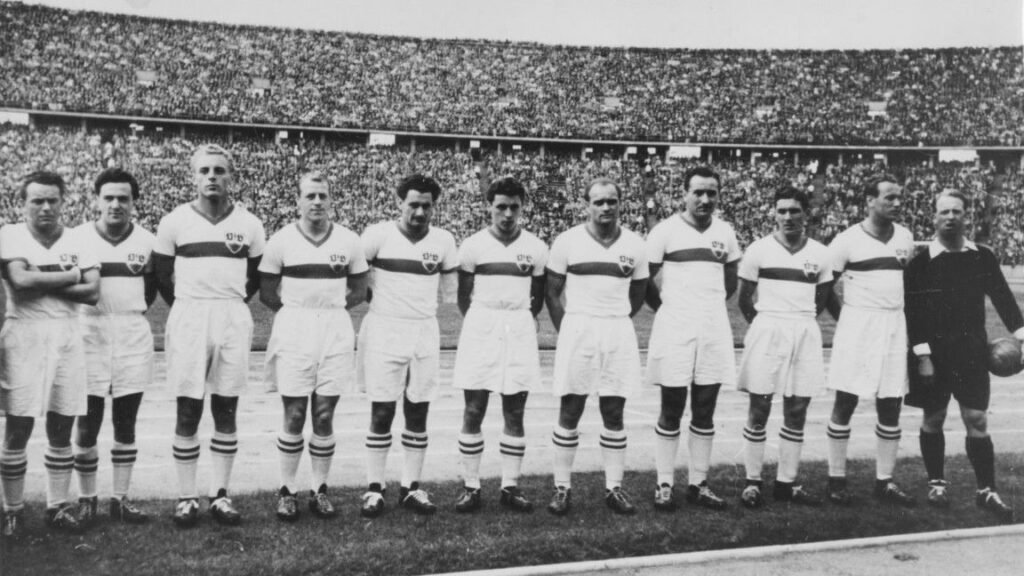
The turning point came in 1962.
Germany had been performing poorly in European club competitions. The situation reached a breaking point after West Germany’s disappointing performance at the 1962 FIFA World Cup in Chile.
German football leaders realized something important:
The country needed a modern, professional national league to compete internationally.
Soon after, the German Football Association (DFB) approved the creation of a national league.
The Birth of the Bundesliga (1963)
The Bundesliga officially launched in 1963, becoming Germany’s first nationwide professional football league.
Instead of regional champions, the Bundesliga introduced a single national competition where the best clubs across Germany played each other every season.
Key Facts About the First Bundesliga Season
| Category | Details |
|---|---|
| First Season | 1963–64 |
| Number of Teams | 16 |
| Organizing Body | German Football Association (DFB) |
| First Champion | 1. FC Köln |
| Total Matches | 240 |
This structure made German football more competitive, organized, and professional.
The 16 Founding Clubs of the Bundesliga
The DFB selected the best clubs from regional leagues to form the first Bundesliga.
Clubs were chosen based on:
- Historical success
- Financial stability
- Stadium capacity
- Sporting performance
Founding Bundesliga Clubs
| Club | City |
|---|---|
| 1. FC Köln | Cologne |
| Borussia Dortmund | Dortmund |
| Werder Bremen | Bremen |
| Hamburger SV | Hamburg |
| Eintracht Frankfurt | Frankfurt |
| Karlsruher SC | Karlsruhe |
| 1860 Munich | Munich |
| Schalke 04 | Gelsenkirchen |
| VfB Stuttgart | Stuttgart |
| Hertha BSC | Berlin |
| 1. FC Kaiserslautern | Kaiserslautern |
| Preußen Münster | Münster |
| Meidericher SV (MSV Duisburg) | Duisburg |
| 1. FC Nürnberg | Nuremberg |
| Saarbrücken | Saarbrücken |
| Eintracht Braunschweig | Braunschweig |
Some of these clubs remain major forces today, while others have faded over time.
The First Bundesliga Champion
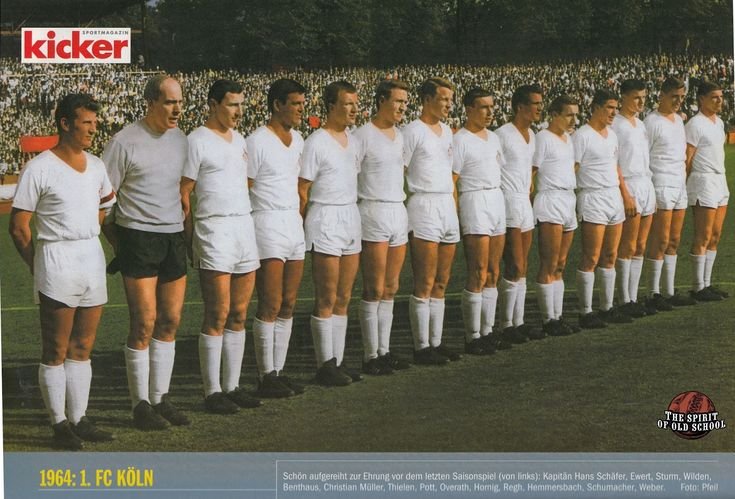
The inaugural Bundesliga season ended with 1. FC Köln is becoming the first champion.
1963–64 Bundesliga Top Teams
| Position | Club | Points |
|---|---|---|
| 1 | 1. FC Köln | 45 |
| 2 | Meidericher SV | 39 |
| 3 | Eintracht Frankfurt | 36 |
At that time:
- Wins = 2 points
- Draws = 1 point
- Loss = 0 points
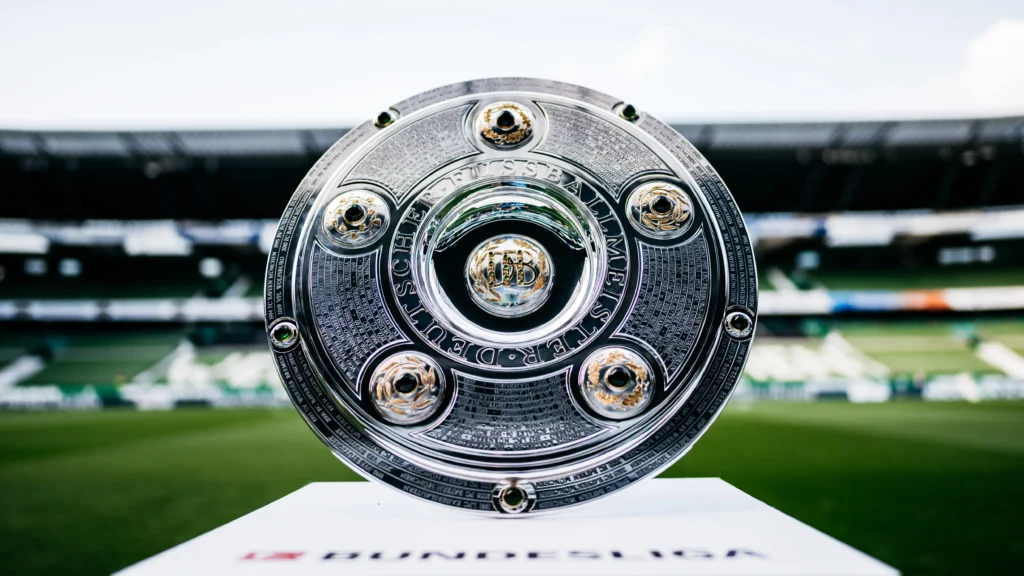
FC Köln dominated the league thanks to their strong defense and tactical discipline
Early Stars of the Bundesliga
The early years of the Bundesliga saw the rise of several legendary players who shaped German football.
Famous Early Bundesliga Players
| Player | Club | Position |
|---|---|---|
| Uwe Seeler | Hamburger SV | Striker |
| Franz Beckenbauer | Bayern Munich | Defender |
| Gerd Müller | Bayern Munich | Striker |
| Günter Netzer | Borussia Mönchengladbach | Midfielder |
These players later helped West Germany dominate international football.
The Rise of Bayern Munich
Interestingly, Bayern Munich was NOT in the first Bundesliga season.
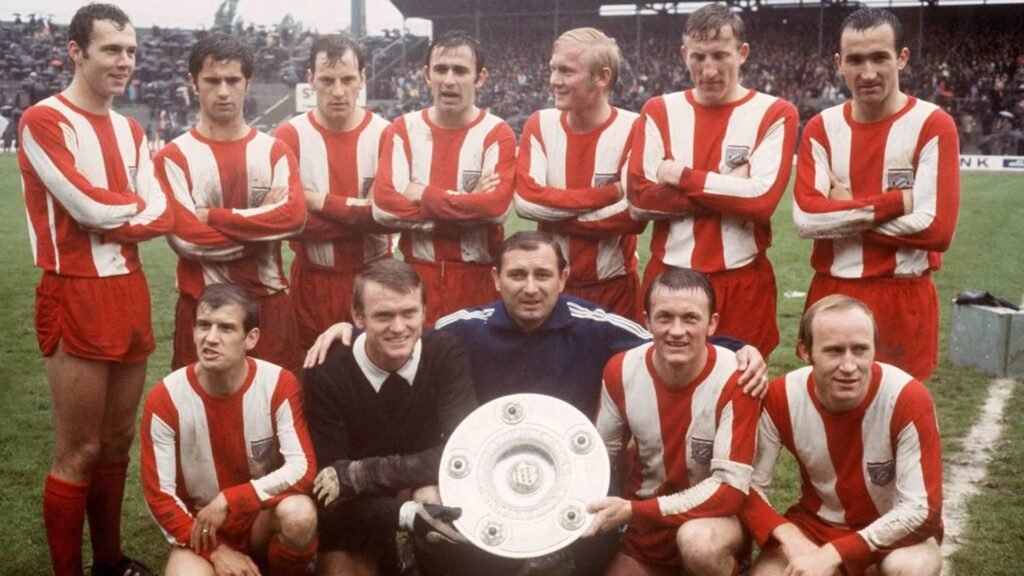
The club only joined the league in 1965 after earning promotion.
Once promoted, Bayern quickly became dominant thanks to players like:
- Franz Beckenbauer
- Gerd Müller
- Sepp Maier
Bayern Munich’s Early Achievements
| Year | Achievement |
|---|---|
| 1965 | Promoted to Bundesliga |
| 1969 | First Bundesliga title |
| 1974 | First European Cup |
Bayern would later become the most successful club in Bundesliga history.
The Bundesliga Scandal of 1971
One of the darkest moments in Bundesliga history happened in 1971, when a match-fixing scandal rocked the league.
More than 50 players, coaches, and officials were involved in manipulating match results.
Impact of the Scandal
| Effect | Outcome |
|---|---|
| Players Suspended | Several long bans |
| Clubs Penalized | Points deductions |
| League Reputation | Temporarily damaged |
However, the scandal also led to stricter regulations and improved governance, helping the Bundesliga grow stronger.
Bundesliga’s Unique Fan Culture
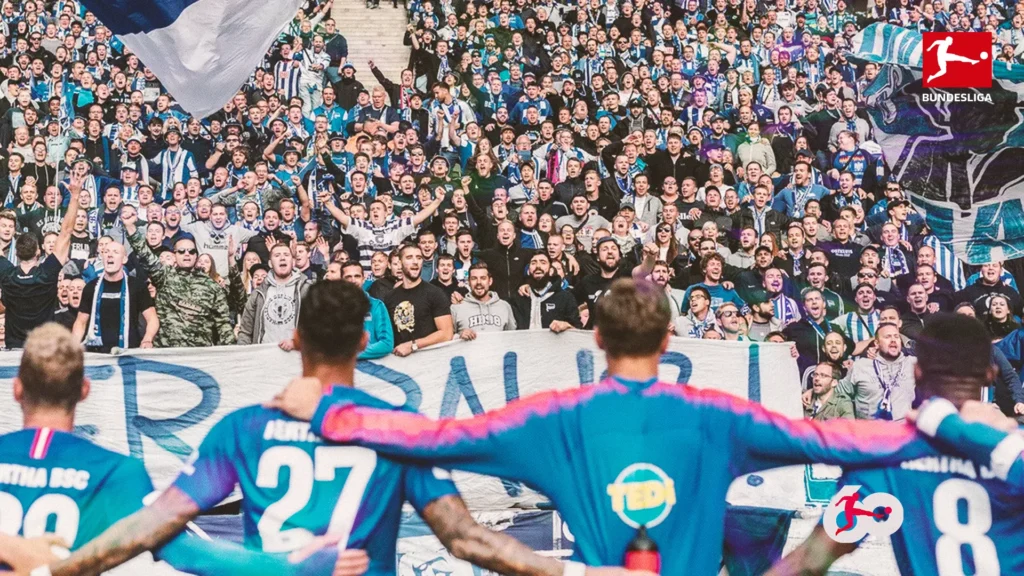
One of the most distinctive aspects of the Bundesliga is its fan-first culture.
German football introduced policies designed to keep clubs connected to their communities.
Key Features of Bundesliga Fan Culture
| Feature | Explanation |
|---|---|
| 50+1 Rule | Fans maintain majority ownership |
| Affordable Tickets | Cheaper than most European leagues |
| Safe Standing Areas | Encourages vibrant atmospheres |
| Community Clubs | Strong local identity |
Because of these policies, Bundesliga matches often have the highest average stadium attendance in Europe.
How the Bundesliga Grew Into a Global League
Since its creation, the Bundesliga has expanded significantly.
Modern Bundesliga Structure
| Feature | Details |
|---|---|
| Teams | 18 |
| Season Length | August – May |
| Matches Per Team | 34 |
| Promotion/Relegation | With 2. Bundesliga |
The league now attracts millions of global viewers and has become one of the top five football leagues in the world.
Fun Facts About the Bundesliga
⚽ Fun Fact #1
The Bundesliga holds the highest average stadium attendance in world football, often surpassing the English Premier League.
⚽ Fun Fact #2
The fastest goal in Bundesliga history was scored in 9 seconds by Karim Bellarabi in 2014.
⚽ Fun Fact #3
Bayern Munich has won more Bundesliga titles than any other club, dominating the league for decades.
⚽ Fun Fact #4
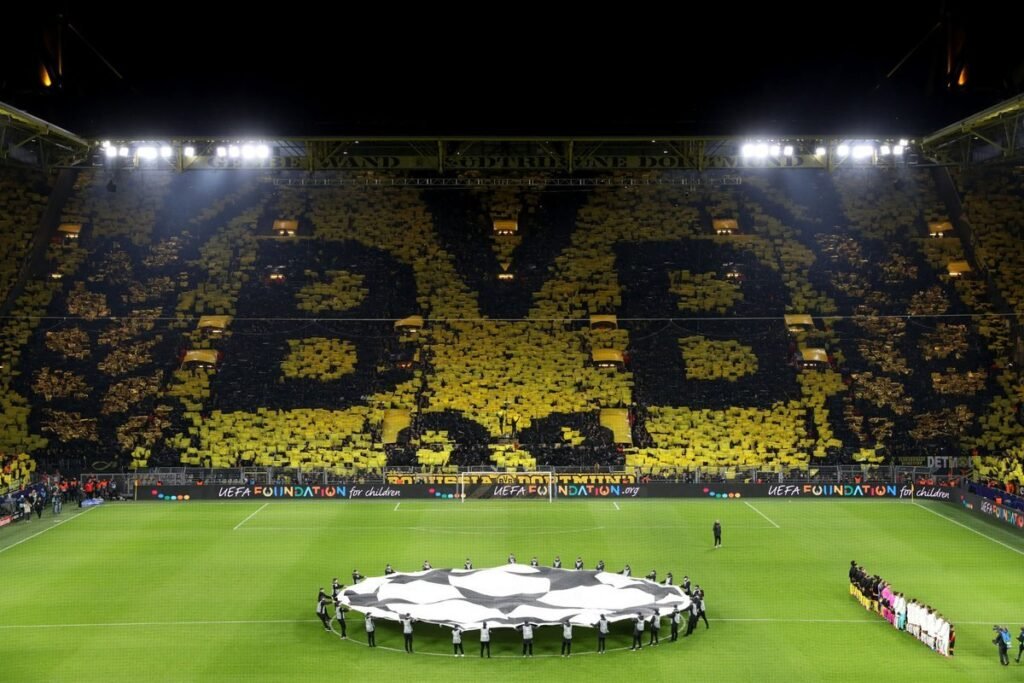
Borussia Dortmund’s Signal Iduna Park is the largest stadium in Germany with over 81,000 seats.
⚽ Fun Fact #5
The famous “Yellow Wall” is the largest terrace for standing fans in European football.
Why the Bundesliga’s Creation Was So Important
The creation of the Bundesliga did more than just reorganize German football.
It:
- Professionalized the sport
- Improved club finances
- Boosted international success
- Built one of the strongest fan cultures in football
Within just 10 years, Germany went from struggling internationally to winning the 1974 FIFA World Cup.
Many historians believe the Bundesliga was a major factor behind that success.
Conclusion
The Bundesliga’s origins tell a fascinating story of transformation. What began as a fragmented regional system evolved into one of the most exciting football leagues in the world.
From the first season in 1963 to the dominance of clubs like Bayern Munich and Borussia Dortmund, the Bundesliga has become a symbol of German football excellence.
Its unique combination of high-quality football, passionate fans, and community ownership continues to make it one of the most admired leagues globally.
And it all started with a simple idea in the early 1960s:
Germany needed a national league to compete with the best.
More than 60 years later, that decision still shapes the future of football.
FAQs
What is the origin of the Bundesliga?
The Bundesliga was created in 1963 by the German Football Association to establish Germany’s first national professional football league. Before this, German football was played in regional leagues called Oberligen.
When did the Bundesliga start?
The Bundesliga officially began in the 1963–64 season with 16 founding clubs competing in Germany’s first nationwide football league.
Which clubs were founding members of the Bundesliga?
Some founding clubs included Borussia Dortmund, Werder Bremen, Hamburger SV, Schalke 04, Eintracht Frankfurt, and 1. FC Köln.