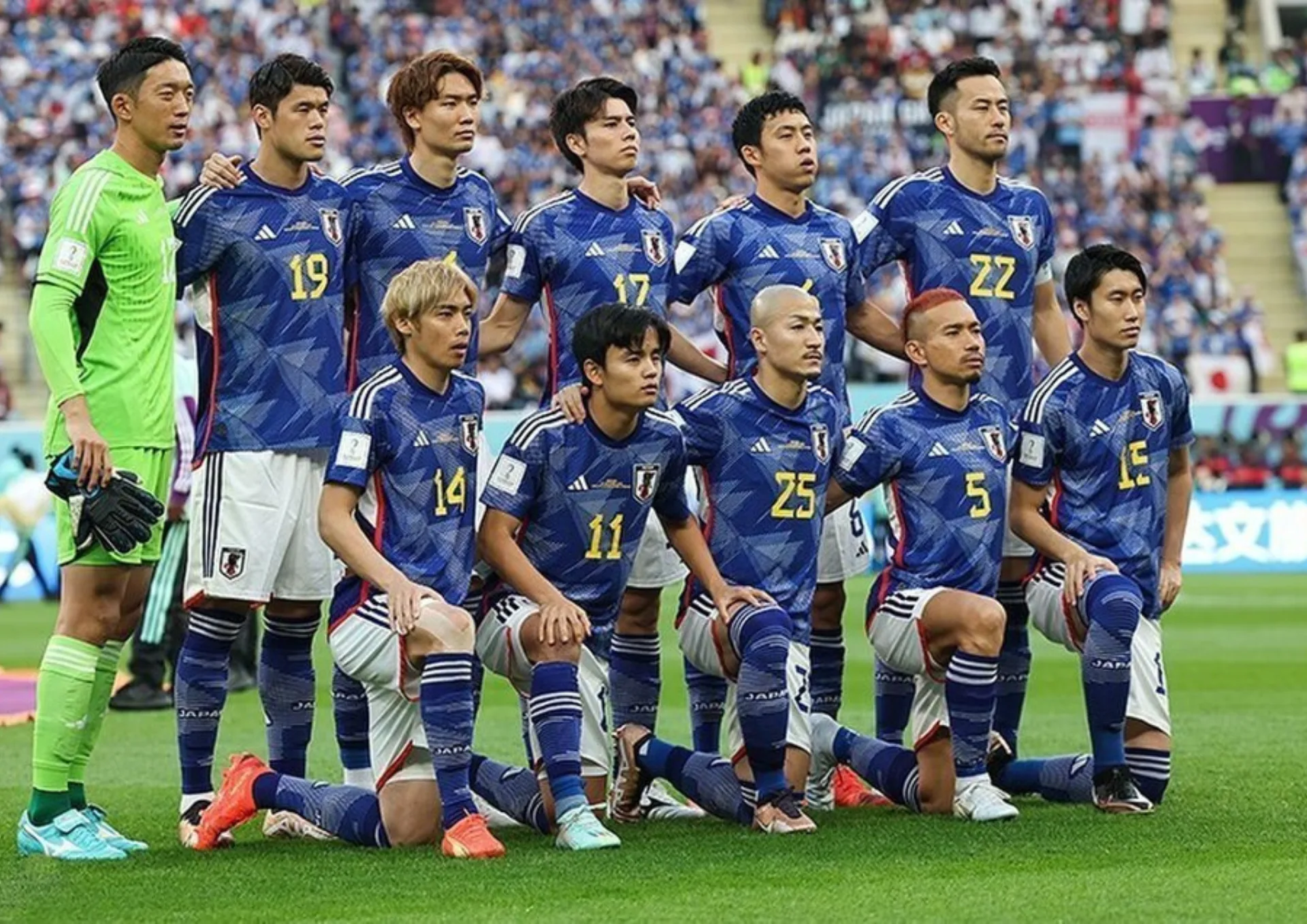
🇯🇵 Japan FIFA World Cup 2026: The Dark Horse That Could Shock the World
There are dark horses, and then there is Japan.
Ask any casual football fan to name their favourites for the Japan FIFA World Cup 2026, and you’ll likely hear the same names: Brazil, France, Argentina, and England. Japan? Maybe not. And that is precisely the point.
At the 2022 FIFA World Cup, the Japan national football team didn’t just show up—they made a statement. In a group that featured two of Europe’s heavyweights, Germany’s national football team and Spain’s national football team, Japan played with boldness and composure, defeating both sides and finishing top of Group E. Their 2–1 win over Spain sealed a place in the Round of 16, while Germany, four-time world champions, were sent home early. This wasn’t a fluke—it was a clear signal of Japan’s rising strength on the global stage.
Now, as they head into the Japan FIFA World Cup 2026, Japan national football team—the Samurai Blue—brings something even more formidable than unpredictability: real expectations backed by proven quality. Ranked 18th globally, they’ve already shown their level by beating top-tier sides like the Germany national football team (twice), the Brazil national football team, and the England national football team since 2022—teams typically considered among the favourites and all ranked above them.
The question is no longer whether Japan can compete. The question is: how far can they actually go?
Tactical Evolution Under Hajime Moriyasu
No single factor explains Japan’s transformation better than the tactical evolution under head coach Hajime Moriyasu. Once criticised as too cautious and reactive, Moriyasu has reshaped the Samurai Blue into one of international football’s most energetic and intelligent sides.
Under Hajime Moriyasu, the Japan national football team has evolved into one of the most intense pressing sides in international football. They’re comfortable switching between a 4-3-3 and a 3-4-2-1, combining sharp passing, relentless counter-pressing, and dynamic width to create multiple tactical threats across the pitch. This adaptability isn’t by chance—it’s the result of months of structured work on pressing triggers, defensive compactness, and quick, vertical attacking transitions.
What makes this system especially dangerous against elite teams is its adaptability. Against possession-heavy sides like the Spain national football team, the Japan national football team is comfortable sitting deep and launching rapid counter-attacks with devastating pace. Against more direct opponents, they can take control of the midfield through precise passing and quick combinations. Hajime Moriyasu has also frequently used a three-at-the-back setup, built around a disciplined defensive structure that creates the perfect foundation for fluid and dynamic attacking play.
At the Japan FIFA World Cup 2026, this tactical intelligence could be the edge that separates them from fellow contenders in a newly expanded 48-team tournament.
Star Power: The Players Who Can Change Everything
A generation ago, Japanese football relied on its collective spirit to compensate for a lack of individual brilliance. That era is over.
Takefusa Kubo has developed into one of the most exciting attacking midfielders in Europe. Playing for Real Sociedad in La Liga, his close control, vision, and ability to unlock defences in a single moment make him Japan’s most dangerous creative outlet. With Kubo expected to return after missing some recent selections, Hajime Moriyasu will have genuine match-winners at his disposal heading into the tournament.
Kaoru Mitoma has been just as electrifying, with his explosive wing play at Brighton & Hove Albion F.C. making him a constant threat to full-backs. However, Japan’s FIFA World Cup 2026 preparations have suffered a major setback, as Mitoma is sidelined with an ongoing hamstring injury sustained during a Premier League win over Wolverhampton Wanderers F.C.
Similarly, Takumi Minamino will also miss out on the squad due to injury, further impacting Japan’s attacking options heading into the tournament.
The midfield core is built around captain Wataru Endo, the Liverpool F.C. defensive midfielder who remains central to Hajime Moriyasu’s system after recovering from a serious ankle injury in April. Alongside him, Ao Tanaka and Daichi Kamada provide composure and technical quality in midfield, while Joel Chima Fujita and others bring added energy and squad depth.
In goal, Zion Suzuki of Parma Calcio 1913 is the leading candidate to start between the posts, having established himself as a regular in the lineup since the retirement of Shuichi Gonda.
Japan’s collective strength at the Japan FIFA World Cup 2026 is not built around one or two players — it is built around an entire squad of European-tested, technically gifted athletes who trust the system above personal glory.
Proof They Can Beat Giants
The sceptics still exist. They call Japan’s results against Germany and Spain “flukes,” “tactical accidents,” “a product of circumstance.” History disagrees.
Japan’s national football team delivered one of the most remarkable upsets in 2022 FIFA World Cup history, coming from behind to defeat the Spain national football team 2–1 and finish top of Group E, helped by a hugely debated goal. Even more astonishing, Japan managed to win with just 17.7% possession, the lowest ever recorded for a victorious team in World Cup history. That wasn’t luck—it was a masterclass in tactical discipline.
Against Germany national football team, the script was just as dramatic. Ritsu Doan and Takuma Asano—both plying their trade in Germany—came off the bench to score after the 76th minute, beating Manuel Neuer and sealing a stunning comeback. Hajime Moriyasu later described it as “a historic moment, a historic victory.”
These were not defensive performances born of fear. They were bold tactical masterclasses. Japan absorbed pressure, conserved energy, and then detonated — using fresh substitutes, pace in behind, and clinical finishing to devastate opponents who thought they had the game under control.
The mentality built through those performances is now embedded in the culture of Japan’s FIFA World Cup 2026 preparations. These players know they can beat anyone. That belief is priceless.
Japan’s Biggest Strengths in 2026
Here is a summary of what makes Japan’s FIFA World Cup 2026 such a compelling proposition:
| Strength | Detail |
|---|---|
| Tactical Flexibility | Can play 4-3-3 or 3-4-2-1, depending on the opponent |
| High Pressing | Among the most aggressive pressing units in international football |
| European Experience | The majority of squads play in top European leagues |
| Squad Depth | Multiple quality options in every position |
| Mental Toughness | Proven ability to come from behind against elite opposition |
| Team Chemistry | Long-serving core under Moriyasu with strong cohesion |
| Speed & Stamina | Among the fastest and highest-energy squads in the tournament |
Japan national football team heads into the tournament with one of the most exciting and well-rounded squads, featuring established stars playing across Europe. Their strength lies not just in individual talent, but in depth across every position, ensuring they are not dependent on a single match-winner. This is a squad carefully built to handle the intensity and demands of a long tournament run.
The Weaknesses That Could Hold Them Back
No honest analysis of Japan’s FIFA World Cup 2026 can ignore the challenges.
The biggest concern remains the striker position. The Japan national football team has long lacked a truly dominant, world-class centre-forward capable of finishing half-chances in high-pressure knockout games. Ayase Ueda, Koki Ogawa, Shuto Machino, Daizen Maeda, and Yuito Suzuki offer Hajime Moriyasu a range of options in attack, but none yet dominate the penalty area with the authority of players like Harry Kane or Robert Lewandowski.
Physicality remains an issue against larger European and South American sides. Japan’s press and speed are remarkable, but sustained physical battles — particularly against teams with tall, powerful defenders — can drain the legs and test the squad’s depth in ways that friendlies against Scotland and England do not fully replicate.
Defensive lapses under sustained pressure are another concern. While Japan’s high line works brilliantly when their press is functioning, a team that bypasses the press with direct balls in behind can expose the backline. And in knockout football, a single moment of inattention can end a campaign.
Finally, there’s the question of experience. The Japan national football team has reached the Round of 16 four times—their best-ever achievement at a FIFA World Cup. But pushing beyond that, into the quarterfinals or even the semifinals, means stepping into uncharted territory—something this squad has yet to successfully navigate.
How Far Can Japan Really Go?
Let’s be clear-eyed about what Japan’s FIFA World Cup 2026 can realistically achieve.
Japan’s national football team, led by Hajime Moriyasu, will share their World Cup group with strong opponents like the Netherlands national football team, Sweden national football team, and Tunisia national football team—a challenging draw, but one that remains well within reach for a team of Japan’s quality.
A quarterfinal berth is not just possible — it is probable if Japan stay healthy and their pressing game fires. A semifinal run would require everything to align: favourable draws in the knockout rounds, peak performance from key players, and perhaps one or two moments of inspired substitution from Moriyasu, as Japan fans have learned to expect.
Here is how their odds stack up against traditional tournament powers:
| Team | FIFA Ranking (approx.) | Recent H2H vs Japan |
|---|---|---|
| Brazil | Top 5 | Lost to Japan (post-2022) |
| Germany | Top 15 | Lost twice to Japan since 2022 |
| England | Top 5 | Lost to Japan (March 2026) |
| Spain | Top 5 | Lost to Japan (Qatar 2022) |
| France | Top 3 | No recent competitive meeting |
The draw matters enormously. But if Japan gives them a path that avoids France or Brazil until the later rounds, a deep run is genuinely on the cards.
Could Japan Make History?
The question sounds outlandish. But so did “Japan beats Germany AND Spain in the same group stage” until it happened.
Could Japan produce the most seismic result in football history — the first Asian nation to win the World Cup? The honest answer is: not yet. France, Brazil, and Argentina remain structurally superior in terms of depth, physical power, and elite individual quality. A Japan World Cup victory in 2026 would be the greatest upset in sporting history.
But a Japan semifinal? A Japan final? Those no longer belong purely in the realm of fantasy.
What a deep run by Japan at the Japan FIFA World Cup 2026 would mean for Asian football cannot be overstated. It would fundamentally change how scouts, clubs, and confederations invest in the Asian game. It would inspire a generation of children across Japan, South Korea, Australia, and beyond. It would reshape the global football conversation in ways that one Qatar group stage would never fully accomplish.
The Japan FIFA World Cup 2026 is not just a football tournament for Japan. It is the stage for a nation to announce itself as a permanent member of the game’s elite.
Conclusion: Don’t Be Surprised If It Happens
Football has a beautiful habit of humbling the overconfident.
Germany and Spain were overconfident in Qatar. They paid the price. Whoever faces Japan in the FIFA World Cup 2026 knockout rounds and dismisses the Samurai Blue as a team to be managed, rather than feared, will be making the same mistake.
After consecutive Round of 16 appearances, the Japan national football team is determined to take the next step in 2026—and if their recent friendly performances are anything to go by, they have every reason to believe they can.
This is a team coached by a tactician who has mastered the art of the upset. A squad packed with European-hardened players who carry the quiet confidence of those who have beaten the best in the world. A nation that plays not with the anxiety of proving itself, but with the freedom of a team that knows exactly what it is capable of.
Underestimate Japan at the FIFA World Cup 2026 at your own risk. The shock has been coming for years. In the summer of 2026, the world might finally take permanent notice.
Frequently Asked Questions (FAQs)
What group is Japan in at the FIFA World Cup 2026?
Japan has been drawn into Group F alongside the Netherlands, Sweden, and Tunisia — a competitive but navigable group for a side of their quality and experience under Moriyasu.
Is Kaoru Mitoma playing at the Japan FIFA World Cup 2026?
Unfortunately, Kaoru Mitoma has been ruled out of the tournament due to a hamstring injury sustained in a Premier League match for Brighton. His absence is a significant blow, though Japan’s squad depth means they have alternatives in wide areas.
Who is Japan’s captain at the FIFA World Cup 2026?
Wataru Endo, the Liverpool FC defensive midfielder, captains the side. He recovered from an ankle injury in time to lead the squad into the tournament.
Has Japan ever beaten Germany and Spain at the same World Cup?
Yes — at the 2022 FIFA World Cup in Qatar, Japan defeated both Germany (2-1) and Spain (2-1) in the group stage, topping Group E in one of the tournament’s most stunning storylines.
What is Japan’s best-ever FIFA World Cup result?
Japan has reached the Round of 16 on four separate occasions, most recently at Qatar 2022. Reaching the quarterfinals at the Japan FIFA World Cup 2026 would mark the greatest achievement in the nation’s football history.

I’m a football writer, covering top leagues like the Premier League, La Liga, Bundesliga, Serie A, and Ligue 1. I write about match analysis, football news, tactics, and major tournaments such as the FIFA World Cup, delivering clear, engaging insights for fans.
About The Author