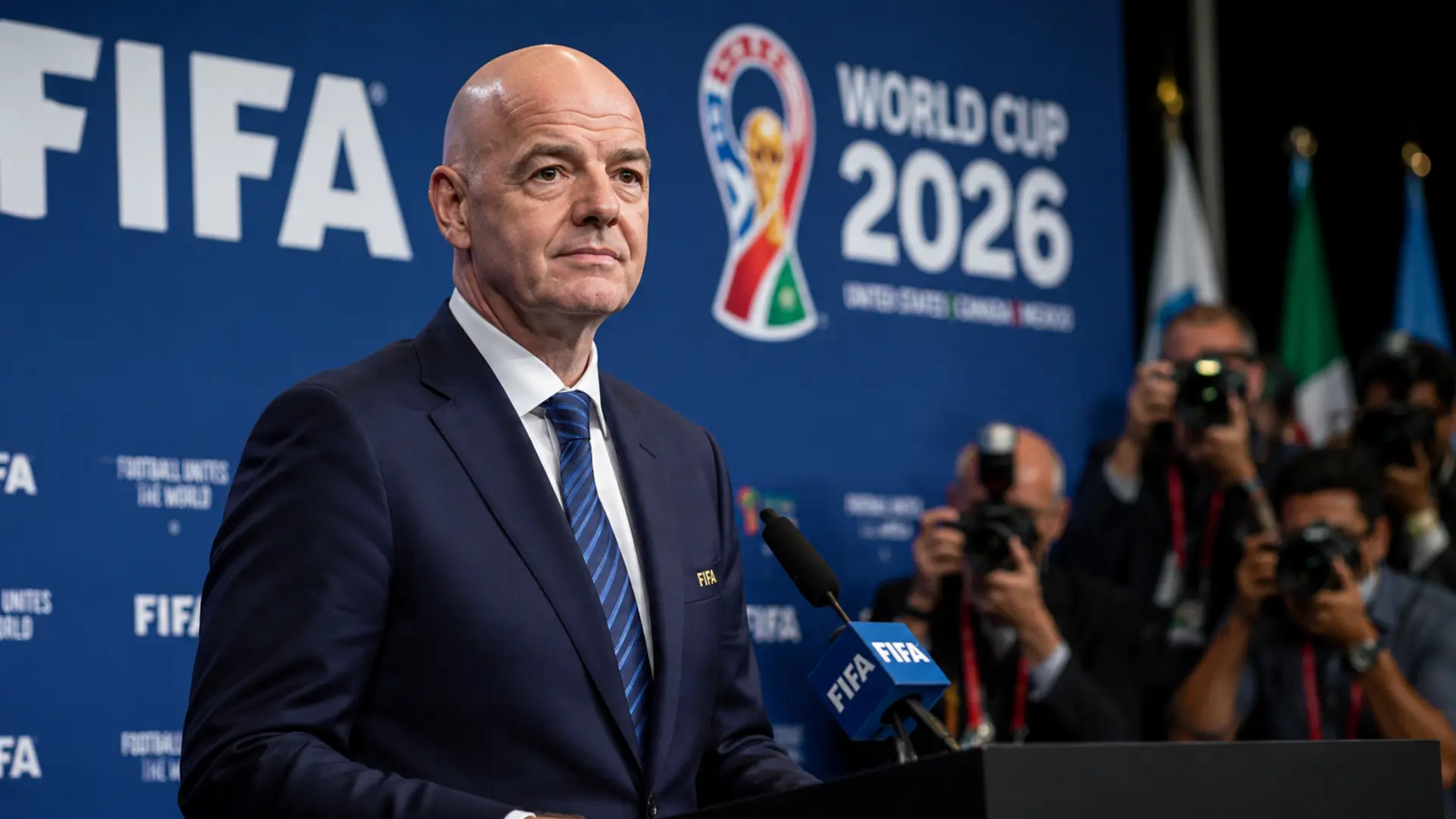
FIFA President Gianni Infantino has moved to quell mounting concerns surrounding visa denials and entry restrictions affecting participants of the FIFA 2026 World Cup, firmly stating that the global football governing body does not hold the authority to override sovereign government decisions.
Speaking at a press conference in Mexico City on the eve of the tournament’s opening, Infantino drew a clear line between FIFA’s jurisdiction and that of national governments, reminding reporters that the organization operates strictly as a sports body.
“We try always to find solutions — always,” Infantino told journalists. “But then we need to respect that we are not the kings of the world who can rule over governments and police forces. We are a sports organisation; we try to do our best with the means that we have.”
The Artan Case
The controversy reached its peak earlier this week when Somali referee Omar Artan was denied entry into the United States despite holding a valid tournament visa. The US government’s decision drew widespread criticism from football officials and human rights observers alike.
FIFA subsequently removed Artan from the official roster of match officials, a move that further intensified scrutiny of the United States as a host nation. Infantino described the development as “unfortunate” but offered no further explanation regarding the circumstances behind the denial.
Trump Administration Weighs In
Infantino’s remarks followed a public statement from US President Donald Trump, who indicated that his administration was actively screening individuals seeking entry into the country for the World Cup, with the intention of ensuring only what he termed “the right people” were permitted in.
Rather than escalating tensions with Washington, Infantino urged restraint, advising that an immediate and aggressive reaction to such situations often proves counterproductive.
“Sometimes, to immediately start screaming and shouting has the opposite effect in terms of finding a solution,” he said, adding that FIFA was working “behind the scenes” to manage such issues as they arose.
A Tournament Like No Other: The Iran Question
Beyond the visa disputes, this year’s edition of the World Cup carries a geopolitical weight unlike any in the tournament’s near-century-long history. For the first time since the competition’s founding in 1930, a host nation finds itself at war with one of the participating teams.
The ongoing US-Israel military campaign against Iran has cast a long shadow over what is otherwise the world’s most-watched sporting event, with both Washington and Tehran appearing to leverage the tournament for broader political messaging.
Despite the extraordinary circumstances, Iran’s national squad was granted entry visas approximately ten days before their opening fixture in Los Angeles. Given the diplomatic sensitivities, the Iranian team relocated its training base to Mexico, crossing the border specifically for matches before returning to Tijuana.
Infantino acknowledged the delicate nature of the situation but credited FIFA’s persistent diplomatic efforts for making Iran’s participation a reality.
“It has been successful to bring Iran to play in America — I don’t know who would’ve managed to do that,” he said. “We don’t live on the moon, we live on planet Earth, and we try our best.”
No Regrets Over Host Selection
Despite the controversies, Infantino stated unequivocally that FIFA harbours no regrets over its decision to award the United States co-hosting rights for the expanded 48-team tournament, alongside Canada and Mexico.
The organisation, he maintained, remains committed to delivering a successful and inclusive competition — one that, despite its political complexities, continues to carry the promise of uniting the world through sport.

I’m a football writer, covering top leagues like the Premier League, La Liga, Bundesliga, Serie A, and Ligue 1. I write about match analysis, football news, tactics, and major tournaments such as the FIFA World Cup, delivering clear, engaging insights for fans.
About The Author