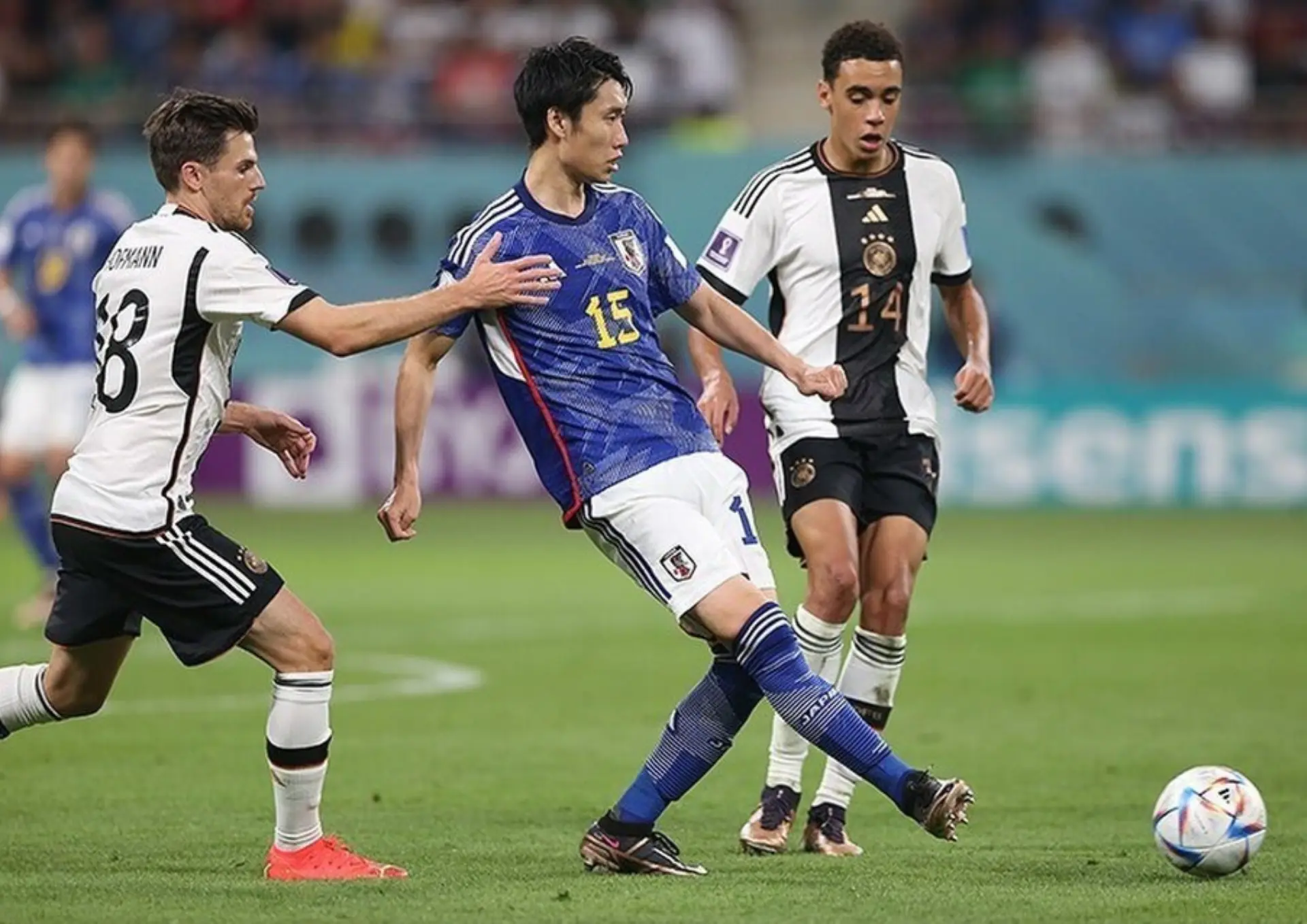
FIFA World Cup 2026 Group E Predictions: Germany Lead, Ecuador Rise & Shock Exits
The FIFA World Cup 2026 Group E stage (June 14–25, 2026) features Germany, Curaçao, Ivory Coast, and Ecuador, and on paper looks like a straightforward path for Germany, but the underlying competitive dynamics are far more complex. While Germany brings elite depth and tournament pedigree, Ivory Coast offers physicality and athletic transition threat, Ecuador add altitude-honed intensity and defensive structure, and Curaçao arrive as a rapidly improving underdog with little pressure and high variance potential. The result is a group that appears top-heavy at first glance but is tactically diverse and far less predictable than it seems.
Group E of the FIFA 2026 World Cup features Germany, Ivory Coast, Ecuador, and Curaçao, creating a highly diverse mix of playing styles. Germany is the clear favourite, but the group also includes African physicality, South American structure, and a historic debut from Curaçao, making it more competitive than it appears on paper.
Germany is the clear favourite to top Group E of the FIFA World Cup 2026, with most projections and betting markets heavily backing their progression. The real competition is expected between Ecuador and the Ivory Coast, where the battle for second place looks far more open and tactically tight. Meanwhile, Curaçao are widely viewed as an underdog, but their presence adds unpredictability to a group where margins behind Germany could be thin.
🇩🇪 Germany – Tournament Favourites Rebuilding for Glory
When discussing FIFA World Cup 2026 Group E predictions, Germany dominates the narrative, but they arrive under pressure after consecutive early exits in 2018 and 2022 following their 2014 triumph. Those failures have reshaped the squad’s mentality, creating a clear expectation to reassert themselves immediately and avoid another group-stage collapse.
Germany approaches Group E of the FIFA World Cup 2026 with a structured, high-intensity system built on pressing, rapid transitions, and positional flexibility. Under Julian Nagelsmann, they operate primarily in a fluid 4-2-3-1 that can shift into a 4-3-3 to increase pressure in advanced zones, supported by a blend of emerging talent and experienced core players that maintains quality across rotations and match phases.
Germany’s depth and adaptability are often cited as its key competitive advantage in Group E of the FIFA World Cup 2026. Players like Nathaniel Brown, who had eligibility for multiple national teams but committed to Germany, underline the squad’s recruitment strength and long-term planning. More broadly, Germany’s tournament mentality—built through decades of knockout-stage experience—remains a defining edge, often separating them from similarly talented but less proven sides in tight group scenarios.
Why Germany tops the group: Even on a bad day, Germany’s structural discipline and squad depth make them near-impossible to beat over 90 minutes. Expect them to win all three group games with relative comfort.
🇪🇨 Ecuador – South American Powerhouse Ready to Upset Expectations
Ecuador are one of the most compelling emerging stories in Group E of the FIFA World Cup 2026, having qualified for consecutive World Cups for only the second time in their history. After a group-stage exit in the previous tournament, this young, energetic squad returns with a clear objective: progression to the knockout rounds for just the second time ever, driven by pace, athleticism, and a rapidly maturing core of players.
Ecuador head into the FIFA World Cup 2026 with a strong midfield identity, and much of their optimism is built around elite European-based talent such as Chelsea’s Moisés Caicedo. His ability to break up plays, cover ground, and disrupt passing lanes makes him a key tactical shield in central areas.
Against top sides like Germany, Caicedo’s role becomes especially important in slowing transitions and limiting progression through midfield, allowing Ecuador to stay compact and competitive even against technically superior opposition.
Ecuador’s approach in the FIFA World Cup 2026 is built on midfield intensity and defensive structure, with Moisés Caicedo acting as the key ball-winner and transition initiator. Piero Hincapié adds defensive stability and flexibility, helping maintain compactness and support Ecuador’s pressing system against stronger opponents.
Ecuador arrive at the FIFA World Cup 2026 with a balanced mix of experience and youth, led in attack by Enner Valencia, who scored six of their 14 qualifying goals and provides a proven finishing outlet in transition. Combined with their high-intensity pressing and defensive discipline, Ecuador’s structure and individual quality make them strong contenders for second place in Group E and capable of testing Germany more than expected on Matchday 3.
Why Ecuador finished second: Their squad quality outranks the Ivory Coast’s in key areas. Caicedo and Hincapié alone give them a midfield and defensive spine that can absorb pressure and hit teams on the break.
🇨🇮 Ivory Coast – Strong Squad but Tough Group Pressure
Ivory Coast return to the FIFA World Cup 2026 for the first time since 2014, marking a new era after the retirements of legends like Didier Drogba and Yaya Touré. The squad has since evolved into a younger, more balanced side, highlighted by their recent AFCON 2024 triumph and strong qualifying campaign, where they topped their group to secure direct qualification.
Ivory Coast’s defensive setup at the FIFA World Cup 2026 is anchored by the centre-back pairing of Evan Ndicka and Odilon Kossounou, combining aerial dominance with composure in possession to support build-up play from the back. Under Emerse Faé, the team typically operates in a structured mid-block, prioritising compact defensive lines before launching quick transitions, a system designed to maximise their physical power and counter-attacking speed.
Ivory Coast’s biggest concern heading into the FIFA World Cup 2026 is consistency at the highest level. While the squad has clear quality and structure under Emerse Faé, questions remain about whether they can maintain defensive organisation against elite attacking units like Germany, whose combination play and movement in advanced areas represent a significant step up from anything encountered in African qualifying.
Why they miss out on qualification: Ivory Coast’s ceiling in this group is high, but their floor is dangerously low. In a tight group where goal difference could separate second from third, inconsistency is fatal.
🇨🇼 Curaçao – Underdogs Facing a Massive Challenge
Ivory Coast’s return to the FIFA World Cup 2026 marks a major milestone, highlighted by coach Emerse Faé calling qualification the “craziest thing” of his career. It reflects a new era for the team after years of absence from the tournament, with a refreshed squad aiming to translate recent African success into competitiveness on the world stage.
Ivory Coast arrive at the FIFA World Cup 2026 having navigated a strong qualification campaign, highlighted by seven wins from ten matches and an unbeaten finish, underlining their consistency at the continental level. This marks a significant achievement for a side that has struggled to qualify for recent tournaments, with their 2024 AFCON success reinforcing belief in this new generation. Standout midfielder Juninho Bacuna was among the key performers, leading the team in duels won and exemplifying their physical, competitive style of play.
Curaçao enters the FIFA World Cup 2026 as historic debutants, but the core challenge they face is a clear step-up in opposition quality. Against teams like Germany, Ecuador, and the Ivory Coast, the individual attacking talent and tempo will be significantly higher than anything encountered in CONCACAF qualifying. As a result, their main test will be maintaining defensive structure and concentration for a full 90 minutes under sustained pressure, which will ultimately define how competitive they can be in the group.
Realistic expectations? Curaçao will aim to stay compact, be hard to break down, and hope to steal a moment of magic against the Ivory Coast. Beating Germany or Ecuador was never the plan. Creating history by simply being here is the plan.
Key Matches That Will Decide Group E
Three matches stand out as pivotal in any FIFA World Cup 2026 Group E predictions breakdown:
Germany vs Ecuador – June 25, MetLife Stadium, New Jersey. Ecuador vs Germany at the FIFA World Cup 2026 is the Group E headline clash, set for June 25 at MetLife Stadium. With both sides likely already qualified, the match is expected to decide group positioning, which could significantly influence the knockout-stage path. Despite the reduced immediate pressure, the tactical stakes remain high, with both teams expected to approach it as a controlled, high-level chess match to secure a more favourable route into the round of 32.
Ivory Coast vs Ecuador – June 14, Lincoln Financial Field, Philadelphia Ivory Coast vs Ecuador in the FIFA World Cup 2026 Group E opener at Lincoln Financial Field is widely viewed as the decisive early clash for second place. A win here would give either side a major psychological boost and strong control over qualification dynamics, while also shaping tactical approaches for the remaining group fixtures.
Curaçao vs Ivory Coast – June 25, Lincoln Financial Field, Philadelphia. Curaçao vs the Ivory Coast in the FIFA World Cup 2026 Group E finale at Lincoln Financial Field is a high-stakes fixture, potentially decisive for second-place qualification. For the Ivory Coast, it becomes a must-win if they are chasing Ecuador, while for Curaçao, it represents their best opportunity to secure a landmark result in their debut World Cup campaign.
Final Group E Table Prediction
| Position | Team | W | D | L | GF | GA | GD | Pts |
|---|---|---|---|---|---|---|---|---|
| 1st 🥇 | 🇩🇪 Germany | 3 | 0 | 0 | 9 | 2 | +7 | 9 |
| 2nd 🥈 | 🇪🇨 Ecuador | 2 | 0 | 1 | 5 | 4 | +1 | 6 |
| 3rd | 🇨🇮 Ivory Coast | 1 | 0 | 2 | 3 | 6 | -3 | 3 |
| 4th | 🇨🇼 Curaçao | 0 | 0 | 3 | 1 | 6 | -5 | 0 |
These FIFA World Cup 2026 Group E predictions reflect the balance of squad quality, recent form, and tactical matchups across all three matchdays. Germany’s dominance is near-certain. The real drama is in second and third place.
Can Ecuador Challenge Germany for First Place?
This is the most compelling sub-question in the entire FIFA World Cup 2026 Group E predictions debate. Ecuador vs Germany on the final matchday is a mouth-watering prospect, but can the Ecuadorians genuinely top the group?
Ecuador is expected to adopt a compact mid-block against Germany in the FIFA World Cup 2026, deliberately conceding wide possession while protecting central spaces. This structure is designed to neutralise progression through key zones, particularly where players like Moisés Caicedo operate most effectively in breaking up play. Supported by a strong defensive core including Piero Hincapié and Willian Pacho, Ecuador has the organisation and physical resilience to frustrate Germany for extended periods and potentially limit their attacking rhythm.
Germany’s weakness? They can be vulnerable in transition when opponents press high and commit numbers forward. Ecuador’s high-intensity style is designed to exploit precisely that. However, Germany’s squad depth means Nagelsmann can always adjust personnel and system mid-match.
Upset probability: 25%. Ecuador will make it competitive, but Germany’s class and tournament experience should prevail. Expect a 2-1 or 2-0 Germany win that still sets pulses racing.
Biggest Surprise & Potential Upset in Group E
Every group stage throws up a result nobody predicted. In the context of FIFA World Cup 2026 Group E predictions, the most likely shock scenario involves the Ivory Coast.
Here is the Ivory Coast breakthrough scenario: if Amad Diallo and Simon Adingra hit peak form simultaneously, and Sébastien Haller finds the net from set-pieces, the Elephants could beat Ecuador on Matchday 1 and completely rewrite the group narrative. A win there would put them in the driving seat for second, leaving Ecuador in desperate catch-up mode.
Curaçao’s approach at the FIFA World Cup 2026 is built on compact defending, collective unity, and opportunistic moments in transition, giving them a realistic chance of unsettling stronger opposition if matches open up. Against teams like the Ivory Coast, their best opportunity comes from discipline and game management, especially if opponents underestimate them or lose focus in key moments.
The most realistic shock result remains Ivory Coast beating Ecuador on Matchday 1, which would trigger a thrilling three-way battle for second place.
Final Verdict – Who Advances & Who Goes Home
The FIFA World Cup 2026 Group E predictions ultimately point in one clear direction: Germany and Ecuador advance. Germany’s class, depth, and tactical maturity make it the outstanding group winner. Ecuador’s Premier League-calibre spine in Caicedo, Hincapié, and Pacho gives them the tools to handle high-pressure moments.
Ivory Coast, despite their AFCON pedigree and exciting attackers, face too many questions around consistency and their first World Cup in 12 years to reliably book a top-two finish. They remain the most dangerous third-place threat in the group, however, and could still advance as one of the eight best third-placed teams depending on other groups’ results.
Curaçao returns home as heroes regardless. They have already achieved the impossible just by being here.
The Group E story will be written in Philadelphia and New Jersey — and it promises to be unforgettable.
Frequently Asked Questions (FAQs)
Who are the favourites in FIFA World Cup 2026 Group E?
Germany are the overwhelming favourites to win Group E, backed by their four World Cup titles, squad depth, and tactical quality under Julian Nagelsmann. Ecuador are widely tipped to finish second.
When do Group E matches start at the 2026 World Cup?
Group E kicks off on June 14, 2026, with Germany vs Curaçao in Houston and Ivory Coast vs Ecuador in Philadelphia. The final matchday is June 25.
Is Curaçao the smallest country ever to play at a World Cup?
Yes. With a population of around 156,000, Curaçao is the smallest nation in World Cup history to qualify for the tournament finals.
Has the Ivory Coast ever advanced from the World Cup group stage?
No. Ivory Coast have appeared at the World Cup three times previously (2006, 2010, 2014) and has never made it out of the group stage.
Which player is the key figure to watch in Group E?
Moisés Caicedo of Ecuador (Chelsea) is the standout name. His ability to control midfield, break up play, and drive forward makes him the most influential player in the group outside of Germany’s collective unit.
Also Read:-
FIFA World Cup 2026 Group F Predictions: Netherlands Lead, Japan Advance & Two Teams Knocked Out

I’m a football writer, covering top leagues like the Premier League, La Liga, Bundesliga, Serie A, and Ligue 1. I write about match analysis, football news, tactics, and major tournaments such as the FIFA World Cup, delivering clear, engaging insights for fans.
About The Author
2 thoughts on “FIFA World Cup 2026 Group E Predictions: Germany Favorites, Ecuador Advance & Underdog Struggles”