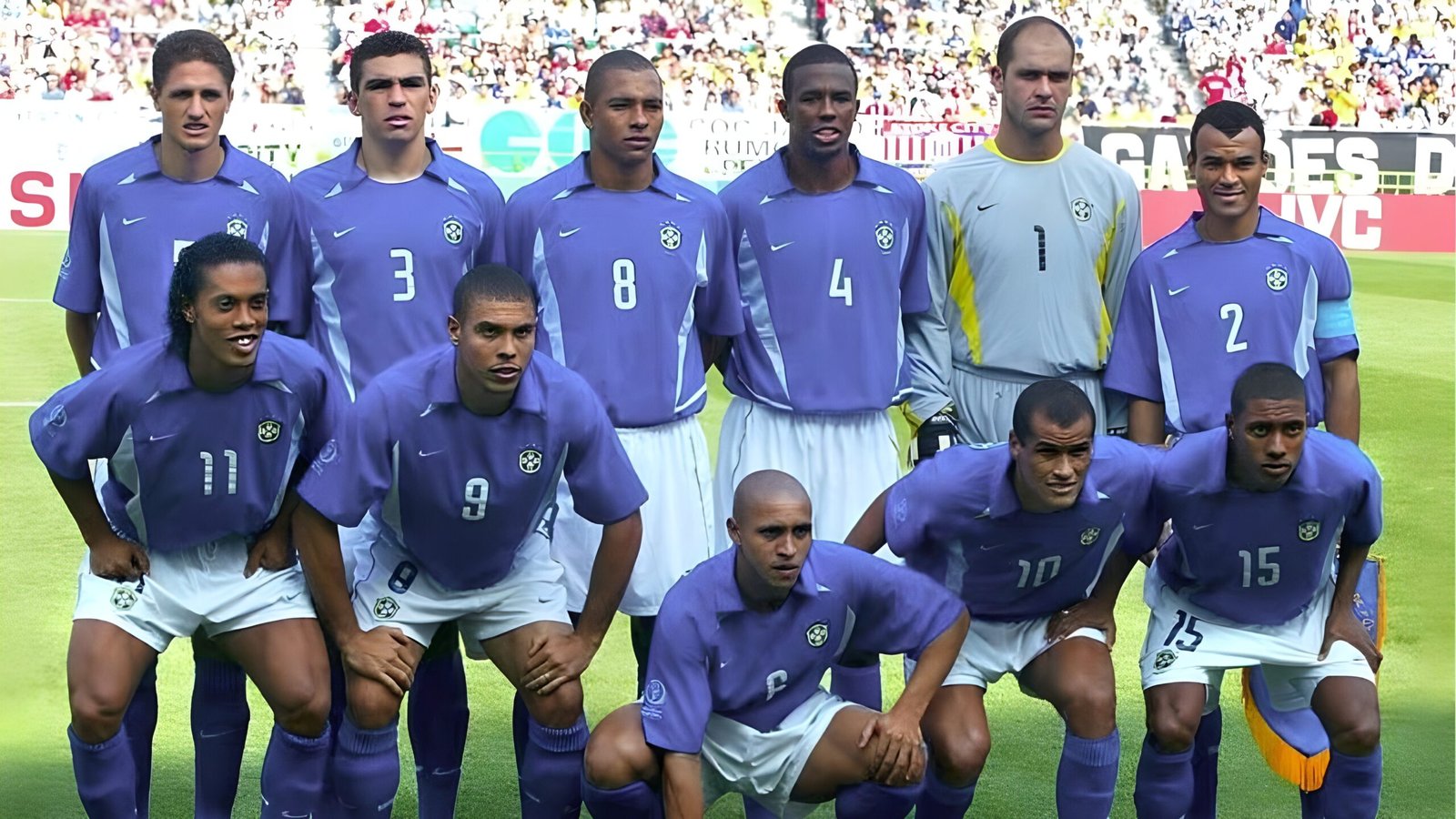
For a nation synonymous with footballing excellence, flair, and dominance, Brazil’s long wait for another World Cup title feels increasingly puzzling. The last time the Seleção lifted the trophy was in 2002, led by icons like Ronaldo Nazário and Ronaldinho. Since then, expectations have remained sky-high—but results haven’t matched the legacy.
More than two decades later, Brazil’s “World Cup drought” has become one of the biggest narratives in global football.
Brazil’s FIFA World Cup Record Since 2002
A quick look at Brazil’s performances highlights a pattern of promise without fulfillment:
| Year | Stage Reached | Eliminated By | Key Result |
|---|---|---|---|
| 2006 | Quarter-finals | France | 1–0 loss |
| 2010 | Quarter-finals | Netherlands | 2–1 loss |
| 2014 | Semi-finals | Germany | 7–1 loss |
| 2018 | Quarter-finals | Belgium | 2–1 loss |
| 2022 | Quarter-finals | Croatia | Lost on penalties |
Despite consistently reaching the knockout stages, Brazil has repeatedly fallen short against disciplined, tactically superior opponents.
The Tactical Shift: Has Brazil Lost Its “Jinga”?
Brazil’s identity has always been tied to “Ginga”—a free-flowing, expressive style rooted in creativity, rhythm, and improvisation. It’s what made legends like Rivaldo and Kaká mesmerizing to watch.
But modern Brazil looks different.
Today’s team prioritizes:
- Structured tactical systems
- Physical pace and pressing
- European-style positional discipline
While these attributes are essential in modern football, they’ve arguably diluted the spontaneity that once made Brazil unpredictable and feared.
The result? An efficient team—but not magical.
The Neymar Factor: The Prince Who Never Became King?
No discussion about Brazil’s struggles is complete without Neymar.
Often labeled as the heir to Brazil’s golden legacy, Neymar carried immense expectations. Statistically, he delivered—becoming one of Brazil’s all-time top scorers—but internationally, the defining World Cup moment never came.
Neymar’s World Cup Impact
| Tournament | Performance | Outcome |
|---|---|---|
| 2014 | 4 goals (injured in QF) | Brazil lost 7–1 in semi-finals |
| 2018 | 2 goals | Eliminated by Belgium |
| 2022 | Key playmaker | Eliminated by Croatia |
Now, with Carlo Ancelotti reportedly leaving Neymar out of the 2026 squad plans, Brazil may be entering a new era—without its biggest star of the past decade.
This raises a critical question:
Has Brazil failed to transition beyond Neymar effectively?
What Made the 2002 Team Different?
The 2002 squad remains Brazil’s gold standard—not just for winning, but for balance.
| Strength | Players |
|---|---|
| Attack | Ronaldo Nazário, Rivaldo, Ronaldinho |
| Midfield Creativity | Kaká |
| Defense | Roberto Carlos, Cafu |
| Experience + Flair | Perfect blend |
That team combined:
- Individual brilliance
- Tactical balance
- Mental resilience
Modern Brazil, by contrast, often appears either overly dependent on individuals or overly system-driven.
Key Issues Behind Brazil’s World Cup Drought
1. Tactical Predictability
Top European teams have figured out how to neutralize Brazil’s attack. Structured defenses and counter-attacks have consistently exposed weaknesses.
2. Over-Reliance on Star Players
From Neymar to emerging talents, Brazil often leans too heavily on individuals rather than cohesive team dynamics.
3. Psychological Pressure
The weight of being a five-time champion brings immense expectation. The 7–1 loss to Germany in 2014 still lingers as a psychological scar.
4. Lack of Midfield Control
Compared to teams like Spain or Germany in their peak years, Brazil has lacked a dominant, controlling midfield presence.
Can Brazil Win the 2026 FIFA World Cup?
Looking ahead to the FIFA 2026 World Cup, Brazil remains a contender—but not the favorite.
Reasons for Optimism:
- Emerging young talents across Europe
- Tactical evolution under experienced management
- Strong attacking depth
Reasons for Concern:
- Unclear identity post-Neymar
- Lack of cohesion in big matches
- Increasing competition from European giants
Final Verdict
Brazil’s World Cup drought isn’t due to a lack of talent—it’s a deeper, structural issue.
The shift away from “Jinga,” tactical rigidity, and an incomplete generational transition have all contributed to the decline. To return to the top, Brazil doesn’t just need better players—it needs to rediscover its footballing soul.
Until then, the question will remain:
Can the five-time champions truly become Brazil again?
Also Read:-
France has the best squad at the 2026 World Cup — so why does everyone think they’ll lose?
Messi at 38 — the cold truth about what he can and cannot do at the 2026 World Cup

I’m a football writer, covering top leagues like the Premier League, La Liga, Bundesliga, Serie A, and Ligue 1. I write about match analysis, football news, tactics, and major tournaments such as the FIFA World Cup, delivering clear, engaging insights for fans.
About The Author
3 thoughts on “Brazil haven’t won the World Cup since 2002 — what is actually going wrong with the five-time champions?”