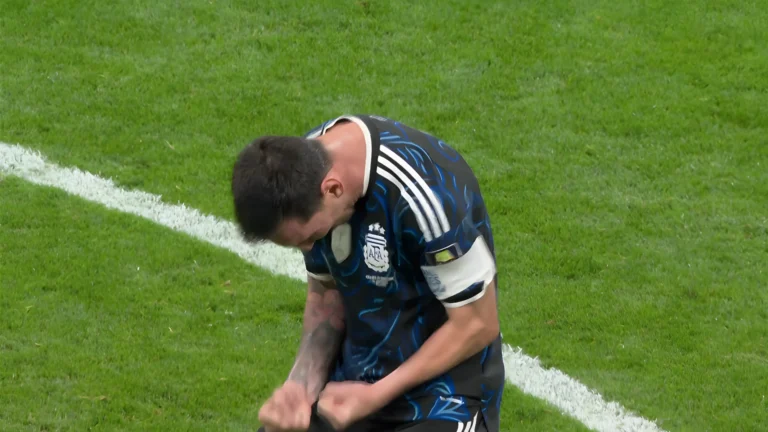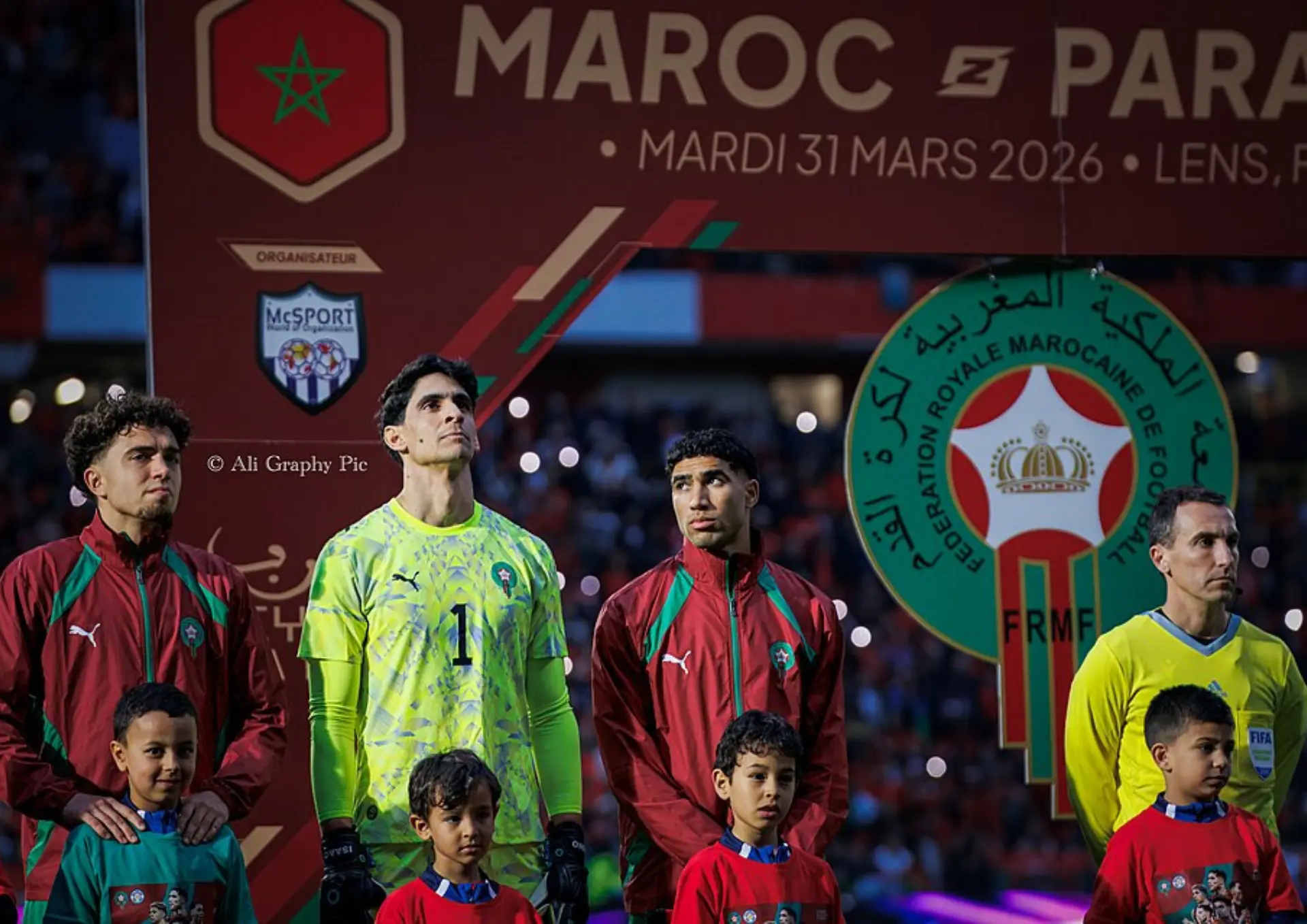
In the 96-year history of the FIFA World Cup, no African nation has ever reached the semi-finals.
Read that sentence again. Ninety-six years. Twenty-two tournaments. Hundreds of African players have been among the finest footballers on the planet in their generation. And not once — not a single time — has an African team stood in the final four of the World Cup.
Morocco came the closest in 2022. They beat Spain. They beat Portugal. They stood on the edge of something historic before France’s quality proved just too much in the semi-final. The continent watched with tears streaming and pride bursting and the absolute certainty that what Morocco had done was not a fluke — it was a foundation.
In 2026, that foundation becomes a launchpad.
The African teams for the 2026 FIFA World Cup sent to North America are the strongest, deepest and most experienced group the continent has ever produced. These two teams — Morocco and Senegal have genuine, realistic, evidence-based cases for reaching the semi-finals.
This is the year the barrier breaks. Here is why.
Why 2026 Is Fundamentally Different for African Football
Before we make the case for individual nations, it is worth understanding why 2026 represents a genuine structural shift for African football rather than simply another cycle of optimism.
The expanded format changes everything.
Africa receives nine places at the 2026 FIFA World Cup — up from five at every previous tournament in the modern era. Nine African nations will play at the world’s biggest sporting event. That is nine times the experience, nine times the stage, nine times the data for the next generation of African players to grow up watching.
But beyond the numbers, the expanded format changes the tournament mathematics for every team. With 48 teams in 12 groups of four, three teams from each group advance to a Round of 32. That means finishing third in your group — something that would have eliminated you in previous tournaments — now keeps you alive.
For African teams that have historically been drawn into brutal groups alongside two or three European or South American giants, this safety net is transformative. One bad game no longer ends your tournament.
| African World Cup Appearances | Teams Sent | Best Result | Year |
|---|---|---|---|
| Pre-2026 (all tournaments) | 5 max | Semi-final | 2022 (Morocco) |
| 2026 World Cup | 9 | TBD | 2026 |
The European league revolution is complete.
Twenty years ago, the best African players were scattered across mid-table European clubs — good enough to play in Europe, rarely good enough to compete for trophies. Today, the picture is completely different.
Brhahim Diaz plays for one of the best teams in the world, REAL MADRID. Achraf Hakimi plays for PSG and is the best right back in the world. Sadio Mané won the Premier League and the Champions League with Liverpool. Nicolas Jackson is playing for the Bundesliga’s greats, Bayern Munich. Iliman Ndiaye plays for Everton. Ismaïla Sarr plays in the Premier League.
The African teams’ 2026 FIFA World Cup squads are not collections of talented individuals playing at mid-table European clubs. They are collections of genuine elite players performing at the very top of the world’s most competitive leagues every single week. The experience gap between African teams and European and South American opposition — historically the decisive factor — has effectively closed.
Morocco: The Semi-Finalists Who Want to Go Further
Morocco will not arrive at the 2026 FIFA World Cup as underdogs. They arrive as a team that has done this before — and knows exactly how far they can go.
The 2022 campaign was not luck. It was not chaos working in Morocco’s favour. It was the product of a meticulous defensive system built by Walid Regragui, a collective spirit that refused to accept any ceiling and a group of players who had spent years developing together in European football.
| Morocco 2022 World Cup Run | Opponent | Result | Clean Sheet |
|---|---|---|---|
| Group Stage | Croatia | 0-0 | ✅ |
| Group Stage | Belgium | 2-0 | ✅ |
| Group Stage | Canada | 2-1 | — |
| Round of 16 | Spain | 0-0 AET (Morocco win pens) | ✅ |
| Quarter-final | Portugal | 1-0 | ✅ |
| Semi-final | France | 0-2 | ❌ |
Five clean sheets across six games. They beat the world number one-ranked team, Spain. They beat Cristiano Ronaldo’s Portugal. They lost to France — the eventual runners-up — in the semi-final after playing extraordinary football for the previous four weeks.
The core of that squad returns in 2026.
| Morocco Key Players | Club | Why They Matter |
|---|---|---|
| Achraf Hakimi | PSG | Best right back in the world — pace, crossing, goals |
| Hakim Ziyech | Wydad AC | Creativity, set pieces, big game experience |
| Youssef En-Nesyri | Fenerbahçe | Goals, aerial threat, tournament pedigree |
| Azzedine Ounahi | Girona FC | Midfield engine — covered most ground in 2022 |
| Sofyan Amrabat | Real Betis | Defensive midfield anchor — elite at this level |
| Yassine Bounou | Al Hilal Saudi Club | Goalkeeper who saved two penalties vs Spain in 2022 |
Hakimi is the headline. At 27 years old and playing his best football at PSG, he is not just Morocco’s most important player — he is one of the five most important players of any nation at the entire tournament. His ability to bomb forward, create chances and score goals from right back gives Morocco an attacking dimension that almost no other defensive system in world football can replicate.
Morocco under Regragui plays a 4-3-3 that shifts to a 4-5-1 out of possession — compact, organised, difficult to play through and devastatingly effective on the counter-attack. Every European team at the tournament will have spent months studying how to break Morocco’s shape. None of them found the answer in 2022. None of them has a clear answer now. The new head coach for the 2026 campaign will be Mohamed Ouahbi. We’ll have to see what he’ll bring to the table.
Why Morocco can reach the semi-finals: They have done it. The players are better. The system is refined. And the psychological confidence of a nation that knows it belongs at this level — after 2022 proved it — is an intangible advantage that no tactical analysis can quantify.
The risk: Key injury to Hakimi or a group draw that puts them against two elite European nations simultaneously. Morocco’s attacking depth beyond the first eleven is limited.
Senegal: Africa’s Most Complete Squad With a Point to Prove
Senegal arrives at the 2026 FIFA World Cup with the most talented squad in African football history. Not the most experienced — Morocco has that. Not the most tactically sophisticated — Morocco has that too. But the most talented. The most dangerous. The one most capable of beating any team in the world on their best day.
And they have Sadio Mané. Playing his last World Cup. Carrying the weight of a nation’s dreams on his shoulders for the final time.
| Position | Player | Club | Quality Level |
|---|---|---|---|
| Goalkeeper | Édouard Mendy | Al-Ahli | World Class |
| Defender | Kalidou Koulibaly | Al-Hilal | Elite |
| Defender | Moussa Niakhaté | Lyon | Very Good |
| Midfielder | Pape Matar Sarr | Tottenham | Elite |
| Midfielder | Lamine Camara | Monaco | Very Good |
| Midfielder | Idrissa Gueye | Everton | Experienced |
| Forward | Sadio Mané | Al-Nassr | World Class |
| Forward | Nicolas Jackson | Bayern Munich | Very Good |
| Forward | Iliman Ndiaye | Everton | Very Good |
| Forward | Ismaïla Sarr | Crystal Palace | Very Good |
| Forward | Boulaye Dia | Lazio | Very Good |
Look at that forward line. Mané, Jackson, Iliman Ndiaye, Ismaïla Sarr and Boulaye Dia. Five forwards — all playing regular football in top European leagues — all capable of scoring at the highest level. No African nation in history has sent a forward line of that quality to a World Cup.
But the player who could be the real revelation is not in that forward line. He is 22 years old and plays in central midfield for Monaco.
Lamine Camara has enjoyed a standout breakthrough 2025/26 campaign with AS Monaco in Ligue 1, firmly establishing himself in Senegal’s midfield under coach Pape Thiaw.
His performances have combined defensive discipline, control in possession, and well-timed forward runs, marking him out as a key player to watch heading into the 2026 FIFA World Cup.
Cissé has paired Camara with Pape Matar Sarr in central midfield — and the combination is arguably the most exciting young midfield partnership at the entire 2026 FIFA World Cup. Sarr creates from deep. Camara controls and recovers. Together, they give Mané and the forwards the platform to be decisive.
Senegal’s group challenge. Senegal landed in Group I — the same group as France and Norway. This is the most brutal draw any African nation has received. Getting out of that group requires performing against Mbappé’s France or Haaland’s Norway. It is possible — Senegal has the quality. But it demands an almost perfect group stage performance.
| Senegal Group I Fixture | Difficulty | Predicted Result |
|---|---|---|
| vs Iraq | Low | Senegal win |
| vs Norway | High | Draw |
| vs France | Very High | Narrow loss |
If those predictions hold, Senegal will advance in second place. From there, their path opens up — and a Senegal side with Mané motivated, Camara controlling, and Jackson, Ndiaye and Sarr running at tired defenders in the knockout rounds is genuinely frightening.
Why Senegal can reach the semi-finals: The forward line is the most dangerous in African football history. Mané’s leadership and tournament experience are irreplaceable. Cissé has built one of the most tactically intelligent coaching setups on the African continent.
The risk: Group I is brutal. One bad result against France or Norway, and Senegal goes home before the knockout rounds. Their semi-final dream depends entirely on navigating the hardest group at the tournament.
The Historical Context — Why This Time Is Different
Every four years, the same conversation happens about African football at the World Cup. The talent is there. The potential is there. This time it will be different. And every four years — until Morocco in 2022 — the result was the same.
Group stage exits. Round of 16 eliminations. Broken hearts and promises about next time.
But 2022 was different. Not just because Morocco reached the semi-finals. Because the way they reached the semi-finals — through tactical discipline, collective organisation, defensive excellence and a clear game plan executed perfectly across six games — was fundamentally different from every previous African World Cup campaign.
Morocco proved it was possible. Not through individual genius or chaos going in their favour. Through structure. Through preparation. Through believing completely in a system and executing it at the highest level.
The Semi-Final Probability Table
| African Team | Semi-Final Probability | Key Factor | Biggest Risk |
|---|---|---|---|
| Morocco | 32% | Hakimi’s pace | Injury crisis, tough Group B |
| Senegal | 25% | Mané depth, Thiaw’s system | Group I (Netherlands path) |
| Egypt | 10% | Salah clutch scoring | Over-reliance on ageing stars |
| Ivory Coast | 9% | Kessié midfield, PL talent | Coach instability |
| Algeria | 8% | Mané’s depth, Thiaw’s system | Post-qualifier fatigue |
| Others | 16% | N/A | N/A |
Conclusion
Africa does not need a miracle at the 2026 FIFA World Cup. It does not need chaos, luck or favourable draws working in its favour simultaneously. What Morocco showed in 2022 was possible — a team that believes completely in its system, executes it across seven games and refuses to accept any ceiling on what African football can achieve.
Morocco has done it. Senegal has the talent to do it.
One of them will reach the semi-finals on July 19. Possibly more than one. And when they do — when an African nation stands in the final four of the World Cup for the first time in 96 years — it will not feel like a surprise.
It will feel inevitable. Because in 2026 it finally is.
Africa does not need luck in 2026. It needs one team to believe completely — and right now, three of them do.”
For more World Cup 2026 analysis, read our complete guide to the World Cup 2026 top teams and our full World Cup 2026 predictions.
I’m a football writer, covering top leagues like the Premier League, La Liga, Bundesliga, Serie A, and Ligue 1. I write about match analysis, football news, tactics, and major tournaments such as the FIFA World Cup, delivering clear, engaging insights for fans.
About The Author