FIFA World Cup Golden Boot Winners List: Every Top Scorer from 1930 to 2022
The FIFA World Cup is the most-watched sporting event on the planet, and while nations battle for the ultimate prize, individual players chase a golden glory of their own — the FIFA World Cup Golden Boot. Awarded to the tournament’s top scorer, this prestigious accolade has produced some of football’s most iconic moments and performances. Whether you’re a statistics enthusiast, a fantasy football manager, or simply a lifelong fan of the beautiful game, the World Cup Golden Boot Winners List is a fascinating journey through nearly a century of footballing history.
In this comprehensive guide, we cover every winner from Uruguay 1930 to Qatar 2022, explore record-breakers, shared awards, and look ahead to what 2026 might bring.
What Is the FIFA World Cup Golden Boot?
The Golden Boot — originally called the Golden Shoe before 2010 — is awarded to the player who scores the most goals in a single FIFA World Cup tournament. When two or more players finish level on goals, tiebreakers such as assists, minutes played, and fair play records are used to separate them. In some tournaments, most notably 1962, no tiebreaker was applied, and the award was shared among multiple players.
The World Cup Golden Boot winners list spans 23 tournaments across 96 years, featuring legendary names from Guillermo Stábile in 1930 right through to Kylian Mbappé in 2022. It is a roll call of attacking greatness.
The Complete World Cup Golden Boot Winners List (1930–2022)
Below is the full, unabridged World Cup Golden Boot winners list, including every shared winner and goals tally across all 23 World Cup tournaments.
| Year | Winner(s) | Goals | Nation(s) |
|---|---|---|---|
| 1930 | Guillermo Stábile | 8 | Argentina |
| 1934 | Oldřich Nejedlý | 5 | Czechoslovakia |
| 1938 | Leônidas | 7 | Brazil |
| 1950 | Ademir | 8 | Brazil |
| 1954 | Sándor Kocsis | 11 | Hungary |
| 1958 | Just Fontaine | 13 | France |
| 1962 | Garrincha, Vavá, Leonel Sánchez, Flórián Albert, Valentin Ivanov | 4 each | Brazil, Brazil, Chile, Hungary, Soviet Union |
| 1966 | Eusébio | 9 | Portugal |
| 1970 | Gerd Müller | 10 | West Germany |
| 1974 | Grzegorz Lato | 7 | Poland |
| 1978 | Mario Kempes | 6 | Argentina |
| 1982 | Paolo Rossi | 6 | Italy |
| 1986 | Gary Lineker | 6 | England |
| 1990 | Salvatore Schillaci | 6 | Italy |
| 1994 | Oleg Salenko, Hristo Stoichkov | 6 each | Russia, Bulgaria |
| 1998 | Davor Šuker | 6 | Croatia |
| 2002 | Ronaldo | 8 | Brazil |
| 2006 | Miroslav Klose | 5 | Germany |
| 2010 | Thomas Müller | 5 | Germany |
| 2014 | James Rodríguez | 6 | Colombia |
| 2018 | Harry Kane | 6 | England |
| 2022 | Kylian Mbappé | 8 | France |
The All-Time Top Scorers: Who Leads the Records?
When you scan the World Cup Golden Boot winners list for the highest individual tallies in a single tournament, one name stands completely alone.
Just Fontaine — The Untouchable Record
Just Fontaine’s 13 goals at the 1958 World Cup in Sweden remain the single greatest individual scoring performance in World Cup history. The French striker netted in every single match, including a remarkable four goals in the third-place play-off against West Germany. Over 65 years later, no one has come close to dismantling that record.
Top 5 Single-Tournament Tallies
| Rank | Player | Year | Goals |
|---|---|---|---|
| 1 | Just Fontaine | 1958 | 13 |
| 2 | Sándor Kocsis | 1954 | 11 |
| 3 | Gerd Müller | 1970 | 10 |
| 4 | Eusébio | 1966 | 9 |
| 5 | Ronaldo, Kylian Mbappé, Guillermo Stábile, Ademir | Various | 8 |
Fontaine’s haul is so extraordinary that even the modern era’s most clinical finishers — Ronaldo with 8 in 2002, Mbappé with 8 in 2022 — remain five goals short. Kocsis’s 11 in 1954 is the second-highest tally ever and came in a tournament where Hungary were the overwhelming favourites before their shock final defeat to West Germany.
Era-by-Era Breakdown of the Golden Boot
The Early Pioneers (1930–1950)
The World Cup Golden Boot winners list begins with Argentina’s Guillermo Stábile, who scored 8 goals on debut in 1930 — a tournament record that stood for over two decades. The early World Cups were irregular in format and frequency due to World War II, but the goals flowed freely. Czechoslovakia’s Oldřich Nejedlý won in 1934 with a modest 5, while Brazil’s Leônidas, nicknamed “The Black Diamond,” dazzled in 1938 with 7. Ademir continued Brazil’s dominance in 1950 with 8 goals in the famously formatless final-round tournament.
The Golden Age of Goal-Scoring (1954–1970)
This era produced three of the top four tallies ever recorded on the World Cup Golden Boot winners list. Kocsis, Fontaine, and Müller all surpassed 9 goals in their respective tournaments, reflecting an era of high-scoring, attack-minded football.
Gerd Müller — “Der Bomber” — claimed his Golden Boot in 1970 with 10 goals, helping West Germany to third place. His tally remains the third highest in history, and when combined with his 4 goals in 1974, Müller is one of the most prolific World Cup scorers of all time.
The 1974–1998 Consistency Era
From Grzegorz Lato’s 7 goals in 1974 through to Davor Šuker’s 6 in 1998, the World Cup Golden Boot winners list entered a more balanced phase. Six goals became almost the standard winning tally across multiple decades. Mario Kempes won the boot on home soil in 1978 with Argentina, helping his nation to their first World Cup title. Paolo Rossi’s 6 in 1982 came dramatically — he scored a hat-trick against Brazil in one of the tournament’s greatest matches before netting twice in the final.
Gary Lineker (1986) and Salvatore Schillaci (1990) both lit up their respective tournaments, with Schillaci’s unlikely journey from reserve striker to Italia 90’s top scorer making him one of football’s great stories.
Shared Golden Boot Winners: When Goals Weren’t Enough to Separate Them
The World Cup Golden Boot winners list features five notable instances of shared awards, but none is more remarkable than 1962.
The 1962 Five-Way Tie
At the Chile World Cup, no fewer than five players finished level on 4 goals — Brazil’s Garrincha and Vavá, Chile’s Leonel Sánchez, Hungary’s Flórián Albert, and the Soviet Union’s Valentin Ivanov. FIFA did not apply tiebreakers at the time, making it the only five-way share in the award’s history.
The 1994 Duo: Salenko and Stoichkov
Perhaps the most contrasting shared award in the World Cup Golden Boot winners list belongs to 1994. Russia’s Oleg Salenko scored 5 of his 6 goals in a single match — against Cameroon — including the World Cup record for most goals by one player in a single game. His co-winner, Hristo Stoichkov, was Bulgaria’s legendary captain, who drove his nation to a stunning fourth-place finish. Two very different journeys, one shared trophy.
Brazil: The Nation That Dominates the World Cup Golden Boot Winners List
No nation has produced more top scorers than Brazil. Looking at the World Cup Golden Boot winners list, four Brazilian winners or sets of winners stand out:
- Leônidas (1938) — The original Brazilian superstar, a pioneer of acrobatic football
- Ademir (1950) — 8 goals in a tournament held on home soil
- Garrincha & Vavá (1962) — A shared title in Chile
- Ronaldo (2002) — 8 goals and a World Cup winner’s medal to match
No other nation comes close to this collective record. Germany comes second with three Golden Boot winners — Müller (1970), Lato’s tournament came under the West German shadow, and then Klose and Thomas Müller in 2006 and 2010, respectively.
The Award’s Evolution: From Golden Shoe to Golden Boot
Before 2010, the award was officially called the Golden Shoe. FIFA rebranded it as the Golden Boot ahead of the South Africa tournament, aligning the award more closely with the existing European Golden Shoe. The tiebreaker system was also formalised around this time — if players are level on goals, assists are counted next, followed by minutes played per goal, and finally disciplinary records.
This evolution is worth noting when reviewing the World Cup Golden Boot winners list, as earlier shared awards like 1962 and 1994 were handled under different criteria than modern tournaments.
The Golden Boot vs. The Golden Ball: Different Kinds of Glory
One of the most fascinating modern contrasts in football awards is the divergence between the Golden Boot (top scorer) and the Golden Ball (best player). At Qatar 2022, Kylian Mbappé claimed the Golden Boot with 8 goals, while Lionel Messi took the Golden Ball — despite scoring just 7 goals — because his all-around influence and leadership were deemed superior.
This distinction captures something essential about modern football: goals aren’t everything, but in the World Cup Golden Boot winners list, they are the only currency that counts.
Host Nation Winners: A Rare Achievement
Home advantage is a significant factor in football, yet the World Cup Golden Boot winners list shows that very few host nation players have claimed the award. Mario Kempes remains the standout example, winning the Golden Boot and the World Cup with Argentina on home soil in 1978. His 6 goals included two in the final against the Netherlands, making him an enduring national hero.
With the 2026 World Cup being jointly hosted by the United States, Canada, and Mexico, the chances of a host nation player topping the scoring charts remain slim — but not impossible. Mexico’s Hirving Lozano and the USA’s Christian Pulisic will undoubtedly carry the hopes of their nations, though the competition from European and South American strikers will be fierce.
Youngest and Oldest Winners
Youngest: Eusébio (1966)
Portugal’s Eusébio was 24 years old when he claimed the Golden Boot at the 1966 World Cup in England with 9 goals. The “Black Panther” was already a European Cup winner with Benfica and lit up Wembley with a combination of pace, power, and finishing. His tally of 9 remains fourth on the all-time single-tournament list in the World Cup Golden Boot winners list.
Notable Veteran: Miroslav Klose (2006)
While not the oldest winner, Klose claimed his Golden Boot at 28 in 2006 and is the only player to feature in the World Cup Golden Boot winners list while also going on to become the all-time leading World Cup goal scorer across multiple tournaments (16 goals in total across four editions).
Looking Ahead: The 2026 World Cup Golden Boot Race
The FIFA 2026 World Cup in the United States, Canada, and Mexico will be the first edition to feature 48 teams and a 104-game format — meaning more matches, more goals, and greater opportunities for top strikers to rack up impressive tallies. This expanded structure could potentially see the World Cup Golden Boot winners’ list record broken for the first time since 2022.
The frontrunners heading into 2026 include:
| Player | Nation | Why They’re Contenders |
|---|---|---|
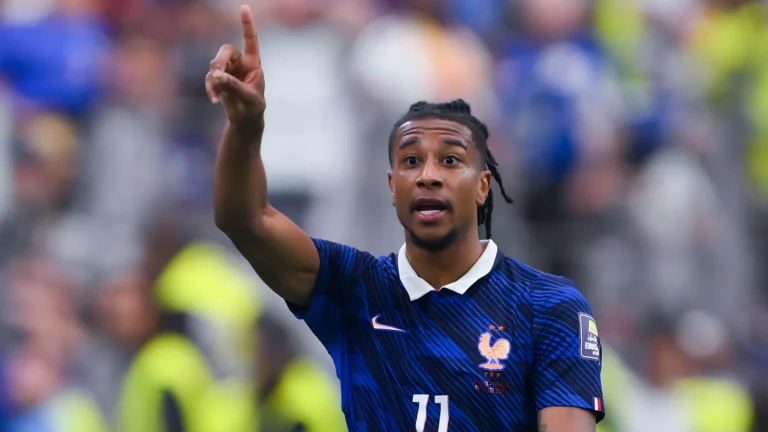
| Kylian Mbappé | France | Defending champion with 8 goals in 2022 |
| Erling Haaland | Norway | Most prolific striker in Europe |
| Harry Kane | England | 2018 Golden Boot winner, consistent at every level |
| Vinicius Jr. | Brazil | In career-best form for club and country |
| Lamine Yamal | Spain | Generational talent turning 19 during the tournament |
The expanded format means teams could play up to 8 matches en route to the final, compared to 7 previously. For clinical strikers, those extra fixtures represent a genuine chance to challenge Fontaine’s legendary 13-goal record — a mark that has stood since 1958.
Frequently Asked Questions
Who has won the World Cup Golden Boot the most times?
No player has won the Golden Boot at multiple World Cups as a solo winner. However, multiple players have featured in the World Cup Golden Boot winners list across different years as part of shared awards.
What is the record number of goals in a single World Cup?
Just Fontaine holds the record with 13 goals at the 1958 World Cup in Sweden.
Who won the 2022 World Cup Golden Boot?
Kylian Mbappé of France won the 2022 Golden Boot with 8 goals in Qatar.
Has a goalkeeper ever won a Golden Boot?
No. The World Cup Golden Boot winners list is exclusively composed of outfield players, specifically forwards and attacking midfielders.
When was the award first officially called the Golden Boot?
FIFA officially renamed it from the Golden Shoe to the Golden Boot in 2010.
Conclusion
The World Cup Golden Boot winners list is more than a statistical record — it is a living archive of the game’s greatest individual performances on its grandest stage. From Stábile’s 8 goals in 1930 to Mbappé’s electrifying 8 in Qatar 2022, each entry tells the story of a player who rose above the pressure of a World Cup and simply scored goals when the world was watching.
As we look forward to 2026, the list stands ready to be updated. Will Mbappé defend his title? Can Haaland finally shine at a major tournament? Could an unknown striker emerge from the expanded 48-team field to etch their name in history? One thing is certain: the race for the World Cup Golden Boot winners list will be one of the most compelling subplots of the entire tournament.
Bookmark this page, share it with your football community, and revisit it after the 2026 final. The next chapter of this golden history is just around the corner.

I’m a football writer, covering top leagues like the Premier League, La Liga, Bundesliga, Serie A, and Ligue 1. I write about match analysis, football news, tactics, and major tournaments such as the FIFA World Cup, delivering clear, engaging insights for fans.
About The Author