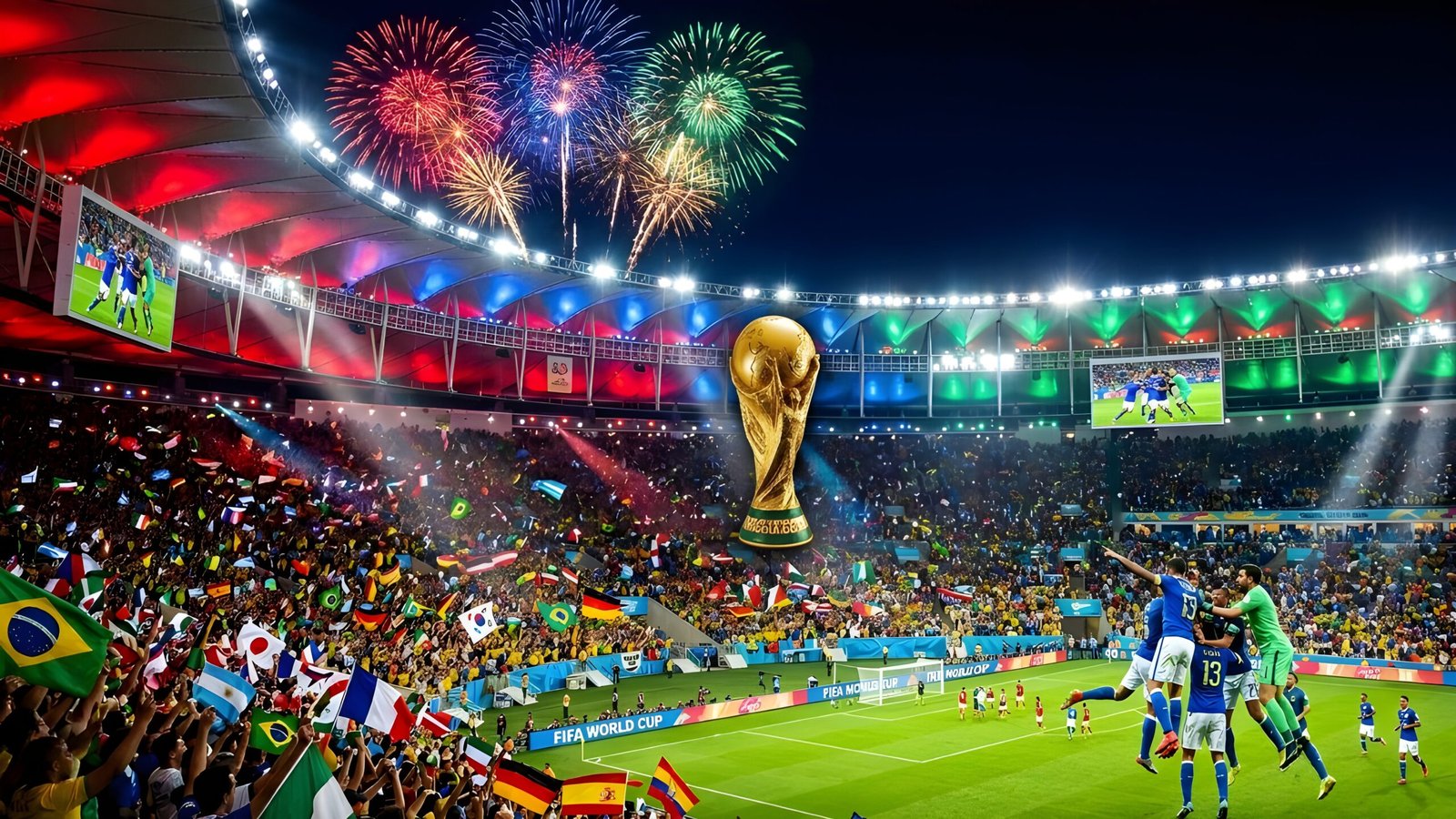
Why the World Cup Is the Most Watched Sporting Event in History
From remote villages to gleaming skyscrapers, one event stops the world every four years
Every four years, billions watch the World Cup not merely as a sporting event, and understanding why billions watch the World Cup requires looking far beyond the sport itself. The FIFA World Cup is one of them. Every four years, billions watch the FIFA World Cup not merely as a sporting event but as a shared human experience — raw, electric, and utterly irreplaceable.
With an estimated 5 billion viewers tuning in across the 2022 Qatar edition alone, the tournament has transcended the sport that anchors it. But why? What is it about twenty-two players chasing a ball across a rectangular patch of grass that commands the attention of more than half of humanity? The answer lies in a constellation of forces: unity, pride, drama, and the deep cultural roots of the beautiful game.
Why Billions Watch the FIFA World Cup: How It Unites the Entire Planet
The FIFA World Cup is, in the simplest and most profound sense, the world’s tournament. Unlike the Olympics, which disperses attention across dozens of disciplines, the World Cup funnels the entire globe into a single narrative. Every nation that participates carries the dreams of millions, and every nation that does not participates vicariously through allegiances born of geography, heritage, or pure affection.
When billions watch the FIFA World Cup, language barriers dissolve. A goal celebrated in Seoul resonates the same way it does in São Paulo. Grief after a penalty shootout loss feels identical in Accra and Amsterdam. The tournament creates a rare condition — a shared emotional frequency — where strangers across continents are effectively living through the same story simultaneously.
This unifying quality is not accidental. FIFA’s expansion of the tournament from 32 to 48 teams, beginning with the 2026 edition in the United States, Canada, and Mexico, is a deliberate effort to widen that circle further. More nations qualifying means more populations emotionally invested, more first-time viewers discovering the tournament, and more communities experiencing the peculiar joy of shouting at a television in a language the players will never hear.
Why Does a Simple Jersey Feel Like Carrying an Entire Nation’s Pride?
Few events on earth activate national identity the way the World Cup does. Why billions watch the FIFA World Cup becomes clear when you see what the tournament does to national identity — a ticket to the knockout rounds feels, to many citizens, like a national achievement. Politicians reference it in speeches. Armies reportedly pause conflicts for it. Streets that are normally indifferent to one another suddenly share the same flag.
The national symbols embedded in every match — the anthems, the crests on jerseys, the colors — transform what is technically a game into something closer to a cultural milestone. When Senegal defeated Poland in 2018, or when South Korea eliminated Germany, those results were absorbed not just as sports scores but as statements of national significance. They were retold, replayed, and remembered as pieces of national identity.
The table below illustrates how the World Cup functions as a moment of national self-expression across different regions:
| Region | Common Fan Behavior | Cultural Significance |
|---|---|---|
| Latin America | Public street viewing parties, national holidays declared | Community gatherings, drumming, and singing |
| West Africa | Pub culture and inter-country rivalries dominate the media | Collective pride in continental representation |
| Europe | Pub culture, inter-country rivalries dominate media | Historical football rivalries given fresh stages |
| East Asia | Social media-driven viewership spikes | Rising football culture intersecting with national ambition |
| Middle East | Family-centered viewing, post-2022 host pride | Rapid growth in local football passion |
This table only scratches the surface. In reality, the overlap between football and national pride is so deeply rooted that separating the two — at World Cup time — becomes almost impossible.
Why Do 4 Years of Waiting Come Down to Just 90 Minutes of Pure Chaos?
The four-year cycle is perhaps the clearest answer to why billions watch the FIFA World Cup — the long wait sharpens desire into something almost unbearable. That elimination process itself generates drama before a single World Cup match is played. By the time the tournament begins, billions watch the FIFA World Cup knowing that every team on the pitch has already endured a minor odyssey just to be there.
The four-year cycle is perhaps the tournament’s most powerful psychological lever. Olympic sports happen every four years, too, but no single Olympic event carries the concentrated global weight of a World Cup final. The long wait sharpens desire. Fans who last celebrated together may have grown older, seen children born, watched grandparents pass away — and yet here they are again, gathered around the same glowing screen, reconnecting with the same rituals.
The quality of football on display is unambiguous. These are the best players on the planet, stripped of their club loyalties and reassembled under national banners, frequently playing the most important matches of their careers. The stakes are existential in a way club football rarely achieves.
| Tournament Stage | Average Viewership (2022, billions) | Emotional Stakes |
|---|---|---|
| Group Stage | 0.8–1.2 per match | National survival, first drama |
| Round of 16 | 1.5–2.0 per match | Underdogs vs favorites emerge |
| Quarter-finals | 2.5–3.0 per match | Global attention narrows sharply |
| Semi-finals | 3.5–4.0 per match | Near-universal viewership peaks |
| Final | 5.0+ | Singular global moment |
How Does the FIFA World Cup Reach Billions of Screens Worldwide?
One reason billions watch the FIFA World Cup is simply that the infrastructure now exists to make it almost impossible not to. Broadcasting rights are sold to networks in virtually every country on earth. Free-to-air coverage in many developing nations ensures that a television set — even a shared one in a community center — is enough to join the global audience.
Digital platforms have added an entirely new dimension. Streaming services, YouTube highlights, and social media clips mean that someone who missed a match at 3 AM local time can relive every goal and controversy by morning. Casual viewers who would never sit through a full ninety minutes are nonetheless drawn in by thirty-second clips of extraordinary goals that flood their feeds regardless of whether they sought them out.
The accessibility of the World Cup also operates at a deeply human level — football requires no expensive equipment, no specialized facilities, no complex rule knowledge to enjoy as a spectator. A viewer who has never attended a match in their life understands, instinctively, that putting the ball in the net is good. That simplicity is a competitive advantage no other global sport fully replicates.
What Makes World Cup Stories So Emotional, Dramatic, and Unforgettable?
Billions watch the FIFA World Cup because every edition writes new stories that are told and retold for decades. The tournament’s format is a natural story engine: heroes emerge from obscurity, giants fall, underdogs perform miracles, and villains are occasionally redeemed.
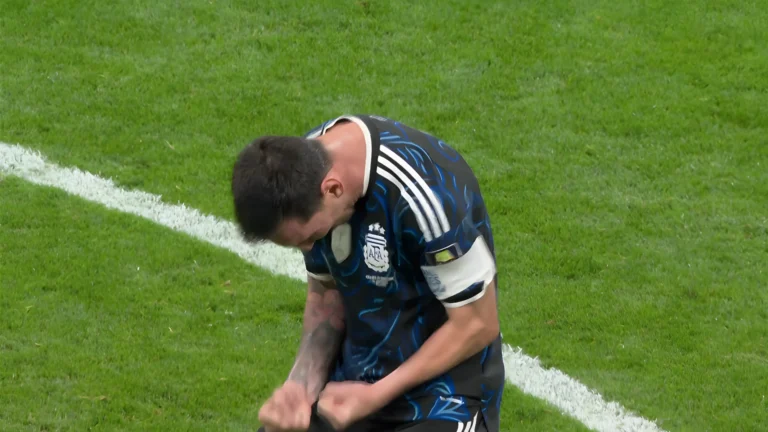
Consider the personal narratives alone. Lionel Messi’s pursuit of the one trophy that had eluded him through a legendary career became, in 2022, one of the most compelling sporting stories ever told. It drew in millions of viewers who had minimal interest in football as such but enormous interest in the human drama of a 35-year-old man chasing the one thing he still needed. Media organizations understood this and amplified it at every turn, turning a football tournament into something approaching a Greek epic.
Rivalries carry similar weight. Argentina vs Brazil. England vs Germany. Portugal vs Spain. These matchups arrive carrying decades of history, and broadcasters know exactly how to invoke that history to hook viewers who were not even alive for the original chapters.
| Memorable Narrative | Tournament | Why It Captivated the World |
|---|---|---|
| Messi’s redemption arc | Qatar 2022 | Legacy, vulnerability, and final triumph |
| Germany 7–1 Brazil | Brazil 2014 | Shock, national humiliation, catharsis |
| Iceland’s debut run | Russia 2018 | Tiny nation, massive underdog spirit |
| South Korea’s semifinal run | Korea/Japan 2002 | Asian football’s global arrival |
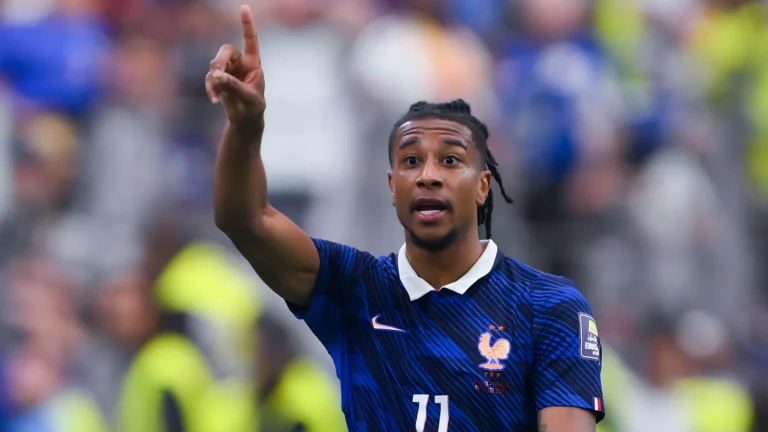
| France’s generational squad | Russia 2018 | Youth, diversity, brilliance |
Media does not merely report these stories — it constructs them. Pre-match documentaries, player profiles, and expert analysis all serve to deepen the emotional investment of viewers who tune in. When billions watch the FIFA World Cup, they are watching a tournament that has spent years building its own mythology.
Why Is the FIFA World Cup More Than Just Football—A Global Cultural Obsession?
The reach of the World Cup extends far beyond football. When billions watch the FIFA World Cup, the effects ripple outward into fashion, commerce, food, language, and urban life in ways that no other sporting event approaches.
Jersey sales spike globally. Restaurants and bars redesign menus around host-country cuisines. Cities empty during matches. Productivity metrics visibly decline in offices around the world during group-stage afternoons. In 2022, Qatar’s hosting introduced millions of viewers to Gulf culture, architecture, and food in ways that no tourism campaign could have engineered.
The commercial ecosystem that surrounds the tournament is itself enormous. Sponsors invest billions because they understand that billions watch the FIFA World Cup with an engagement level that passive media consumption rarely produces. Fans watching a World Cup match are emotionally activated — alert, invested, and far more receptive to brand messaging than audiences scrolling disengaged through a streaming service.
Soccer’s global penetration — the fact that it is played in every country on earth, at every economic level — is what gives the World Cup its unrivaled reach. Unlike American football or cricket, which command massive but geographically concentrated audiences, football’s fan base is genuinely planetary. There is no continent, no major city, no demographic category that exists entirely outside football’s cultural gravity.
Conclusion
The question of why billions watch the FIFA World Cup is ultimately the question of what human beings need most from one another: connection, pride, drama, and the occasional miracle. The World Cup delivers all four simultaneously, reliably, and on a scale that no other manufactured event has ever approached.
It is the only tournament where a nation of 300,000 people and a nation of 300 million people stand on equal ground for ninety minutes, where a teenager from a Lagos street pitch and a superstar from a Madrid academy chase the same trophy, and where a grandmother in rural Peru and a tech worker in Tokyo are, at the same moment, making the same sound.
That is why billions watch the FIFA World Cup — not just every four years, but every time, without fail, without exception, and with a devotion that the modern age of infinite entertainment has done nothing to diminish.
In an age of infinite content and fractured attention, why billions watch the FIFA World Cup every four years is ultimately simple: it is the one moment when the world agrees to feel the same thing at the same time.
Also Read:-
FIFA World Cup Winners List 1930-2022: Full Champions History
How Much Does the FIFA World Cup Trophy Cost? Everything You Need to Know

I’m a football writer, covering top leagues like the Premier League, La Liga, Bundesliga, Serie A, and Ligue 1. I write about match analysis, football news, tactics, and major tournaments such as the FIFA World Cup, delivering clear, engaging insights for fans.
About The Author
Hi to every one, the contents existing at this
web site are in fact remarkable for people experience, well, keep up the nice work fellows.