
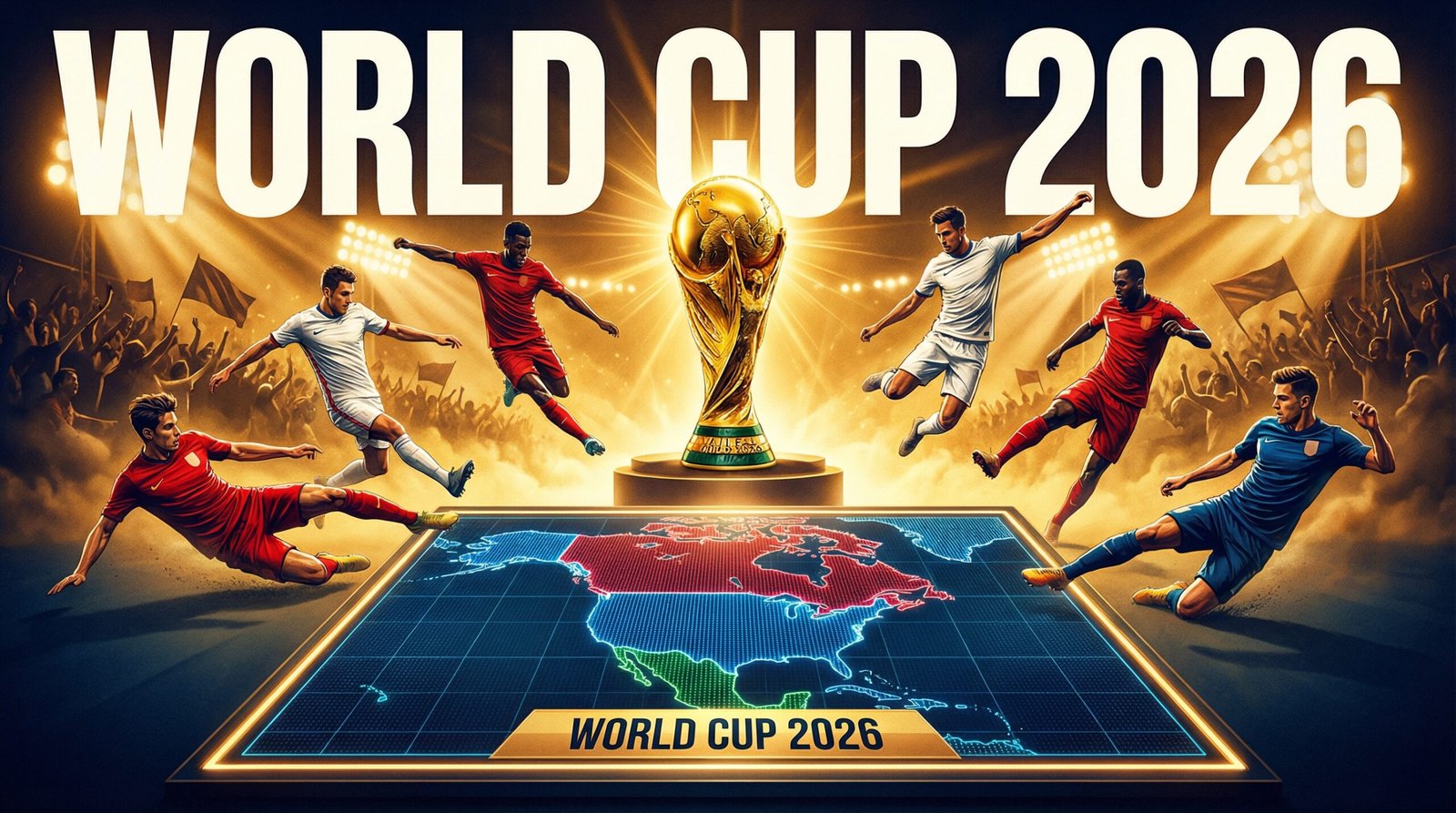
FIFA World Cup 2026: Full Guide to the New 48-Team Format, Groups, and What It Means for Football
Football is about to get bigger, louder, and more exciting than ever before. The FIFA World Cup 2026 isn’t just another tournament — it’s a complete reinvention of the world’s most-watched sporting event. For the first time in history, 48 nations will battle it out across three host countries, spanning an entire continent. Whether you’re a die-hard football fanatic or a casual fan who tunes in every four years, the 2026 World Cup is going to be unlike anything you’ve ever seen.
From a brand-new 48-team format to iconic stadiums, expanded qualification spots, and three nations sharing hosting duties, there’s a lot to unpack. This guide covers everything you need to know about FIFA World Cup 2026 — the format, the groups, the venues, the teams to watch, and why this tournament could change international football forever.
FIFA World Cup 2026 Quick Facts
| Detail | Information |
|---|---|
| Host Countries | USA, Canada, Mexico |
| Total Teams | 48 |
| Number of Groups | 12 |
| Teams Per Group | 4 |
| Total Matches | 104 |
| Tournament Start | June 11, 2026 |
| Final Date | July 19, 2026 |
| Final Venue | MetLife Stadium, New Jersey, USA |
| Qualification Spots | Expanded across all confederations |
When Will the FIFA World Cup 2026 Start?
Mark your calendars. The FIFA World Cup 2026 is set to kick off on June 11, 2026, and the action won’t stop until July 19, 2026 — making it a 39-day festival of football.
That’s significantly longer than previous editions. The 2022 World Cup in Qatar ran for around 29 days. The expanded 48-team format naturally means more matches, more drama, and more football spread across a much longer window.
Here’s a rough timeline of how the tournament will unfold:
| Stage | Approximate Dates |
|---|---|
| Group Stage | June 11 – July 2, 2026 |
| Round of 32 | July 4 – July 7, 2026 |
| Round of 16 | July 9 – July 12, 2026 |
| Quarter-Finals | July 14 – July 15, 2026 |
| Semi-Finals | July 17 – July 18, 2026 |
| Final | July 19, 2026 |
For fans, this means nearly six weeks of wall-to-wall international football. For players and managers, it means careful squad management will be more important than ever.
Which Countries Are Hosting the FIFA World Cup 2026?
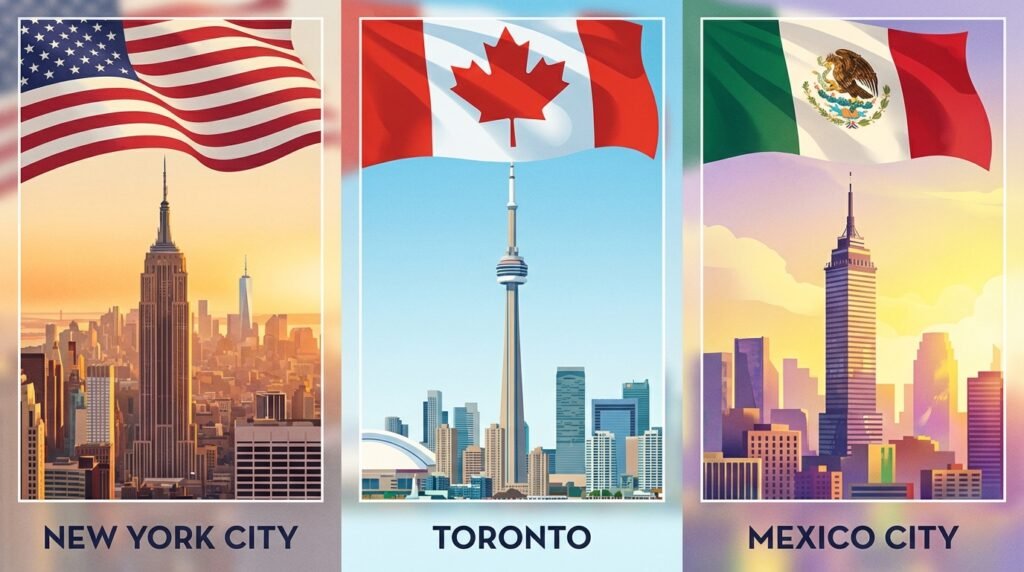
The 2026 World Cup makes history as the first tournament ever to be co-hosted by three nations — the United States, Canada, and Mexico. Together, they form a compelling North American bloc that offers world-class infrastructure, passionate football cultures, and some of the most iconic stadiums on the planet.
🇺🇸 United States — The Main Host
The USA is carrying the heaviest load, hosting the majority of matches, including the final. American football culture has exploded in recent decades, and with Major League Soccer (MLS) growing rapidly, the timing couldn’t be better. The US hosted the World Cup back in 1994 — which remains one of the highest-attended tournaments ever — and is more than ready to do it again on an even bigger scale.
🇨🇦 Canada — Making Its World Cup Debut as a Host
Canada is co-hosting the World Cup for the very first time, a massive milestone for football in the country. Canadian football has been on an upward trajectory, highlighted by the men’s national team qualifying for the 2022 World Cup in Qatar — their first qualification since 1986. Hosting in 2026 will only accelerate that growth.
🇲🇽 Mexico — A Historic Third Time
Mexico becomes the first country ever to host the World Cup three times, having previously done so in 1970 and 1986. Mexican football culture is passionate and deeply embedded in everyday life, and the return of the World Cup to Mexican soil is an enormous deal for fans across the country.
Where Will the FIFA World Cup 2026 Final Be Played?
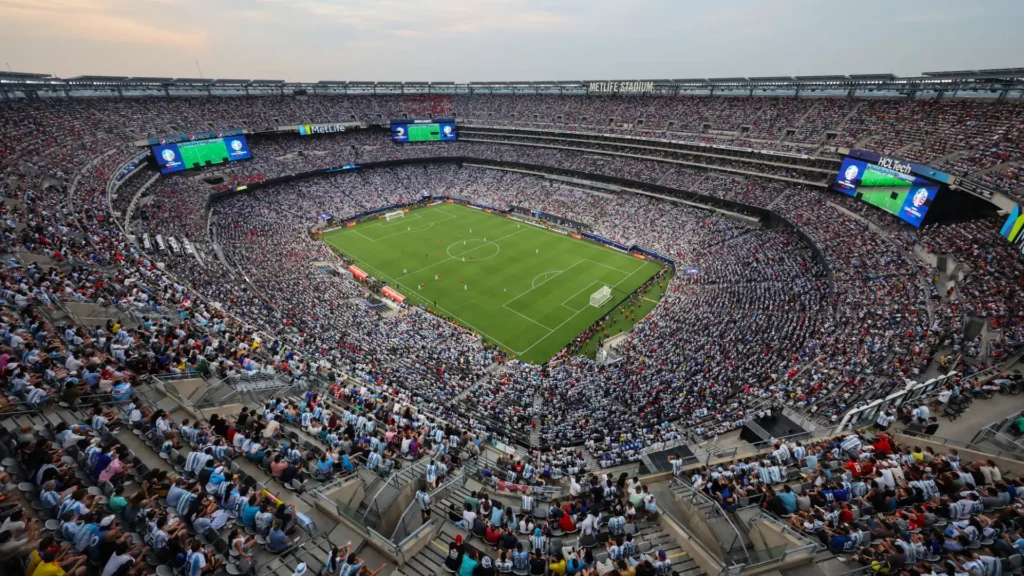
The biggest match in world football — the FIFA World Cup 2026 Final — will be played at MetLife Stadium in East Rutherford, New Jersey, just outside New York City.
| Detail | Information |
|---|---|
| Stadium | MetLife Stadium |
| Location | East Rutherford, New Jersey, USA |
| Capacity | ~82,500 (expanded for the event) |
| Home Teams | New York Giants & New York Jets (NFL) |
MetLife Stadium is one of the most iconic sports venues in the world, sitting in the heart of the most populous metropolitan area in the United States. Hosting the World Cup final in the New York area gives the match an unmatched global backdrop — and you can bet the atmosphere inside that stadium will be electric.
How Many Teams Will Play in the FIFA World Cup 2026?
The FIFA World Cup 2026 will feature 48 teams — a massive jump from the 32-team format that has been used since 1998.
To put that in perspective:
| Year | Teams | Matches |
|---|---|---|
| 1994 | 24 | 52 |
| 1998–2022 | 32 | 64 |
| 2026 | 48 | 104 |
FIFA made the decision to expand the tournament back in 2017, and the reasoning is straightforward — football is genuinely a global game now, and the previous format left out too many deserving nations. Regions like Africa, Asia, and CONCACAF had long argued that their football had grown beyond what their limited quota of spots reflected.
For fans in countries that previously sat on the margins of World Cup qualification, this expansion is genuinely transformative. Nations that spent decades watching from the sidelines now have a realistic path to the biggest stage in football.
How Will the 48-Team Format Work in the FIFA World Cup 2026?
This is where things get really interesting. The 48-team format introduces a brand-new structure that changes how the World Cup flows from start to finish.
Here’s how it works:
Group Stage
- 48 teams are divided into 12 groups
- Each group has 4 teams
- Every team plays 3 group stage matches
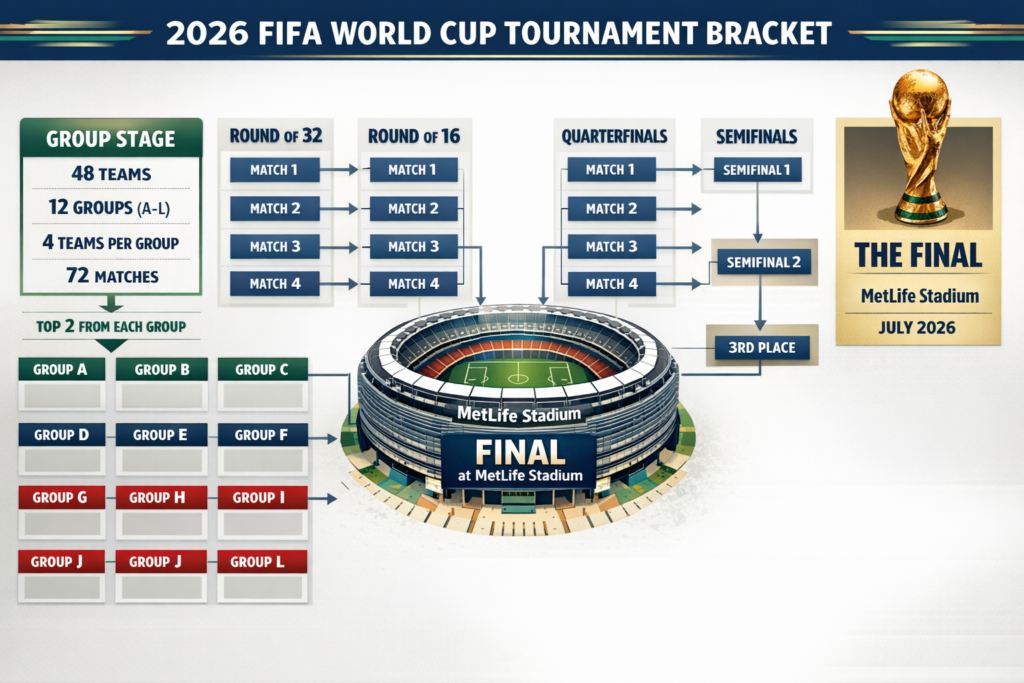
- The top 2 teams from each group advance automatically
- The 8 best third-place finishers also qualify for the knockout stage
- This brings the total of teams in the knockout round to 32
Knockout Stage
Once the group stage is complete, the tournament becomes a straight knockout competition:
| Round | Teams Remaining |
|---|---|
| Round of 32 | 32 |
| Round of 16 | 16 |
| Quarter-Finals | 8 |
| Semi-Finals | 4 |
| Third Place Play-off | 2 |
| Final | 2 |
The addition of the Round of 32 is entirely new to the World Cup. It means there’s an extra knockout match before teams reach the Round of 16, adding more high-stakes drama earlier in the tournament.
How Many Groups Will There Be in the 2026 World Cup?
The 2026 World Cup will have 12 groups, each containing 4 teams. That’s up from 8 groups of 4 teams at the last several World Cups.
Here’s a quick breakdown of how the group stage is structured:
| etail | 2022 World Cup | 2026 World Cup |
|---|---|---|
| Total Teams | 32 | 48 |
| Number of Groups | 8 | 12 |
| Teams Per Group | 4 | 4 |
| Matches Per Group | 6 | 6 |
| Total Group Stage Matches | 48 | 72 |
Each team plays three matches during the group stage — one against each of the other teams in its group. Points are awarded in the standard way: 3 for a win, 1 for a draw, 0 for a loss.
Group standings are determined by points, then goal difference, then goals scored. If teams are still level, FIFA uses additional tiebreakers, including head-to-head results.
How Many Teams Qualify From Each Group in the 2026 World Cup?
Here’s how qualification from the group stage works:
- 1st place in each group → Automatically qualifies (12 teams)
- 2nd place in each group → Automatically qualifies (12 teams)
- Best 8 third-place teams across all 12 groups → Also qualify (8 teams)
- Total teams advancing to the knockout stage: 32
The “best third-place” rule is similar to what UEFA uses in the European Championship and what FIFA used in the 1994 World Cup. It means that even finishing third in your group isn’t necessarily the end — you still have a fighting chance if your record is strong enough compared to the other third-placed teams.
This creates some fascinating late group-stage drama. A team sitting third with a match to go might be watching results elsewhere to see if they need to win, draw, or whether they’re already safe.
How Many Matches Will Be Played in the FIFA World Cup 2026?
The FIFA World Cup 2026 will feature a total of 104 matches — compared to 64 at the last several tournaments. That’s a 63% increase in the number of games.
| Stage | Number of Matches |
|---|---|
| Group Stage | 72 |
| Round of 32 | 16 |
| Round of 16 | 8 |
| Quarter-Finals | 4 |
| Semi-Finals | 2 |
| Third Place Play-off | 1 |
| Final | 1 |
| Total | 104 |
From a broadcasting standpoint, this is enormous. Networks and streaming platforms will have far more content to fill, and for advertisers, the World Cup becomes an even more attractive commercial property. FIFA estimates that the expanded format will significantly increase overall revenue — a key driver behind the decision to expand in the first place.
For fans, it simply means more football. More potential upsets, more group stage tension, and more matches to enjoy across the six-week tournament window.
How Do Teams Qualify for the FIFA World Cup 2026?
Qualification for the FIFA World Cup 2026 runs through each of football’s six continental confederations. Each confederation holds its own qualification competition, with teams battling it out over months (sometimes years) for the available spots.
The general timeline for qualification ran from roughly 2023 through early 2026, with playoff matches determining some of the final spots.
The host nations — USA, Canada, and Mexico — all qualify automatically (more on that below), which slightly adjusts the allocation of remaining spots across the confederations.
How Many Teams Qualify From Each Continent for the 2026 World Cup?
With 48 spots available (minus 3 for automatic host qualification), here’s how the spots are distributed across the confederations:
| Confederation | Region | Spots |
|---|---|---|
| UEFA | Europe | 16 |
| CAF | Africa | 9 |
| AFC | Asia | 8 |
| CONMEBOL | South America | 6 |
| CONCACAF | North/Central America & Caribbean | 6 (including 3 hosts) |
| OFC | Oceania | 1 |
| Intercontinental Playoffs | Various | 2 |
| Total | 48 |
Key takeaways from this breakdown:
- Europe remains the most represented confederation, reflecting the sheer depth and quality of UEFA competition. However, their proportion of the total actually decreases slightly compared to 2022.
- Africa gets a significant boost, going from 5 spots in 2022 to 9 in 2026 — a hugely welcome change for a continent with enormous footballing talent.
- Asia more than doubles its representation, reflecting the rapid growth of football across the continent.
- South America gains one extra spot, though many CONMEBOL nations felt they deserved more given the continent’s historical dominance.
- CONCACAF benefits from the expanded format as well as hosting rights, meaning more Caribbean and Central American nations have a genuine shot at qualifying.
- Oceania gets its first automatic qualification spot, a landmark moment for football in the Pacific region.
Do Host Countries Automatically Qualify for the FIFA World Cup 2026?
Yes — absolutely. As with every World Cup in history, the three host nations all receive automatic qualification.
That means the USA, Canada, and Mexico are already confirmed participants in the FIFA World Cup 2026, regardless of how they perform in their regular CONCACAF qualifying campaigns.
This is a long-standing FIFA tradition. The logic is simple — it would be deeply awkward (and commercially damaging) for a host nation to be absent from its own tournament. It also gives host nations more time to prepare their squads specifically for the tournament without the pressure and distraction of a lengthy qualification campaign.
For all three nations, automatic qualification is also a genuine opportunity. The USA and Canada will be playing in front of their home fans, and home advantage in football is very real. Mexico, with their passionate fanbase, will have significant support even in matches played across the border.
Which Cities Will Host Matches in the FIFA World Cup 2026?
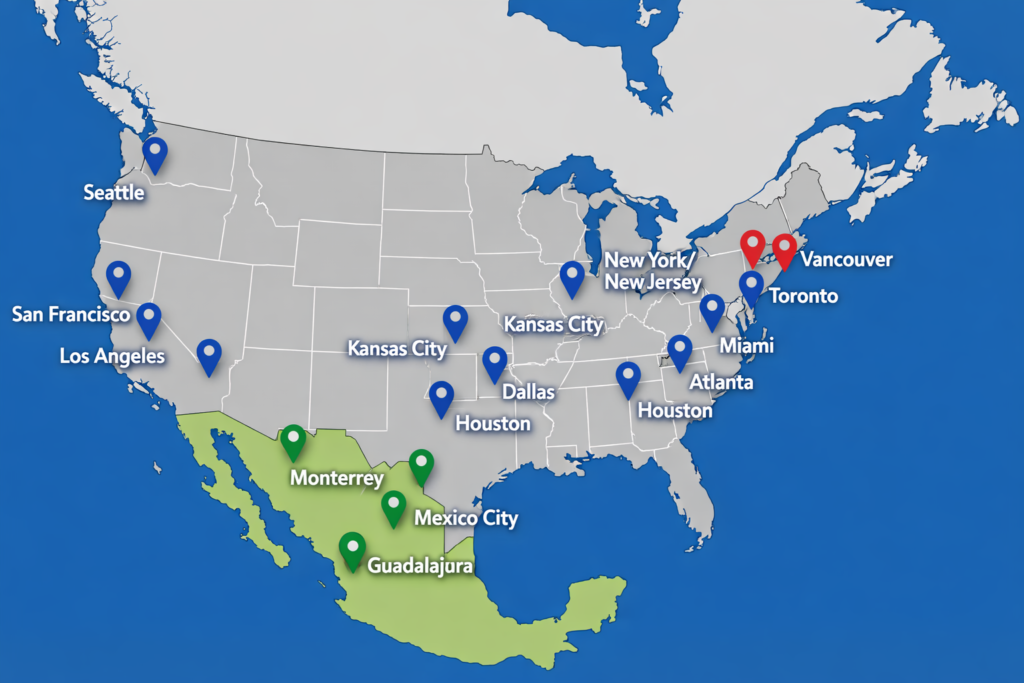
The 2026 World Cup will be spread across 16 host cities — 11 in the United States, 2 in Canada, and 3 in Mexico. This makes it by far the most geographically spread World Cup in history.
🇺🇸 United States Host Cities
| City | Stadium |
|---|---|
| New York/New Jersey | MetLife Stadium |
| Los Angeles | SoFi Stadium |
| Dallas | AT&T Stadium |
| San Francisco Bay Area | Levi’s Stadium |
| Miami | Hard Rock Stadium |
| Atlanta | Mercedes-Benz Stadium |
| Seattle | Lumen Field |
| Boston | Gillette Stadium |
| Kansas City | Arrowhead Stadium |
| Philadelphia | Lincoln Financial Field |
| Houston | NRG Stadium |
🇨🇦 Canada Host Cities
| City | Stadium |
|---|---|
| Toronto | BMO Field |
| Vancouver | BC Place |
🇲🇽 Mexico Host Cities
| City | Stadium |
|---|---|
| Mexico City | Estadio Azteca |
| Monterrey | Estadio BBVA |
| Guadalajara | Estadio Akron |
The sheer scale of this spread is mind-boggling. Teams could be playing matches thousands of kilometres apart in the same group stage. Travelling from Vancouver to Miami, for example, is roughly the same distance as travelling from London to Tehran. Logistics will be a major factor for teams, staff, and fans alike.
Which Stadiums Will Be Used in the 2026 World Cup?
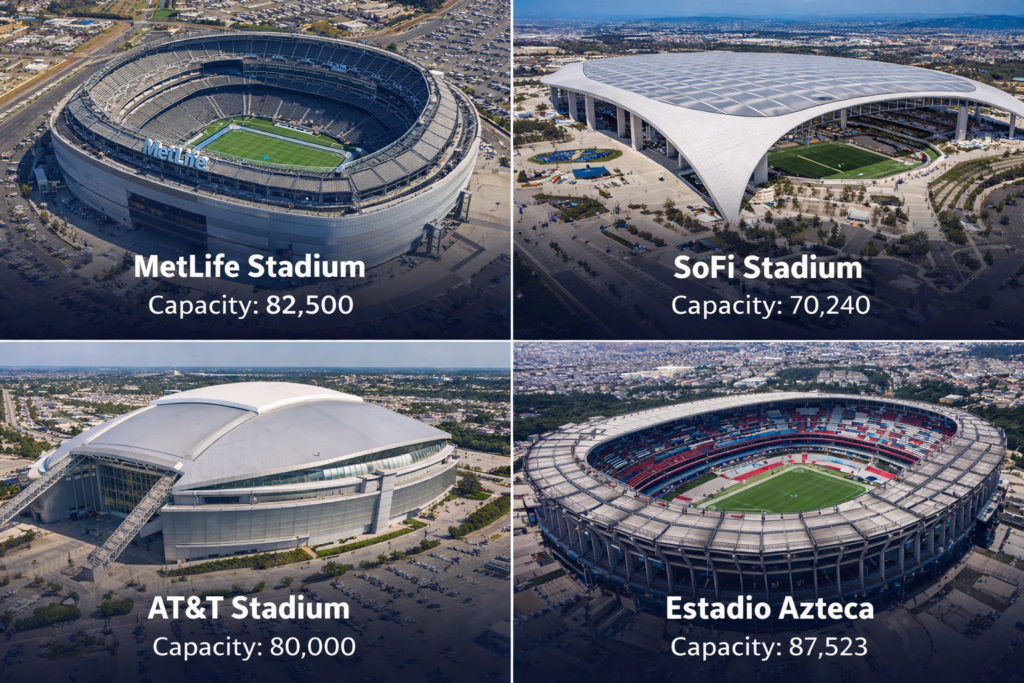
The FIFA World Cup 2026 boasts some of the most impressive sporting venues anywhere in the world. Here are the headline stadiums:
MetLife Stadium — New York/New Jersey
Capacity: ~82,500. Home to the NFL’s Giants and Jets, MetLife is hosting the Final and will be the centrepiece of the entire tournament. Its location in the New York metro area makes it one of the most high-profile venues in sports.
SoFi Stadium — Los Angeles
Capacity: ~70,240. One of the most modern stadiums in the world, SoFi opened in 2020 and is already considered a landmark venue. Los Angeles is one of the most football-mad cities in the United States, with a huge Latin American population that will bring an incredible atmosphere.
AT&T Stadium — Dallas
Capacity: ~80,000. Known as “Jerry’s World,” AT&T Stadium in Arlington, Texas, is a colossal venue with one of the largest video boards ever built. Texas has a massive Hispanic football fanbase, and the atmosphere for World Cup matches here will be extraordinary.
Estadio Azteca — Mexico City
Capacity: ~87,523. Arguably, the most iconic football stadium in the world. Azteca has hosted two World Cup finals (1970 and 1986) and is steeped in football history. It’s also one of the most intimidating atmospheres in world football — opposing teams have long feared playing there.
Mercedes-Benz Stadium — Atlanta
Capacity: ~75,000. A stunning retractable-roof stadium that is already considered one of the finest in the world. Atlanta’s diverse population and growing football culture make it a great host city.
Why Did FIFA Expand the World Cup to 48 Teams?
The expansion from 32 to 48 teams was announced by FIFA in January 2017 and passed with overwhelming support. But why make such a dramatic change to a format that had worked well for nearly three decades?
The Case For Expansion ✅
More countries get to participate. Football really is a global game — it’s played in virtually every country on Earth. Yet for decades, vast swathes of the footballing world were shut out. Under the 32-team format, only 5 African nations qualified. Now 9 do. That’s a meaningful difference.
Growth markets matter. FIFA has been working hard to grow football in Asia, North America, and the Pacific. Giving these regions more World Cup spots is both a reward for growth and an incentive for further development. The 2026 World Cup, being held in North America, is itself a statement of intent.
Revenue, plain and simple. More matches mean more broadcasting rights, more sponsorship, more ticket sales, and more merchandise. FIFA’s commercial revenues are enormous, and expanding the tournament only increases them.
Smaller nations get their moment. For a country like the Faroe Islands or Bhutan, simply qualifying for the World Cup would be the greatest achievement in their football history. More spots mean more nations can have that moment.
The Criticism ❌
Quality concerns. Critics argue that the weakest teams in a 48-team field will be significantly inferior to the top sides, leading to lopsided matches in the group stage. Nobody wants to watch a 7-0 mauling.
Player fatigue. The tournament is longer, and the matches come thick and fast. Elite players already carry enormous physical loads from their club seasons, and adding more World Cup matches only increases the risk of injury and burnout.
Travel challenges. With matches spread across three countries and 16 cities, players and fans will be covering enormous distances. A group stage that has teams flying from Vancouver to Miami and then to Mexico City is genuinely exhausting.
Diluted stakes? Some purists argue that the beauty of the 32-team World Cup was its ruthlessness — lose and you’re out. With 8 third-place teams advancing, there’s more room for error, and that might reduce the intensity of some group stage matches.
Will the 48-Team Format Make the World Cup Longer?
Yes — noticeably so. The FIFA World Cup 2026 runs for approximately 39 days, compared to around 29 days for the 2022 World Cup in Qatar.
That extra ten days is a consequence of having 104 matches to fit in, across 16 venues spread over a huge geographical area. Even with multiple matches happening simultaneously during the group stage, there’s simply more football to get through.
What does that mean in practice?
For players, it means more matches and more travel. A team that goes all the way to the final will play 7 matches — the same as before, since the Round of 32 was added, but the progression to the final remains 7 wins from the knockout stage. However, the group stage period is longer, meaning more time away from clubs and families.
For clubs, this is a genuine concern. Top clubs rely on their star players being fit and fresh for their domestic seasons, and a longer World Cup tournament in the middle of the summer window creates additional friction.
For fans, it’s largely a positive — more football, more stories, more reasons to stay up late watching matches from across the continent.
What the Expanded World Cup Means for the Future of Football
The FIFA World Cup 2026 isn’t just a bigger tournament — it’s a statement about where football is heading.
For smaller nations, the expanded format opens doors that were previously closed. Nations in Africa, Asia, and Oceania that have long had the talent but not the opportunity will now have more World Cup experience. That experience matters — it helps develop players, coaches, referees, and football infrastructure.
For global football development, more nations participating means more investment in youth academies, coaching, and stadium infrastructure around the world. Countries that are serious about making future World Cups tend to invest heavily in football when they qualify.
For competitive balance, the jury is still out. Optimists argue that as more nations get World Cup experience, the overall quality gap between the top nations and the rest will narrow. Sceptics think the opposite — that elite nations will only get stronger through better resources and development systems.
For the commercial landscape, the World Cup was already the most-watched sporting event on Earth. A 48-team tournament with 104 matches and a six-week schedule makes it an even more dominant force in the global entertainment calendar.
One thing is certain — the 2026 World Cup will generate stories, upsets, and moments that nobody can predict. And that’s exactly what makes football so special.
Teams to Watch in FIFA World Cup 2026
While the full 48-team field won’t be confirmed until qualification wraps up, here are the nations most likely to be competing for the title:
| Team | Why They’re Contenders |
|---|---|
| 🇦🇷 Argentina | Reigning World Champions. Messi era may be winding down, but the squad remains deep and dangerous. |
| 🇫🇷 France | Arguably the most talented squad in world football. Loaded with world-class players at every position. |
| 🇧🇷 Brazil | Five-time champions who will be desperate to end their World Cup drought. Always a major threat. |
| 🏴 England | A golden generation that came agonisingly close in 2022. Playing on a friendly continent for their fanbase. |
| 🇪🇸 Spain | Tactically brilliant and always competitive. Their commitment to technical football produces consistent results. |
| 🇩🇪 Germany | A football powerhouse that will be rebuilding. Never write Germany off at a World Cup. |
| 🇵🇹 Portugal | With or without Ronaldo, Portugal has enormous depth and a strong squad for 2026. |
Dark horses to keep an eye on include Morocco (who reached the semi-finals in 2022), Japan, the USA (as hosts with home advantage), and Senegal.
Conclusion
The FIFA World Cup 2026 is set to be the biggest, most ambitious, and most geographically expansive World Cup in the history of the sport. With 48 teams, 104 matches, 16 host cities, and three nations sharing hosting duties, it’s a tournament that breaks records before a single ball is kicked.
The new format opens the door to nations that have never experienced the World Cup stage before, while the iconic venues — from Azteca to MetLife — promise unforgettable atmospheres. Yes, there are valid concerns about match quality and player fatigue, but the overwhelming sense is one of excitement and anticipation.
Football’s greatest show is getting even bigger. And from June 11 to July 19, 2026, the entire world will be watching.
Frequently Asked Questions
When will the FIFA World Cup 2026 start?
The FIFA World Cup 2026 is scheduled to begin on June 11, 2026, with the Final taking place on July 19, 2026, at MetLife Stadium in New Jersey, USA.
How many teams will play in the 2026 World Cup?
48 teams will compete in the FIFA World Cup 2026, up from the 32-team format used from 1998 to 2022.
Which countries are hosting the FIFA World Cup 2026?
The 2026 World Cup is being co-hosted by three countries — the United States, Canada, and Mexico — marking the first time in history that three nations have shared World Cup hosting duties.
How many matches will be played in the 2026 World Cup?
A total of 104 matches will be played across the tournament, compared to 64 at the previous 32-team World Cups.
How does the 48-team World Cup format work?
The 48 teams are split into 12 groups of 4. The top 2 teams from each group, plus the best 8 third-place finishers, advance to a Round of 32. From there, it’s a straight knockout competition through to the Final.
Pingback: FIFA World Cup 2026 Host Cities and Stadiums: Complete Guide
Pingback: FIFA World Cup 2026 Top Teams: Favorites, Dark Horses & Tournament Predictions