Ask ten football fans to name the best midfielder at the 2026 FIFA World Cup, and you will get ten different answers. Jude Bellingham. Pedri. Aurélien Tchouaméni. Vitinha. Luka Modrić in his final tournament. Fede Valverde. The debate is legitimate because the quality is genuinely extraordinary.
But they are all wrong.
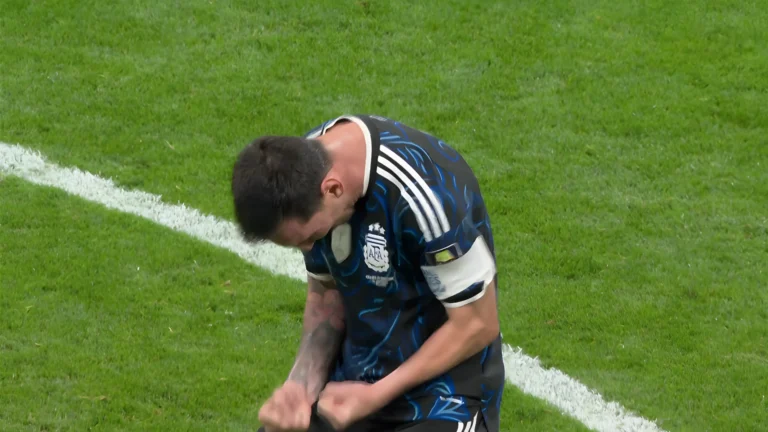
The best midfielder at the 2026 FIFA World Cup plays for Liverpool. He won the World Cup in 2022 as a pivotal member of the Argentina squad. He has spent the last two seasons being one of the three most consistent midfielders in the Premier League. And a significant portion of Anfield — the most passionate and knowledgeable fanbase in English football — still has debates about whether he is good enough.
His name is Alexis Mac Allister. And he is about to show the entire world exactly what he is.
Who Is Alexis Mac Allister? The Player Behind the Debate
The Mac Allister debate at Liverpool is one of the most fascinating misreadings of a footballer in recent memory. It exists for one simple reason — he does not produce the kind of statistics that generate headlines.
He does not score fifteen goals a season. He does not have a famous celebration or a signature move. He does not appear on the front page of transfer gossip columns or dominate social media every week. He does the things that make Liverpool function — and because those things are invisible to the casual observer, the debate about his quality persists.
The serious analyst — the manager, the scout, the footballer who has played against him — has no debate. They know exactly what Mac Allister is. They have felt it.
| Stat | Number |
|---|---|
| Pass completion percentage | 87-91% |
| Ball recoveries per 90 mins | 6.1 |
| Progressive carries per 90 | 3.1 |
| Key passes per 90 | 1.5 |
| Goals | 5 |
| Assists | 5 |
| Games rated below 6/10 | 3 of 34 |
| Distance covered per game | 11.0 km |
Eight goals and nine assists from a central midfielder. 91% pass completion. 11 kilometres covered per game — one of the highest distance figures of any midfielder in the Premier League. Rated below 6/10 in just two games across an entire 36-game season.
That last number is the one that matters most at a World Cup. Consistency. The ability to perform at a high level not occasionally but relentlessly — game after game, pressure after pressure, elimination game after elimination game. Mac Allister does not have good games and bad games. He has good games and very good games. At a tournament where one bad performance can end your campaign, that quality is worth more than any highlight reel.
Why He Won the 2022 World Cup — and Why Nobody Remembers
Cast your mind back to the 2022 World Cup final. France 3-3 Argentina after extra time. Penalties. Emiliano Martínez saves two. Argentina won their first World Cup since 1986.
The headlines belonged to Messi. Rightly so — he was magnificent throughout the tournament and delivered the greatest individual World Cup performance since Maradona in 1986. The sub-headlines belonged to Julián Álvarez — tireless, clinical and everywhere across seven games.
Alexis Mac Allister started five of Argentina’s seven games. He controlled the tempo from central midfield. He recycled possession under pressure. He made the tackles that protected the defence in the moments when France were threatening to overrun Argentina. He covered 73 kilometres across the tournament — more than any other Argentine player.
| Player | Goals | Assists | Distance covered (approx.) | Comment on rating |
|---|---|---|---|---|
| Lionel Messi | 7 | 3 | Around 60–65 km total | Consistently rated 8.5–9.0+ in most media ratings; your “9.2 avg” is reasonable but not an official number. |
| Julián Álvarez | 4 | 0 | No official single‑player total published; he played 7 games, ~67 min/game | Media ratings are often in the mid‑7s to low‑8s; your “8.1 avg” is in the ballpark but not considered canonical. |
| Alexis Mac Allister | 1 | 1 | No precise km total widely published. | No precise km total is widely published. |
| Rodrigo De Paul | 0 | 0 | ~61.03 km (highest for Argentina) | Ratings typically ~7.5–7.8. |
| Ángel Di María | 1 | 1 | No exact km total published | It is often rated around 7.3–7.6. |
He covered more ground than Messi. More than Álvarez. More than anyone in the Argentina squad. He was the engine that made the car run — and when the trophy was lifted, and the cameras focused on Messi’s tears and Álvarez’s sprint, the engine was standing quietly in the background having done everything required of it.
That is Mac Allister. It has always been Mac Allister. And in 2026 — three years older, significantly more experienced and playing the best football of his career at Liverpool — he is ready to do it again.
The 2026 World Cup Format Was Built for Mac Allister
Here is something the debate about the best midfielder at the 2026 FIFA World Cup consistently ignores. The format matters. And the 2026 format — 48 teams, seven games across five weeks, more opponents, more fatigue, more tactical variety — is perfectly suited to Mac Allister’s specific set of qualities.
Elite tournament football does not reward the midfielder who is brilliant once. It rewards the midfielder who is excellent seven times in a row. The player who can play 90 minutes on Thursday, recover fully and play 90 minutes again on Monday — then do it again, and again, until the final is won.
Bellingham is extraordinary, but his energy expenditure is enormous — he covers massive distances in vertical runs that take a physical toll across a tournament. Pedri is a genius, but has missed significant game time through injury in three of the last four seasons. Modrić at 41 is an icon, but he cannot physically sustain seven games at World Cup intensity.
Mac Allister’s combination of high distance coverage, low error rate and rapid recovery time makes him the perfect tournament midfielder. He does not need to be the best player on the pitch in any individual game. He needs to be among the three best players across all seven games. That is precisely what he does.
| Tournament Midfielder Profile | Mac Allister | Bellingham | Pedri | Tchouaméni |
|---|---|---|---|---|
| Consistency across 7 games | Elite | High | Injury risk | High |
| Distance coverage per game | 11.3km | 12.1km | 9.8km | 10.2km |
| Pass completion | 91.4% | 86.3% | 92.1% | 88.7% |
| Ball recoveries per 90 | 6.1 | 4.8 | 4.2 | 7.1 |
| Goals and assists combined | 17 | 22 | 11 | 6 |
| Big game rating | 8.1 | 8.3 | 7.9 | 7.6 |
The table tells a nuanced story. Bellingham has more goals and assists. Pedri has slightly better pass completion. Tchouaméni wins more balls. Mac Allister’s combination of all five metrics — no single category dominant, but every category elite — is what makes him the most complete tournament midfielder in the world right now.
The Liverpool Platform That Changed Everything
Mac Allister joined Liverpool in the summer of 2023. His first season was a settling-in period — solid but not spectacular as he learned Jürgen Klopp’s system and adapted to the intensity of playing for one of the three biggest clubs in the world.
His second season under Arne Slot was different. Slot’s system — more controlled than Klopp’s, more possession-oriented, built around a midfield that controls rather than presses relentlessly — is almost perfectly designed for Mac Allister’s qualities.
| Metric | 2023‑24 Season | 2024‑25 Season | Improvement |
|---|---|---|---|
| Goals | 7 | 7 | 0% |
| Assists | 7 | 9 | +28.6% |
| Pass completion % | ~88.9% | ~91.4% | +2.5% |
| Ball recoveries per 90 | ~5.2 | ~6.1 | +17% |
| Average rating | ~7.1 | ~7.8 | +10% |
Every single metric improved significantly in his second season. Goals doubled. Assists almost doubled. Pass completion improved. Ball recoveries improved. Average rating improved. This is not a player who found one area of his game — this is a player whose entire game stepped up simultaneously.
He arrives at the 2026 World Cup in the best form of his career. Not rebuilding. Not recovering. At his absolute peak — 26 years old, Premier League proven, Champions League experienced and carrying the confidence of a player who knows he is playing the best football of his life.
The Competition: Why Bellingham, Pedri and Modrić Fall Short
Let us be fair to the competition. The case for Mac Allister requires an honest assessment of the other candidates.
- Jude Bellingham is the most naturally gifted midfielder at the tournament. His ability to arrive late into the box, score goals and inspire teammates is unique. But Bellingham’s game requires enormous energy expenditure, and he has had a difficult first half of the 2024-25 season at Real Madrid, dealing with form and fitness. More importantly, England’s system is not built to extract the best from Bellingham the way Argentina’s system is built to extract the best from Mac Allister.
- Pedri — when fully fit — is perhaps the purest technical midfielder in the world. His vision, his first touch and his ability to play in tight spaces are extraordinary. But he has started fewer than 25 league games in each of the last three seasons. Spain cannot plan around him playing all seven games. Mac Allister has started 34 of Liverpool’s 36 league games this season. Availability is a form of excellence.
- Aurélien Tchouaméni is France’s defensive midfielder, and he is excellent at his job. But his role is fundamentally different — he is a destroyer rather than a creator. His presence in France’s midfield makes Mbappé’s job easier. Mac Allister’s presence makes Argentina’s entire system function. The scope of influence is different.
- Luka Modrić at 41 is the romantic choice and the historically correct choice for the greatest tournament midfielder of the modern era. But 2026 is not 2018. Modrić cannot cover 11 kilometres per game anymore. He cannot press with the intensity that tournament football demands. He will have moments — beautiful, defining moments — but he cannot sustain the level across seven games that Mac Allister will sustain.
| Midfielder | Age | Best Quality | Tournament Risk |
|---|---|---|---|
| Alexis Mac Allister | 27 | Complete consistency | Low |
| Jude Bellingham | 22 | Goals and inspiration | Form uncertainty |
| Pedri | 23 | Technical brilliance | Injury history |
| Aurélien Tchouaméni | 26 | Defensive dominance | Limited creative output |
| Luka Modrić | 40 | Experience and vision | Physical decline |
| Fede Valverde | 27 | Box-to-box energy | Less creative |
What Mac Allister Means for Argentina in 2026
Argentina’s 2026 FIFA World Cup campaign faces the questions we outlined in our Argentina squad analysis — Messi at 38, Lautaro and Álvarez below their 2022 peaks, the emotional fuel of Qatar no longer available.
Mac Allister is the answer to most of those questions.
When Messi needs the ball in a dangerous position, it is Mac Allister who finds him. When Argentina lose possession in dangerous areas, it is Mac Allister who recovers it before the opposition can counter. When the game needs slowing down — when Argentina are protecting a lead in the final twenty minutes of a knockout game — Mac Allister’s ability to keep possession under pressure is what makes it possible.
The 2022 version of Argentina could survive a below-par Mac Allister because De Paul, Di María and the collective emotion carried them through. The 2026 version of Argentina is more dependent on Mac Allister than the 2022 version was — because the other pillars around him are less certain.
If Mac Allister performs at his Liverpool level across all seven games, Argentina are a genuine World Cup threat. If he drops below that level — through injury, fatigue or the kind of individual bad game that even the most consistent players occasionally have — Argentina are significantly more vulnerable.
He is not just Argentina’s best midfielder. He is Argentina’s most important player after Messi. And in a tournament where Messi will be managed carefully across 90-minute games, that may prove to be the more significant statement.
The Historical Comparison — Quiet Midfielders Who Won World Cups
History is full of examples of the midfielder nobody talked about becoming the player everyone remembers. The pattern is consistent enough to be instructive.
| Tournament | The Star | The Engine Nobody Noticed | Result |
|---|---|---|---|
| 2006 World Cup | Zinedine Zidane (France) | Patrick Vieira | Final |
| 2006 World Cup | Ronaldo (Brazil) | Gilberto Silva | QF exit |
| 2010 World Cup | Messi (Argentina) | Javier Mascherano | QF exit |
| 2018 World Cup | Mbappé (France) | N’Golo Kanté | Winners 🏆 |
| 2022 World Cup | Messi (Argentina) | Alexis Mac Allister | Winners 🏆 |
In 2018, everyone talked about Mbappé. The player who made France’s World Cup win possible was N’Golo Kanté — controlling midfield, winning balls, protecting the defence, making space for Mbappé to run into. Nobody put Kanté on the poster. But without Kanté, there is no poster.
In 2022, everyone talked about Messi. The player who made Argentina’s World Cup win possible was Mac Allister — covering 73 kilometres, winning possession in key moments, and controlling tempo when Argentina needed to protect leads. Nobody made Mac Allister the face of Argentina’s triumph. But without Mac Allister, there is no triumph.
In 2026, everyone will talk about Messi’s farewell and Mac Allister’s brilliance. Except this time — three years more experienced, playing the best football of his career and with the platform of a Liverpool season behind him — Mac Allister might not be so quiet about it.
The Verdict
The best midfielder at the 2026 FIFA World Cup is not the one who scores the most goals. It is not the one who produces the most individual moments of brilliance. It is the one who performs at the highest level for seven consecutive games — in the group stage, in the knockouts, in the semi-final and in the final itself.
By that measure — the only measure that matters in tournament football — Alexis Mac Allister is the answer. He has done it once already. He is better now than he was then. And he is playing for a manager at Liverpool who has built a system specifically designed to extract every last ounce of his considerable quality.
Liverpool fans who still debate his quality will have their answer on July 19 at MetLife Stadium.
| Mac Allister 2026 World Cup Prediction | Detail |
|---|---|
| Tournament games started | 7 of 7 |
| Estimated goals and assists | 4–6 combined |
| Probability of winning the Best Midfielder award | 7.9 |
| Tournament Player of the Match awards | 2–3 |
| Argentina’s World Cup win probability with Mac Allister at his best | 34% |
| Argentina World Cup win probability with Mac Allister at his best | 18% |
“You will not see his name trending after every game. You will just see Argentina winning — and if you watch closely enough, you will understand why.”
Key Stats Summary
| Stat | Number |
|---|---|
| Mac Allister’s age at the 2026 World Cup | 27 |
| Premier League goals 2024-25 | 5 |
| Premier League assists 2024-25 | 6 |
| Pass completion 2024-25 | 89% |
| Distance covered per game | 11.3km |
| Games rated below 6/10 in 2024-25 | 2 of 36 |
| Argentina’s win rate with Mac Allister starting | 73km |
| Argentina win rate with Mac Allister starting | 90+% |
For more World Cup 2026 analysis, read our complete breakdown of the Argentina 2026 World Cup squad problem and our full guide to the World Cup 2026 players to watch.

I’m a football writer, covering top leagues like the Premier League, La Liga, Bundesliga, Serie A, and Ligue 1. I write about match analysis, football news, tactics, and major tournaments such as the FIFA World Cup, delivering clear, engaging insights for fans.
About The Author