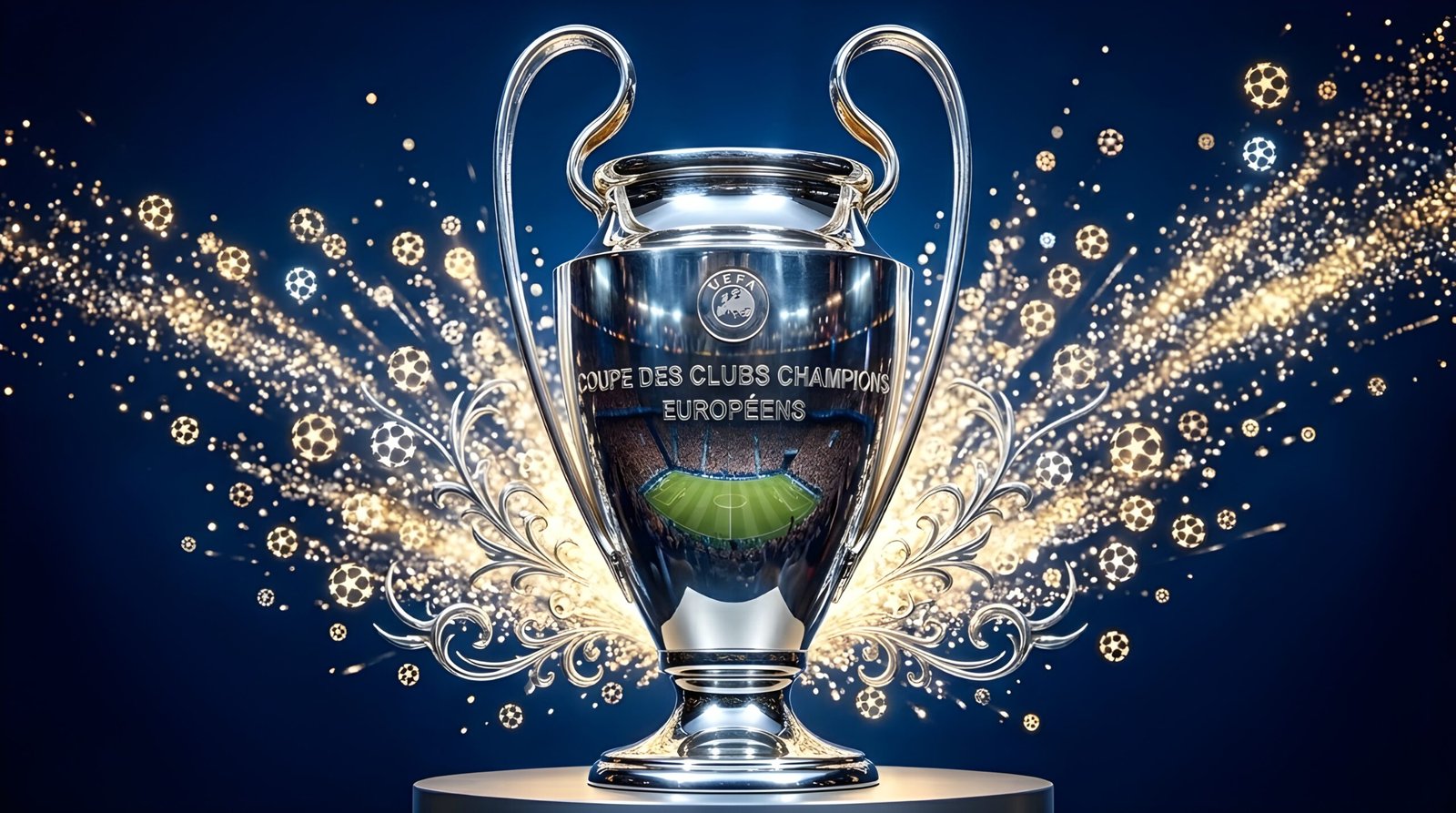
Origins of the Champions League: Inside Europe’s Biggest Club Competition
Today, the UEFA Champions League is the most prestigious club football competition in the world. Every season, the tournament attracts hundreds of millions of viewers and showcases Europe’s elite clubs battling for glory.
However, the competition did not always look the way it does today. The Champions League started as a much smaller tournament called the European Champions’ Cup, commonly known as the European Cup, in the 1950s.
What began as a simple knockout tournament for national league champions has evolved into a massive global sporting event featuring group stages, billion-dollar broadcasting deals, and worldwide fan engagement.
This article explores the origins of the Champions League, the people who created it, how the competition evolved over decades, and the historic moments that shaped the tournament we know today.
The Idea That Started It All
In the early 1950s, European football was becoming increasingly competitive. Clubs from different countries rarely played each other outside of friendlies, and fans had no clear answer to an exciting question:
Which club was truly the best in Europe?
The idea for a continental competition came largely from French journalists at the sports newspaper L’Équipe.
Two key figures played an important role:
- Gabriel Hanot – Former French international footballer and journalist
- Jacques Ferran – Sports writer who helped develop the competition format
After English club Wolverhampton Wanderers defeated several strong European teams in friendlies, the British media began calling them “Champions of the World.”
Hanot disagreed and argued that the only fair way to determine the best club in Europe was through a structured continental tournament.
This debate sparked the creation of the European Cup and marked the true beginning of the origins of the Champions League as a concept.
The Birth of the European Cup (1955)
The origins of the Champions League became official in 1955 when UEFA approved the European Cup, launching a new era in European football.
The tournament initially included 16 clubs, each representing major European leagues.
First European Cup Participants (1955–56)
| Country | Club |
|---|---|
| Spain | Real Madrid |
| England | Chelsea (later replaced by Gwardia Warsaw) |
| Italy | AC Milan |
| France | Stade de Reims |
| Portugal | Sporting CP |
| Netherlands | PSV Eindhoven |
| Sweden | Djurgårdens IF |
| Switzerland | Servette |
| Hungary | Vörös Lobogó |
| Austria | Rapid Wien |
| Denmark | AGF Aarhus |
| Scotland | Hibernian |
| Poland | Gwardia Warsaw |
| Belgium | Anderlecht |
| Yugoslavia | Partizan |
| Saarland | Saarbrücken |
Unlike today’s competition, the original tournament had:
- Only knockout rounds
- Two-legged ties (home and away)
- No group stage
The team that survived the knockout rounds would become European champions.
Real Madrid: The First Dynasty
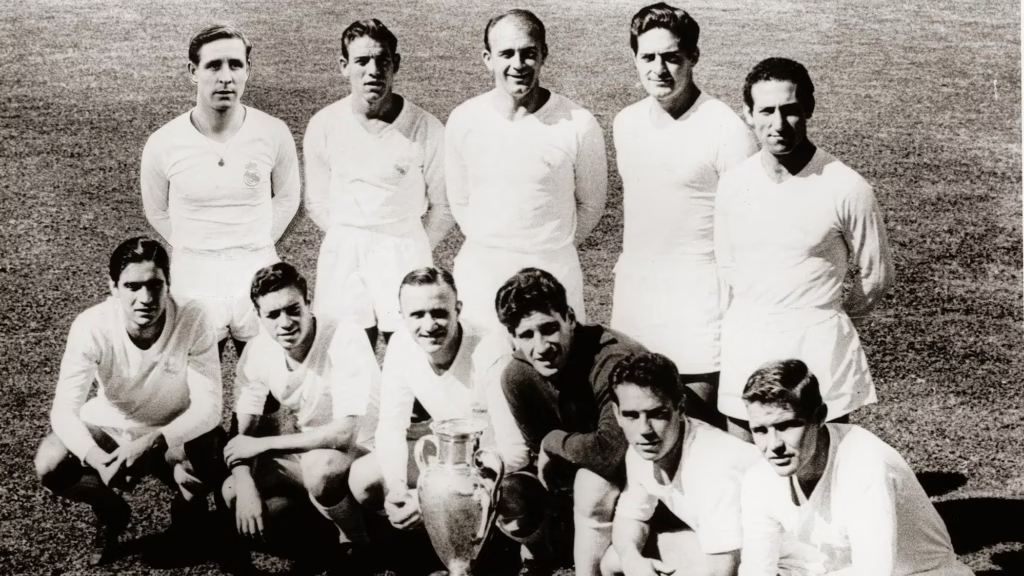
The first European Cup season (1955–56) ended with Real Madrid defeating Stade de Reims 4–3 in the final.
This victory began one of the most dominant eras in football history.
Real Madrid’s Early Dominance
| Season | Winner | Runner-Up |
|---|---|---|
| 1955–56 | Real Madrid | Stade de Reims |
| 1956–57 | Real Madrid | Fiorentina |
| 1957–58 | Real Madrid | AC Milan |
| 1958–59 | Real Madrid | Stade de Reims |
| 1959–60 | Real Madrid | Eintracht Frankfurt |
Real Madrid won five consecutive European Cups, thanks to legendary players such as:
- Alfredo Di Stéfano
- Ferenc Puskás
- Francisco Gento
Their 1960 final victory against Eintracht Frankfurt (7–3) is still considered one of the greatest matches in football history.
How the Tournament Expanded
As the European Cup grew in popularity, UEFA gradually expanded the competition.
Key Changes Over Time
| Year | Major Change |
|---|---|
| 1955 | European Cup founded |
| 1960s | More national champions added |
| 1992 | Rebranded as UEFA Champions League |
| 1997 | Multiple teams from top leagues allowed |
| 2003 | Group stage expanded |
| 2024 | Swiss model league format introduced |
These changes transformed the tournament from a simple knockout competition into a multi-stage international spectacle.
The Transformation Into the Champions League (1992)
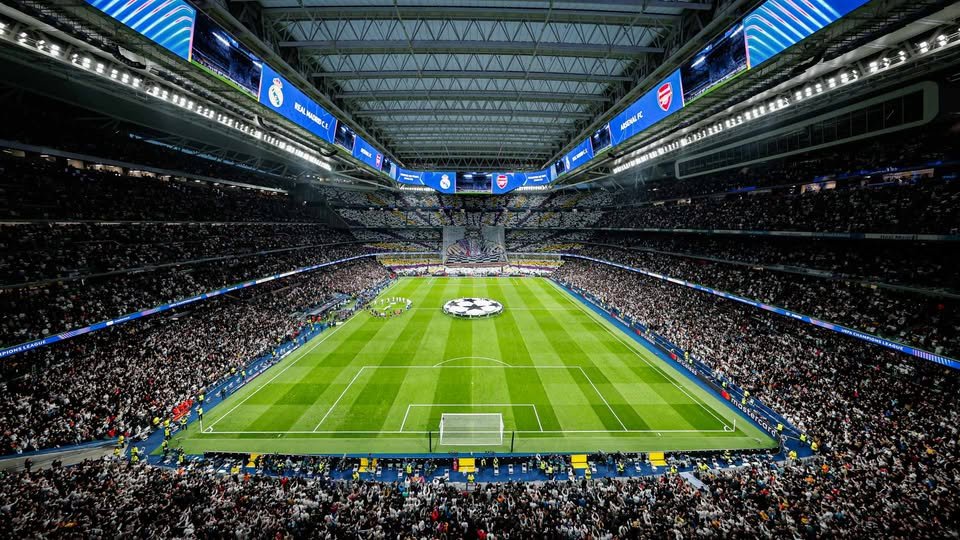
The origins of the Champions League as we know it today were cemented in 1992, when UEFA modernised the competition with a group stage and new branding.
UEFA decided to modernise the competition by introducing:
- A group stage
- New branding
- The iconic Champions League anthem
- Major television broadcasting deals
The tournament was officially renamed:
UEFA Champions League
This change dramatically increased:
- Global audience
- Sponsorship revenue
- Competitive intensity
Today, the Champions League final is one of the most-watched sporting events on Earth.
Evolution of the Champions League Format
The format has continued to evolve to keep the competition exciting.
Current Tournament Structure (Simplified)
| Stage | Description |
|---|---|
| Qualifiers | Smaller clubs compete for entry |
| League Phase | 36 teams play multiple opponents |
| Knockout Playoffs | Top teams advance |
| Round of 16 | Knockout begins |
| Quarterfinals | Last eight teams |
| Semifinals | Final four |
| Final | Single match for the trophy |
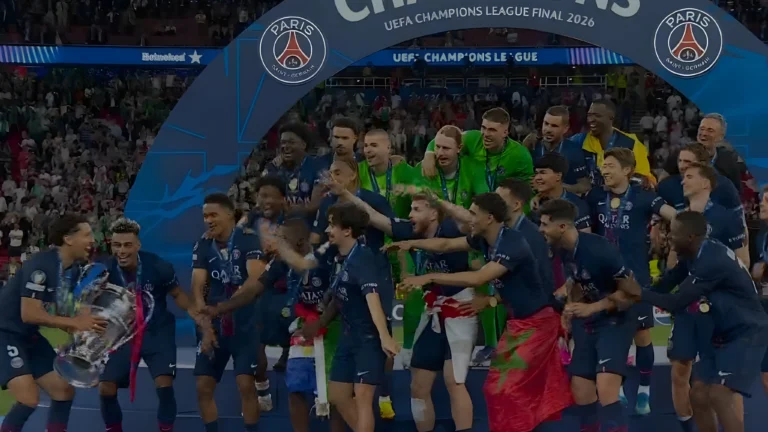
The Champions League trophy, often called “Big Ears”, has become one of the most recognisable trophies in sports.
The Champions League Trophy
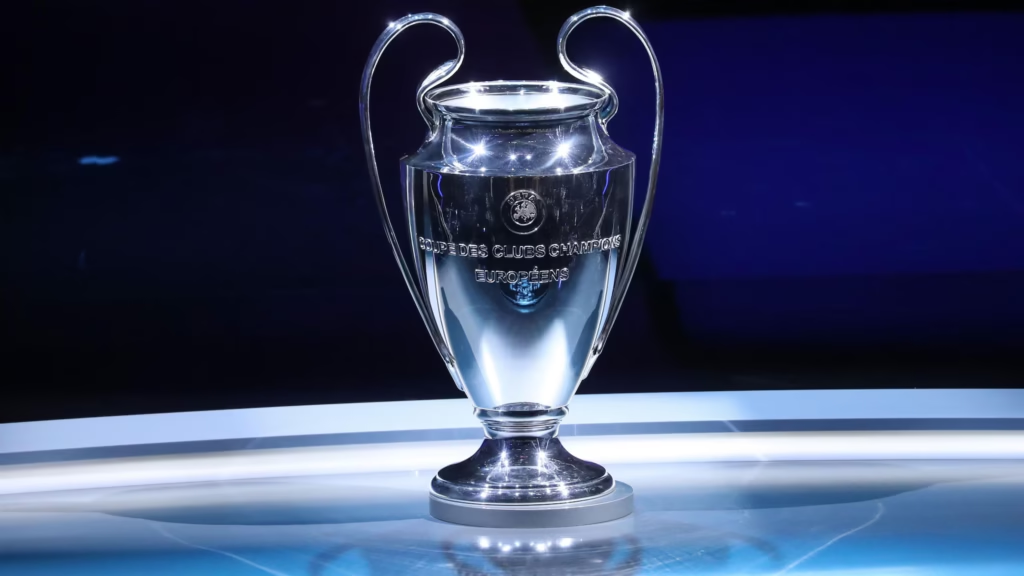
The trophy was designed in 1967 after Real Madrid kept the original European Cup permanently for winning it five times.
Key facts about the trophy:
| Feature | Detail |
|---|---|
| Height | 73.5 cm |
| Weight | 7.5 kg |
| Nickname | Big Ears |
| Material | Sterling silver |
The large curved handles are the reason fans call it “Big Ears.”
Fun Facts About the Champions League
1. Real Madrid Holds the Record
Real Madrid is the most successful club in Champions League history with more than 14 titles.
2. The Anthem Is Based on Classical Music
The iconic Champions League anthem is inspired by George Frideric Handel’s “Zadok the Priest.”
It has become one of the most recognisable sounds in sports.
3. The Final Is One of the Most Watched Events
The Champions League final attracts over 400 million viewers worldwide, rivalling events like the Super Bowl.
4. Only Champions Were Originally Allowed
Initially, only league champions could participate in the tournament.
Today, top leagues can send four or more teams.
5. The Fastest Goal in Champions League History
The fastest goal was scored by Roy Makaay for Bayern Munich in 10.12 seconds against Real Madrid in 2007.
Why the Champions League Became So Popular
The origins of the Champions League gave European football a shared stage — and as the competition grew, so did its global audience.
1. Elite Clubs Competing Together
Fans can watch the biggest clubs face off:
- Real Madrid
- Barcelona
- Bayern Munich
- Manchester United
- AC Milan
- Liverpool
2. Global Television Coverage
Broadcast deals allowed the tournament to reach every continent.
3. Legendary Players
Many of football’s greatest players built their legacies in the Champions League.
Examples include:
| Player | Club | Legacy |
|---|---|---|
| Cristiano Ronaldo | Real Madrid | Most goals in competition |
| Lionel Messi | Barcelona | Magical performances |
| Paolo Maldini | AC Milan | Defensive icon |
| Zinedine Zidane | Real Madrid | Historic final goals |
The Champions League Today
Today, the Champions League is far more than just a football tournament.
It is:
- A global entertainment event
- A major financial engine for clubs
- A stage for football legends
Winning the Champions League represents the highest achievement in club football.
For players, lifting the trophy often defines their careers.
For clubs, it brings prestige, history, and massive financial rewards.
Conclusion
The Champions League has come a long way since its beginnings in 1955 as the European Cup.
What started as a bold idea from football journalists has evolved into the most prestigious club competition in the world.
From Real Madrid’s early dominance to the modern era of global broadcasting and superstar players, the tournament has consistently delivered unforgettable moments.
As football continues to grow globally, the Champions League will likely remain the ultimate stage where Europe’s greatest clubs compete for immortality.
From Gabriel Hanot’s bold idea in a French newspaper to a billion-viewer global spectacle, the origins of the Champions League remain one of football’s greatest stories.
And every season, fans across the world wait to hear those famous words:
“The Champions!”
FAQs
When did the Champions League start?
The Champions League began in 1955 as the European Champion Clubs’ Cup, commonly called the European Cup, before being rebranded as the UEFA Champions League in 1992.
Who created the European Cup?
The idea for the European Cup came from Gabriel Hanot, a French journalist at L’Équipe, who wanted a tournament to determine the best football club in Europe.
Why was the European Cup renamed the Champions League?
UEFA renamed the tournament in 1992 to modernise the competition, introduce a group stage format, and increase global television and sponsorship opportunities.

I’m a football writer, covering top leagues like the Premier League, La Liga, Bundesliga, Serie A, and Ligue 1. I write about match analysis, football news, tactics, and major tournaments such as the FIFA World Cup, delivering clear, engaging insights for fans.
About The Author
1 thought on “The Origins of the Champions League: How Europe’s Greatest Club Competition Was Born”