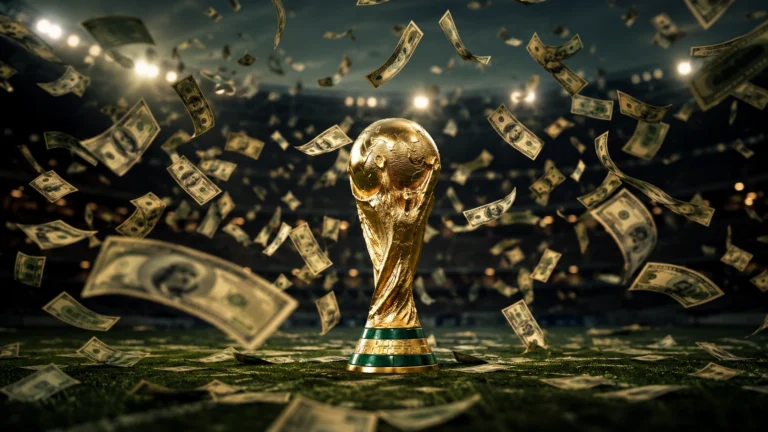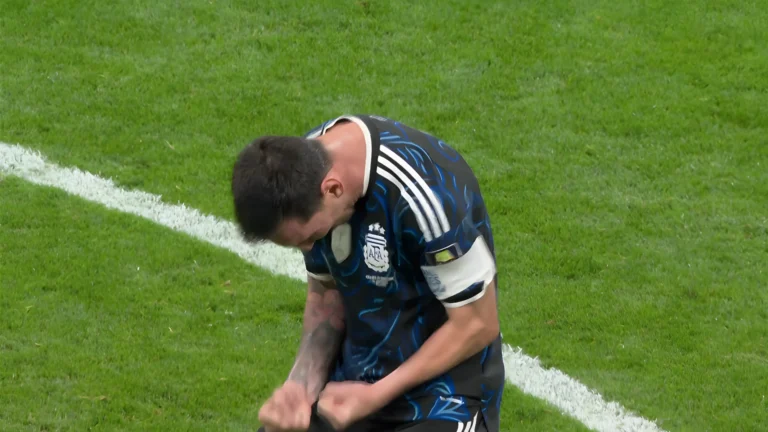
Inside the World Cup Money Machine: 6 Billion Viewers, $13 Billion, and Almost No Pay for Players
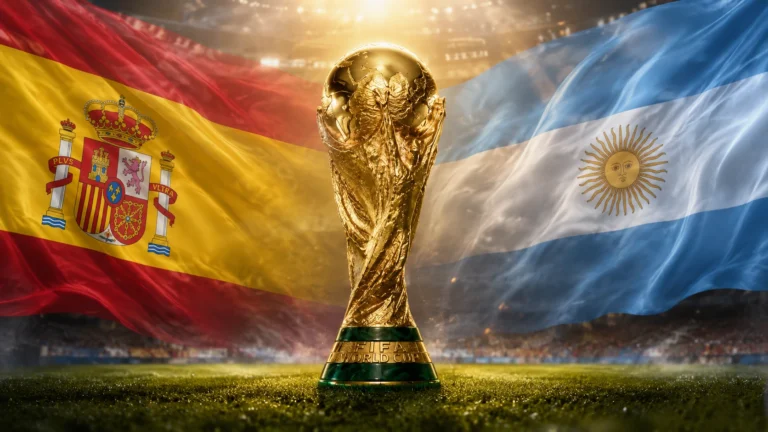
The World Cup is not just a football tournament. It is the biggest show on Earth. No other event, sport, or awards night comes close to how many people watch it.
Quick Recap Table
| Question | Answer |
|---|---|
| Global engagement (2026) | ~6 billion people |
| Total tournament revenue | ~$13 billion |
| FIFA’s profit margin | ~70% |
| Total prize pool | $871 million |
| Champion’s earnings | $50M+ (performance) |
| Global betting estimate | $50–60 billion |
| Total World Cup economy | ~$650 billion |
| Next cycle budget (2030) | $14 billion |
The World Cup Beats Every Other Event Combined
Let’s compare the World Cup to the biggest events in the world:
| Event | Viewers |
|---|---|
| Super Bowl (biggest ever) | 127 million |
| NBA Finals (biggest ever) | 20 million |
| Cricket World Cup Final | 300 million |
| Champions League Final | 145 million |
| Moon Landing (1969) | 650 million |
| World Cup Final (2022) | ~1.5 billion |
- Even if you add up every big event above, they still don’t beat one World Cup final.
- The 2026 tournament is expected to reach around 6 billion people in total engagement, according to FIFA’s own tournament messaging, up from the 5 billion who engaged with the 2022 edition (FIFA).
- Some opening matches have pulled in over 96% of a country’s entire TV audience.
- A single US knockout match once drew 30 million viewers on Fox — more than the NBA Finals.
Simple takeaway: No other recurring event unites this many people, at the same time, watching the same thing.
Football’s Superstars Are Bigger Than Hollywood
You don’t realize how big World Cup stars are until you compare their social media following to US celebrities.
| Person | Followers |
|---|---|
| Tom Brady | 15.5 million |
| LeBron James | 154 million |
| Lionel Messi | 512 million |
| Cristiano Ronaldo | 675 million |
- Ronaldo alone has more followers than Kim Kardashian and Taylor Swift combined.
- Most people in the US have no idea how massive these players really are outside America.
Tickets Are Nearly Impossible to Get
Global demand for World Cup tickets is off the charts.
- FIFA received over 500 million ticket requests in just 33 days.
- The tournament expects around 6.5 million stadium visitors in total.
- That works out to more than 75 ticket requests for every single seat available.
- The highest verified resale price so far: almost $10 million for four Final tickets.
How Much Money Does the World Cup Make?
This is where things get wild. The World Cup isn’t just a game — it’s one of the biggest money machines on the planet.
Revenue breakdown:
| Source | Amount |
|---|---|
| Tickets & hospitality | $3.1 billion |
| Sponsorships | $3.8 billion |
| Broadcasting rights | $4.3 billion |
| Total revenue | ~$13 billion |
- Late-round US commercials can cost up to $2 million for 30 seconds — that’s about $66,000 every second.
- FIFA’s reported costs for running the tournament sit around $3.8 billion.
- That leaves roughly $9 billion in profit — a 70% profit margin.
- For comparison, industry analysts project this World Cup cycle could bring FIFA close to $9 billion in tournament-year revenue, driven largely by media rights (S&P Global Market Intelligence via TV Tech).
Why is it so profitable? FIFA doesn’t pay to train or develop the players. National federations and clubs do that. FIFA simply owns the stage where the world’s biggest stars perform.
So… How Much Do the Players Actually Get?
Here’s the surprising part. Despite generating billions, players and teams get a tiny slice of the pie.
- Total prize pool for 2026: a record $871 million, up 65% from the $528 million pool at Qatar 2022 (SI).
- The champion takes home $50 million in performance prize money alone, with total earnings (including qualification and preparation funds) crossing $63.5 million (Yahoo Sports).
- Even at $50 million, that’s less than 0.5% of the roughly $13 billion the tournament generates.
- FIFA doesn’t pay players directly — the prize money goes to national federations first. Players then get whatever bonus was agreed upon beforehand.
| Finish | Prize Money |
|---|---|
| Champion | $50 million (performance) |
| Runner-up | $33 million |
| Third place | $29 million |
| Fourth place | $27 million |
| Group stage exit | $9 million (minimum) |
Who Actually Owns the World Cup?
On paper, nobody “owns” the World Cup. FIFA is registered as a nonprofit organization. It says it reinvests all profits back into global football development.
- FIFA has 211 member federations across the world.
- Around $2.7 billion of FIFA’s development money flows into these same federations — the same ones that vote for FIFA’s president.
- Critics call this cycle the “world’s most expensive re-election machine.”
- Current president Gianni Infantino changed FIFA’s own rules to allow himself to run for a third term, and he’s expected to run unopposed. He reportedly earns around $6 million a year in the role.
Why does this matter? Whoever leads FIFA controls a global media empire watched by billions — enough influence that world leaders and governments often try to stay on good terms with the organization.
FIFA’s History With Controversy
Big money always attracts big scrutiny.
- In 2015, US prosecutors indicted dozens of FIFA officials using the RICO Act — the same law used to take down organized crime networks.
- Charges included wire fraud, money laundering, and bribery spanning decades.
The Betting Industry Makes Even More Than FIFA
FIFA’s $13 billion is huge. But it’s not even the biggest pile of cash tied to the World Cup — betting is.
- Betting platforms like Flutter expect peak traffic of 100,000 bets every minute — around 1,667 bets per second.
- Analysts project $50–60 billion will be wagered globally on this World Cup.
- This number doesn’t even include unregulated or crypto betting.
The Full World Cup Economy
When you add everything up — tourism, flights, hotels, merchandise (legal and fake), betting, resellers, and general spending — the entire World Cup economy is estimated to be worth around $650 billion.
That’s roughly the size of Belgium’s or Sweden’s entire yearly economy, all packed into a single 39-day football tournament.
What’s Coming Next?
The World Cup machine keeps growing.
- The 2030 World Cup will be hosted across three countries — Morocco, Spain, and Portugal — with special opening matches in South America to mark the tournament’s 100th anniversary.
- FIFA’s budget for the next four-year cycle is projected at $14 billion.
- The prize pool is expected to cross $1 billion for the first time.
Final Answer: How Big Is the World Cup?
- How big is it? Bigger than every other major sporting final on Earth — combined.
- How much do winners get paid? Less than half of one percent of what the tournament makes.
- Who owns it? A nonprofit that nobody outside football directly elected, funded by fans and sponsors worldwide, and accountable mainly to the federations it pays.
Also Read: How Much Does the FIFA World Cup Trophy Cost? Everything You Need to Know

I’m a football writer, covering top leagues like the Premier League, La Liga, Bundesliga, Serie A, and Ligue 1. I write about match analysis, football news, tactics, and major tournaments such as the FIFA World Cup, delivering clear, engaging insights for fans.
About The Author