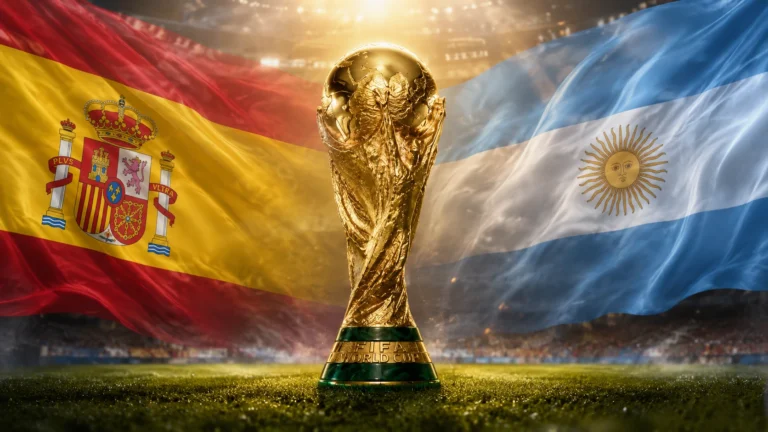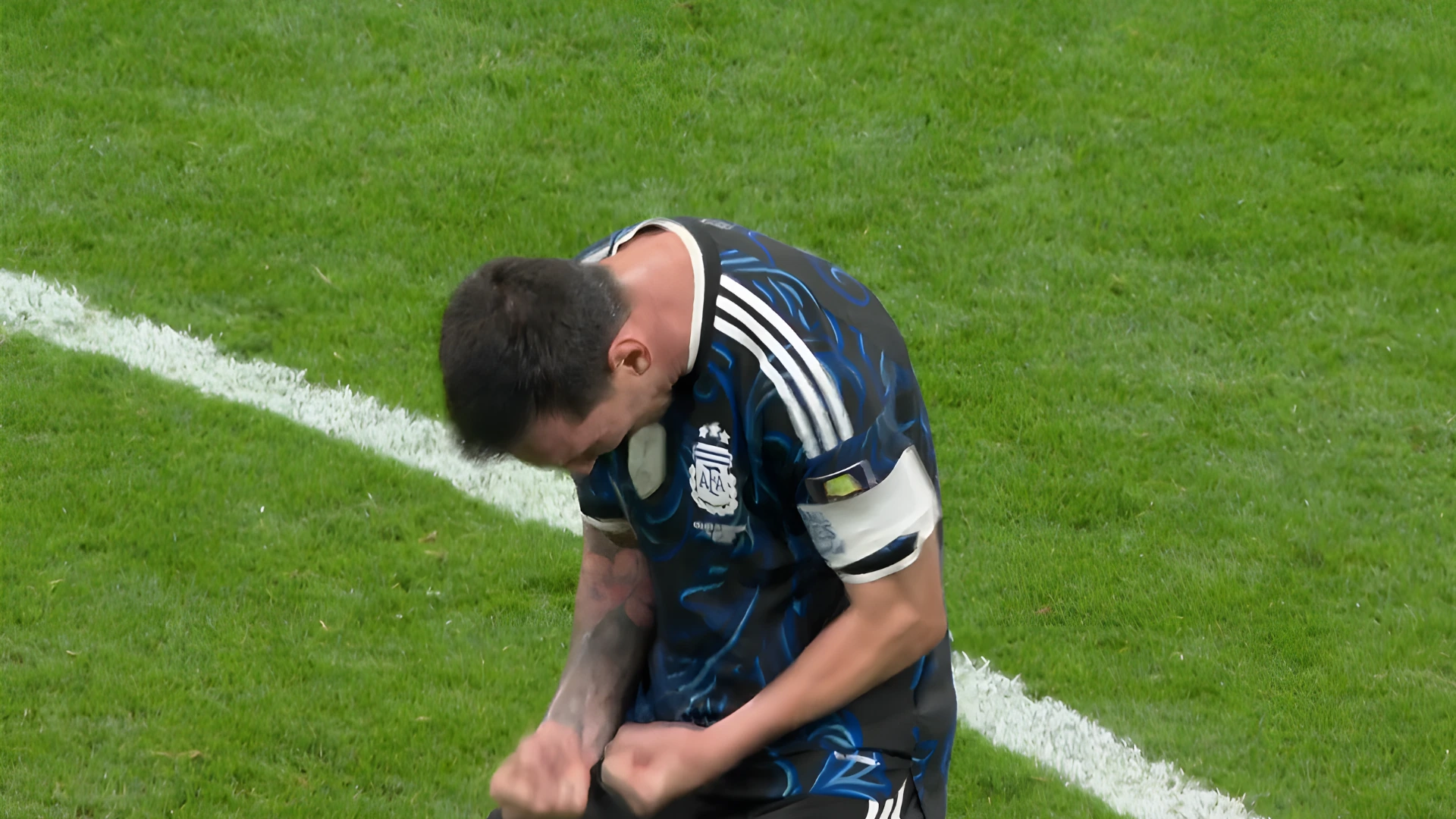
When football fans debate who deserves the title of greatest footballer of all time, one name consistently rises above the rest: Lionel Messi. Across two decades, three clubs, and a World Cup triumph, Messi has built a résumé that blends individual brilliance with sustained team success in a way few athletes in any sport have matched.
This article breaks down why Messi is widely considered the greatest footballer of all time, how he compares to legends like Pelé, Maradona, and Cristiano Ronaldo, and what makes his on-field game so tactically unique.
Why Messi Is Considered the Greatest Footballer of All Time
Messi’s claim to being the greatest footballer of all time isn’t built on one moment or one season. It rests on two decades of near-uninterrupted excellence across different teams, leagues, and tactical systems.
He has scored more goals in a calendar year than anyone in history, won more individual player-of-the-year awards than anyone in history, and finally added the one trophy critics said he lacked: a FIFA World Cup. That combination of volume, consistency, and international success is rare even among legends.
Career Achievements at a Glance
| Category | Record / Total |
|---|---|
| Ballons d’Or | 8 (most ever) |
| FIFA World’s Best Player awards | 8 (most ever) |
| European Golden Shoes | 6 (most ever) |
| Career goals (club + country) | 919 |
| Career assists | 450+ (most in football history) |
| La Liga goals | 474 (record) |
| Goals for a single club (Barcelona) | 672 (all-time record) |
| World Cup goals | 21 (all-time record) |
| Goals in a calendar year | 91 (2012, all-time record) |
| Consecutive 30+ goal seasons | 13 (no one else has done this) |
| Career team trophies | 46 (most decorated player ever) |
Sources: Wikipedia’s List of Career Achievements by Lionel Messi; ESPN; Britannica
Major Trophies Won
- 4x UEFA Champions League titles with Barcelona
- 10x La Liga titles with Barcelona
- 1x FIFA World Cup (2022) with Argentina
- 2x Copa América titles with Argentina
- 1x MLS Cup (2025) with Inter Miami
- 1x Olympic gold medal (Beijing 2008)
How Messi Compares to Other All-Time Greats
Any honest discussion of the greatest footballer of all time has to weigh Messi against the other legends of the sport. Here’s how the main contenders stack up.
| Player | Signature Strength | Main Limitation in the Debate |
|---|---|---|
| Lionel Messi | Unmatched combination of goals, assists, longevity, and a World Cup win | Historically light defensive/pressing contribution |
| Cristiano Ronaldo | More career goals, elite physicality, 5 Champions Leagues | Fewer Ballons d’Or, far fewer assists, no World Cup |
| Pelé | 3 World Cups, generational peak | Played in an era with weaker global competition and record-keeping |
| Diego Maradona | Arguably football’s greatest single tournament (1986 World Cup) | Shorter prime, far fewer team trophies overall |
| Alfredo Di Stéfano | 5 consecutive European Cups, positional versatility | Pre-modern era makes direct comparison difficult |
Ronaldo remains Messi’s closest rival in this debate. He currently holds a higher career goal tally, but Messi’s superior playmaking numbers, extra Ballons d’Or, and World Cup title are usually cited as the deciding factors in his favor.
Tactical Analysis: What Makes Messi’s Game Unique
Messi’s case as the greatest footballer of all time isn’t just about stats — it’s about how he produces them. His playing style has evolved significantly across different phases of his career.
Peak Barcelona (2008–2015): Under Pep Guardiola, Messi was repositioned from a right winger into a “false 9.” He dropped into midfield pockets to combine with Xavi and Iniesta, dragging defenders out of position and opening space in behind for others to exploit.
Left-foot cutback: Starting nominally as a right winger let Messi cut inside onto his stronger left foot, a diagonal movement that simultaneously threatened a shot and a pass, making him almost impossible to defend one-on-one.
Decision-making speed: Messi isn’t an elite athlete in terms of raw pace or power. His edge comes from anticipation — he tends to know his next two or three options before he even receives the ball.
Late-career evolution (PSG, Argentina 2022, Inter Miami): As his explosiveness declined, his role shifted deeper into a playmaking hub. Argentina’s coaching staff built their entire 2022 World Cup system around this, using a double pivot to cover defensively so Messi could focus purely on creating and finishing.
Current role (2025–2026): At Inter Miami and with Argentina at the 2026 World Cup, Messi operates as a deeper creator with occasional poaching instincts, relying more on passing range and positioning than explosive dribbling.
The Bottom Line
Lionel Messi’s case as the greatest footballer of all time is built on a rare mix of longevity, statistical dominance, and trophy success across three different leagues. No player has combined individual creativity with sustained team achievement quite like him, and his 2022 World Cup win removed the last major gap in his résumé. That said, the debate is ultimately subjective — Ronaldo, Pelé, and Maradona all have legitimate, well-supported cases built on different strengths. What’s not in dispute is that Messi belongs at the very top of that conversation.
Also Read: Can Argentina Win Back-to-Back FIFA World Cups? Will Lionel Messi Cement His Legacy as the Ultimate GOAT?
Can Messi Win Back-to-Back World Cups? Every Team Standing in Argentina’s Road to the FIFA World Cup Finals
Sources
- List of career achievements by Lionel Messi — Wikipedia
- Lionel Messi — Wikipedia
- Lionel Messi’s soccer career: Stats, trophies, honors — ESPN
- Lionel Messi — Britannica
- Messi.com — Honours and Achievements
Frequently Asked Questions (FAQs)
Why is Messi called the greatest footballer of all time?
Messi holds the record for most Ballons d’Or (8), most assists in football history, and most goals in a single calendar year, while also winning a World Cup, a Copa América, four Champions Leagues, and ten La Liga titles — a combination no other player has matched.
Do Messi or Ronaldo have more goals?
As of mid-2026, Cristiano Ronaldo has more career goals than Messi. However, Messi holds a significant lead in assists and individual awards, which is central to his side of the GOAT debate.
How many World Cups has Messi won?
Messi has won one FIFA World Cup, in 2022, where Argentina defeated France on penalties in the final. He is also the tournament’s all-time leading goalscorer, with 21 World Cup goals.
What is Messi’s total career goal tally?
As of July 2026, Messi has scored 919 goals across his club and international career, combining his time at Barcelona, PSG, and Inter Miami with his goals for Argentina.
Is the “greatest footballer of all time” debate settled?
No — it remains one of the most contested topics in sport. While Messi’s trophy count and statistical records make a strong case, supporters of Pelé, Maradona, and Ronaldo point to different criteria, such as team success in different eras or peak physical dominance, to argue for their favorites.

I’m a football writer, covering top leagues like the Premier League, La Liga, Bundesliga, Serie A, and Ligue 1. I write about match analysis, football news, tactics, and major tournaments such as the FIFA World Cup, delivering clear, engaging insights for fans.
About The Author